

TL;DR:
- Lab-grown diamonds have a significantly lower environmental impact compared to mined diamonds.
- Certified sustainable jewelry requires proof through third-party standards like RJC, Fairmined, or SCS-007.
- True eco-friendly jewelry depends on responsible sourcing, production practices, and lifecycle considerations.
Most people assume that choosing luxury jewelry means accepting a compromise with the environment. That assumption is outdated. The gap between a lab-grown diamond and a mined one is staggering: mined diamonds produce roughly 160 kg of CO2 per carat, while lab-grown alternatives can generate as little as 1.5 kg under the right conditions. That’s not a small difference. It’s a fundamental shift in what’s possible for eco-conscious buyers. This guide covers lab-grown gemstones, ethical craftsmanship, certification standards, how to spot greenwashing, and practical tips for buying sustainable luxury jewelry with confidence.
Table of Contents
- What makes jewelry eco-friendly?
- Lab-grown gemstones vs. natural: The sustainability facts
- Certifications, standards, and how to avoid greenwashing
- Pricing, quality, and brand choices: What to expect
- Why ‘eco-friendly’ in jewelry is more than a buzzword
- Discover sustainable luxury jewelry options
- Frequently asked questions
Key Takeaways
| Point | Details |
|---|---|
| Lab-grown advantages | Lab-grown gemstones offer much lower environmental impact and cost than mined stones. |
| Certification matters | Always check for third-party certifications like RJC or SCS-007 to avoid greenwashing. |
| Real sustainability costs | Eco-friendly jewelry typically costs more but ensures ethical sourcing and premium quality. |
| Smart buying tips | Demand transparency from brands and favor recycled metals and certified lab stones. |
What makes jewelry eco-friendly?
The phrase “eco-friendly jewelry” gets used loosely, and that’s exactly the problem. A bracelet made from recycled gold but set with a conflict stone isn’t eco-friendly. A ring marketed as “natural” isn’t automatically sustainable. Real eco-friendly jewelry requires examining three core areas: materials sourcing, production processes, and lifecycle impact.
Materials sourcing asks where your metals and gemstones come from. Were they extracted through responsible mining, or did they come from a process that displaced communities and polluted waterways? Production processes look at energy use, chemical waste, and worker conditions during manufacturing. Lifecycle impact considers whether the piece can be repaired, recycled, or passed down, rather than ending up in a landfill.
Common claims in sustainable jewelry include:
- Recycled metals: Gold or silver reclaimed from old jewelry or electronics, reducing the demand for new mining
- Conflict-free stones: Gemstones verified not to fund armed conflict
- Low-impact manufacturing: Production methods designed to minimize water and energy consumption
- Fair-trade sourcing: Materials purchased at prices that support miners’ livelihoods
But claims are cheap. Verification is what counts. The ethical luxury guide we’ve put together goes deeper on how to assess a brand’s full supply chain. Key third-party standards to look for include the RJC Code of Practices, Fairmined and Fairtrade certifications for metals, B Corp status for brand-level accountability, and SCS-007, which is currently the leading standard for lab-grown gemstones.
Pro Tip: A brand that cannot name its certifying body or link to a public audit isn’t being transparent. Real eco-friendly jewelry brands welcome hard questions and back their claims with documentation.
Supply chain transparency is the real differentiator. The best brands publish detailed sourcing reports, name their suppliers, and submit to regular audits. If a brand’s sustainability page is full of abstract language and lifestyle imagery but short on specifics, that’s a red flag.
Lab-grown gemstones vs. natural: The sustainability facts
With eco-friendly criteria in mind, let’s break down why lab-grown gemstones are rapidly replacing mined stones for the conscious buyer.
The environmental contrast is striking. Lab-grown diamonds are chemically identical to mined diamonds but cost 40 to 80% less and now represent 47.7% of US engagement rings in 2025. That market shift reflects a major change in buyer values, not just price sensitivity.
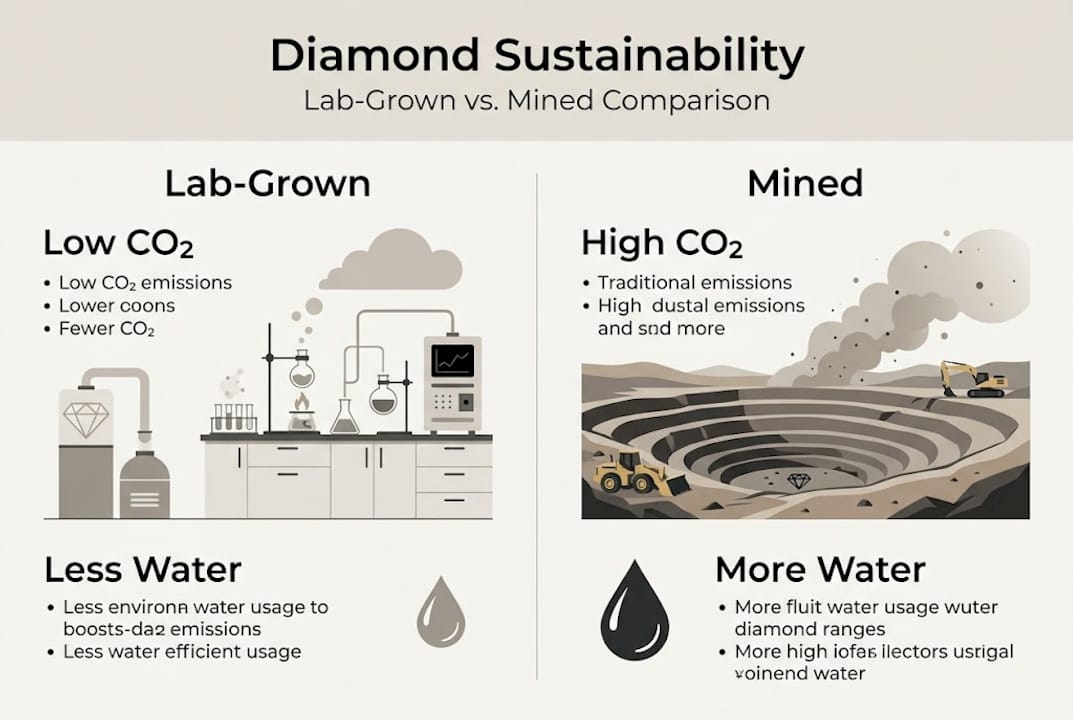
| Factor | Lab-grown diamonds | Mined diamonds |
|---|---|---|
| CO2 per carat | 1.5 to 50 kg | ~160 kg |
| Water use | Significantly lower | High |
| Land disturbance | None | Extensive |
| Price difference | 40 to 80% less | Baseline |
| Chemical composition | Identical | Identical |
The energy source behind lab-grown production matters enormously. A lab running on renewable energy can deliver a carbon footprint comparison that is dramatically better than mining. But a lab powered entirely by coal narrows that gap considerably. Always ask about a producer’s energy mix before assuming a lab-grown stone is the greener option.
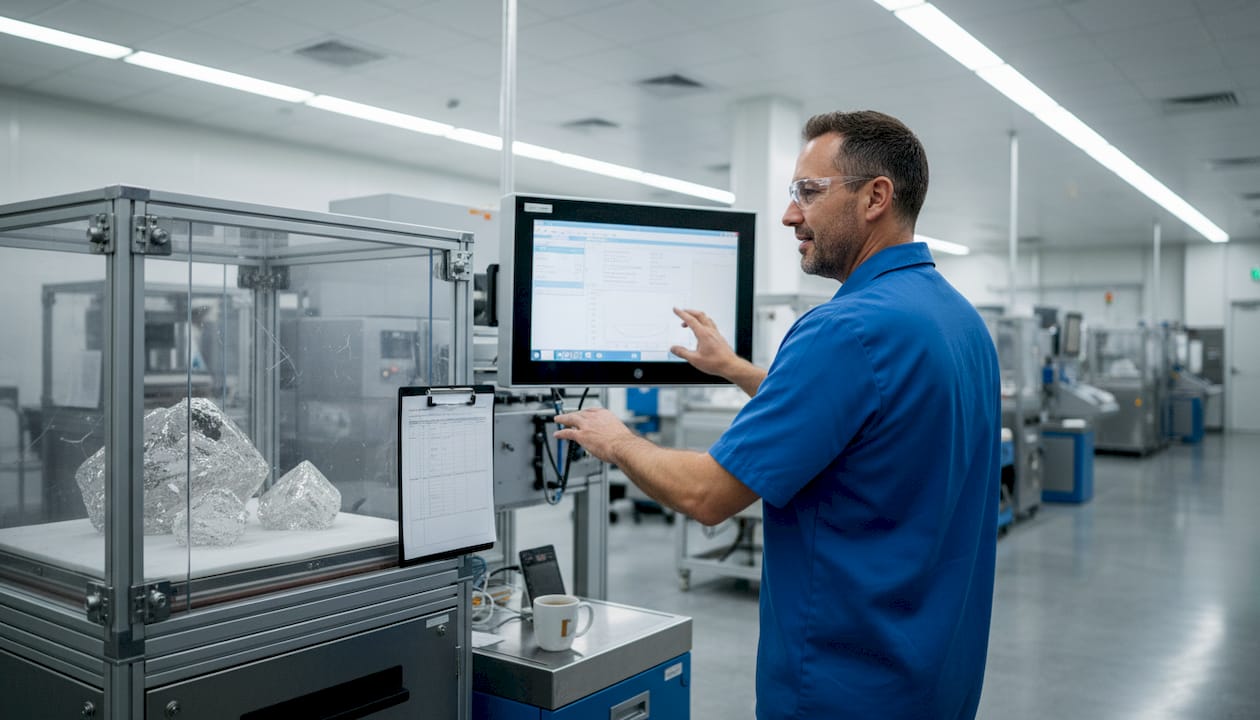
Understanding lab-grown diamonds’ sustainability also means looking at what doesn’t happen. No mountaintop removal. No toxic chemical runoff. No displacement of local ecosystems. These are not minor side benefits. They represent a completely different relationship between your jewelry and the planet.
Here’s a quick checklist for evaluating any gemstone’s sustainability credentials:
- Ask for the production method: HPHT (High Pressure High Temperature) or CVD (Chemical Vapor Deposition) for lab-grown, and the mine of origin for natural stones.
- Confirm the energy source used in production, particularly for lab-grown options.
- Request third-party certification documentation before purchasing.
For more on the technical side of how these stones are created, our guide on how lab-grown diamonds are made walks through the science without the jargon. And if you want an independent view on energy use, energy sources for lab-grown diamonds offers a solid breakdown.
Certifications, standards, and how to avoid greenwashing
Now, understanding your options, it’s essential to ensure brands walk the talk on sustainability.
The certification landscape in jewelry can feel overwhelming, but a handful of organizations have become the real benchmarks. Here’s what each one actually means:
| Certification | What it covers | Why it matters |
|---|---|---|
| RJC Code of Practices | Full supply chain: mining, manufacturing, retail | Industry-wide accountability standard |
| Fairmined | Gold and silver sourcing from responsible artisan mines | Protects mining communities |
| Fairtrade | Similar to Fairmined with added market access support | Economic equity for miners |
| B Corp | Brand-level social and environmental standards | Holistic business accountability |
| SCS-007 | Lab-grown gemstones: carbon neutrality and sustainability | Specific to lab-grown production |
These RJC certifications aren’t decorative labels. They require documented audits, supply chain mapping, and ongoing compliance reviews. A brand displaying these certifications has submitted to scrutiny that most jewelry companies actively avoid.
Greenwashing is the practice of making a product or brand appear more sustainable than it actually is. In jewelry, it shows up as vague claims like “eco-conscious design” or “ethically inspired” without any certification backing. As one investigation into common greenwashing traps revealed, even major global brands have faced criticism for sustainability claims that didn’t hold up under examination.
“Eco-friendly” without evidence is just marketing. The brands that earn trust are the ones that publish their audit results and name their supply chain partners.
Here’s a buyer checklist to protect yourself:
- Ask for the specific certification name and the certifying body
- Search the certifying body’s website to verify the brand’s listed status
- Look for a publicly available sourcing or sustainability report, not just a webpage
- Check if the claim applies to the whole product or just one component
- Compare the lab-grown vs natural diamond guide to understand which stone type carries which risks
When you’re comparing diamond types, certification becomes even more important. Natural and lab-grown stones have different supply chains and therefore different certification frameworks.
Pricing, quality, and brand choices: What to expect
Having learned how to find truly sustainable pieces, let’s look at what you can expect to pay and which brands are leading the way.
Sustainable jewelry costs 10 to 30% more than conventional alternatives due to ethical sourcing, certification, and responsible manufacturing. The lab-grown segment is projected to reach $55.6 billion globally, which signals that this premium is becoming the new baseline rather than a niche surcharge.
The price difference reflects real choices made at every stage of production. Certified Fairmined gold costs more because miners receive fair wages. Lab-grown stones require significant capital investment in technology and energy. Brands that publish supply chain audits spend more on compliance than those that don’t.
Key factors that influence the price of sustainable jewelry:
- Certification costs passed on to the consumer
- Renewable energy sourcing for lab-grown production
- Fair labor practices at every supply chain stage
- Recycled metal processing versus raw material extraction
- Custom craftsmanship and design complexity
Brands like Brilliant Earth and Pandora have built their reputations on recycled metals and lab-grown stones. It’s worth noting that some buyers still prefer natural diamonds for their rarity and perceived long-term value, even with the higher environmental cost. That’s a personal decision, but it should be an informed one.
Browsing the best lab-grown diamond rings available today shows just how far quality has come. The brilliance and fire of a well-cut lab-grown stone is indistinguishable from a mined diamond to the naked eye, and often superior due to tighter production controls. The industry trends in sustainable jewelry point strongly toward lab-grown becoming the default choice for engagement rings within the decade.
Pro Tip: Buying sustainable jewelry isn’t just a values statement. Pieces with certified ethical sourcing and documented provenance tend to hold their story, and often their value, better than mass-market alternatives with no traceability.
Why ‘eco-friendly’ in jewelry is more than a buzzword
Stepping back, here’s what most people, even eco-minded shoppers, miss about sustainable jewelry.
Most guides stop at recycled metals and lab-grown stones. Those are important starting points, but they don’t challenge the deeper question: what does it mean for a luxury product to truly respect the planet? Real sustainability in jewelry means accountability at every level, from the energy powering a lab to the wages paid to the craftsperson setting your stone.
The most powerful driver of change in this industry isn’t regulation. It’s informed consumer demand. When buyers start asking which mine, which lab, which energy source, brands that can’t answer lose the sale. That pressure is already reshaping sourcing decisions at major retailers.
Here’s the uncomfortable reality: many brands with “eco” in their name still cut corners where consumers don’t look. Luxury means nothing without accountability. A $10,000 ring is not inherently more ethical than a $1,000 one without proof. Our perspective on sustainable engagement rings explained makes the case that the most luxurious thing a brand can offer today is full transparency. You have the power to redefine what luxury means for the planet, one purchase at a time.
Discover sustainable luxury jewelry options
Ready to act on what you’ve learned? Here’s how to take the next step toward sustainable luxury.
At Eternal Carat, we built our entire offering around the questions this article raises. Every lab-grown diamond jewelry piece we carry is selected for quality, certified sourcing, and genuine environmental accountability. Whether you’re designing a custom engagement ring or choosing a ready-made piece, our clients receive full transparency on every stone and metal involved.

Visit our online collection or schedule a private appointment at our Parker, Colorado location. We specialize in one-on-one consultations that help you match your values with a piece you’ll love for life. Sustainable luxury isn’t a compromise. With the right partner, it’s an upgrade.
Frequently asked questions
Are lab-grown diamonds truly eco-friendly?
Lab-grown diamonds generally have a much lower carbon footprint than mined diamonds, especially when produced with renewable energy. Carbon footprints range from 1.5 to 50 kg CO2 per carat for lab-grown versus 160 kg for mined.
How do I verify a brand’s sustainability claims?
Look for third-party certifications like RJC, Fairmined, or SCS-007 and ask for detailed supply chain documentation. Vague language without audit results is a warning sign.
Does sustainable jewelry cost more?
Yes, expect to pay 10 to 30% more due to ethical sourcing and certified production. Most buyers consider this a worthwhile investment in quality and accountability.
What materials are most sustainable for jewelry?
Recycled precious metals and lab-grown gemstones lead the pack for minimizing environmental impact. Brands using both, like Brilliant Earth and Pandora, set the current industry benchmark.
Recommended
- How to choose sustainable jewelry: a step-by-step guide – Eternal Carat
- Why sustainable jewelry matters: ethical luxury buyers guide – Eternal Carat
- Sustainable jewelry explained: ethical luxury guide 2026 – Eternal Carat
- What is a sustainable jewelry option: eco-friendly guide – Eternal Carat
- Eco-Friendly Champagne Towers Cut Pesticide Use 30% UK - Champagne Tower Hire


