

Luxury and ethics have long been treated as opposing forces in fine jewelry. The assumption runs deep: if a piece is truly exceptional, something or someone must have paid a steep price for it. That narrative is collapsing. Lab-grown diamonds, recycled precious metals, and transparent supply chains now make it possible to wear something extraordinary without the hidden costs. This guide breaks down what genuine sustainability looks like in jewelry, why the evidence behind it is more compelling than most buyers realize, and how to tell the difference between real ethical luxury and clever marketing.
Table of Contents
- What makes jewelry truly sustainable?
- Environmental impact: Lab-grown diamonds and recycled gold
- The ethical dimension: Beyond the environment
- What most buyers get wrong: Greenwashing, resale value, and real impact
- Aligning values and luxury: How to choose and where to start
- Our perspective: The future of luxury is ethical, personal, and transparent
- Discover ethical luxury with Eternal Carat
- Frequently asked questions
Key Takeaways
| Point | Details |
|---|---|
| Lab-grown diamonds cut emissions | Lab-grown diamonds can produce up to 97% less carbon emissions than mined stones if powered by renewables. |
| Recycled metals significantly reduce impact | Using recycled gold and metals in jewelry results in a 99% smaller carbon footprint than mining new material. |
| Certifications protect buyers | Look for IGI, GIA, RJC, or Fairmined certification to ensure jewelry is truly sustainable and ethically sourced. |
| Customization minimizes waste | Made-to-order designs using lab-grown or recycled materials allow for personal luxury while reducing environmental harm. |
| Beware of greenwashing | Always verify claims about recycled metals and lab-grown stones to avoid misleading sustainability marketing. |
What makes jewelry truly sustainable?
Sustainability in jewelry is not a single checkbox. It spans three interconnected areas: environmental impact, ethical labor, and supply chain transparency. A piece can use recycled gold but still rely on exploitative labor. A lab-grown diamond can be chemically identical to a mined stone but carry a vastly different carbon footprint depending on how it was produced. Genuine sustainability means all three areas hold up to scrutiny.
On the materials side, the most meaningful choices are:
- Recycled precious metals: Recycled gold has a 99% lower carbon footprint than newly mined gold, making it one of the most impactful swaps a jeweler can make.
- Lab-grown diamonds: Created in controlled environments, they avoid the land disruption and community displacement tied to large-scale mining. Our how lab-grown diamonds are made guide explains the science behind them.
- Responsibly sourced stones: When natural stones are used, certifications from the Responsible Jewellery Council (RJC) or Fairmined indicate verified ethical sourcing.
Third-party certifications are your clearest signal. IGI and GIA grade individual stones for quality and origin. RJC and Fairmined address the supply chain around those stones. A jeweler who offers none of these should raise questions.
Pro Tip: Ask any jeweler for documentation before you buy. If they cannot produce certifications or name their suppliers, treat their sustainability claims with skepticism. Greenwashing is common in this market, and vague language like “responsibly sourced” without evidence means very little.
For a broader look at what ethical sourcing actually involves, our ethical jewelry guide covers the full landscape.
Environmental impact: Lab-grown diamonds and recycled gold
The data on lab-grown diamonds versus mined diamonds is striking. Lab-grown diamonds use 85 to 97% less water and generate 80 to 97% fewer carbon emissions compared to mined diamonds. Those numbers represent a genuinely different environmental profile, not a marginal improvement.
| Factor | Mined diamond | Lab-grown diamond (renewable energy) |
|---|---|---|
| Water use per carat | ~126 gallons | ~18 gallons |
| Carbon emissions per carat | ~160 kg CO2 | ~6 kg CO2 |
| Land disturbance | Significant | Minimal |
| Waste rock generated | ~5,798 lbs | Near zero |
Recycled gold tells a similarly powerful story. When Pandora committed to using only recycled metals, the company saved 58,000 tonnes of CO2 per year. That scale is only possible because the difference between mining new gold and reprocessing existing metal is so dramatic.
The critical variable for lab-grown diamonds is energy source. A diamond grown using coal-fired electricity carries a much heavier footprint than one grown using renewables. This is not a minor detail. It is the difference between a genuinely low-impact stone and one that simply avoids the mining problem while creating an energy problem. Understanding lab-grown diamonds’ sustainability means asking where the power comes from, not just how the stone was grown.
Pro Tip: Before purchasing a lab-grown diamond, ask the jeweler which energy source powers their supplier’s production facility. Reputable suppliers will have this information readily available.
The lab-created diamond benefits extend beyond environmental metrics into quality and value, making the case even stronger for informed buyers.
The ethical dimension: Beyond the environment
Sustainability is not just about carbon counts and water usage. The human side of the supply chain matters equally for anyone serious about ethical luxury.
Traditional diamond mining has a documented history of labor abuses, unsafe working conditions, and funding for armed conflict in certain regions. Lab-grown diamonds sidestep this entirely. No mining community is displaced. No conflict zone is funded. The production environment is industrial and regulated rather than remote and difficult to audit.
Key ethical advantages of lab-grown and recycled jewelry include:
- No conflict funding: Lab-grown stones cannot originate from conflict zones by definition.
- Traceable supply chains: Fewer steps between creation and sale means fewer opportunities for misrepresentation.
- Made-to-order customization: Custom pieces generate less waste than mass-produced inventory and allow full traceability from raw material to finished design.
- Worker protections: Regulated production environments apply consistent labor standards that artisanal mining often cannot guarantee.
The market is responding to these advantages at scale. The lab-grown diamond market is expected to reach $55.6 billion by 2030, with 47.7% of US engagement rings in 2025 being lab-grown. That is not a niche trend. It is a structural shift in how affluent buyers define value.
For affluent buyers, sustainable jewelry via lab-grown diamonds and recycled metals offers ethical luxury with identical quality, lower costs, and custom options that mined alternatives simply cannot match.
Exploring ethical engagement rings and sustainable engagement ring trends reveals just how far design innovation has come alongside ethical progress.
What most buyers get wrong: Greenwashing, resale value, and real impact
Even buyers with genuine values get misled. The sustainable jewelry space has real pitfalls, and understanding them protects both your investment and your principles.
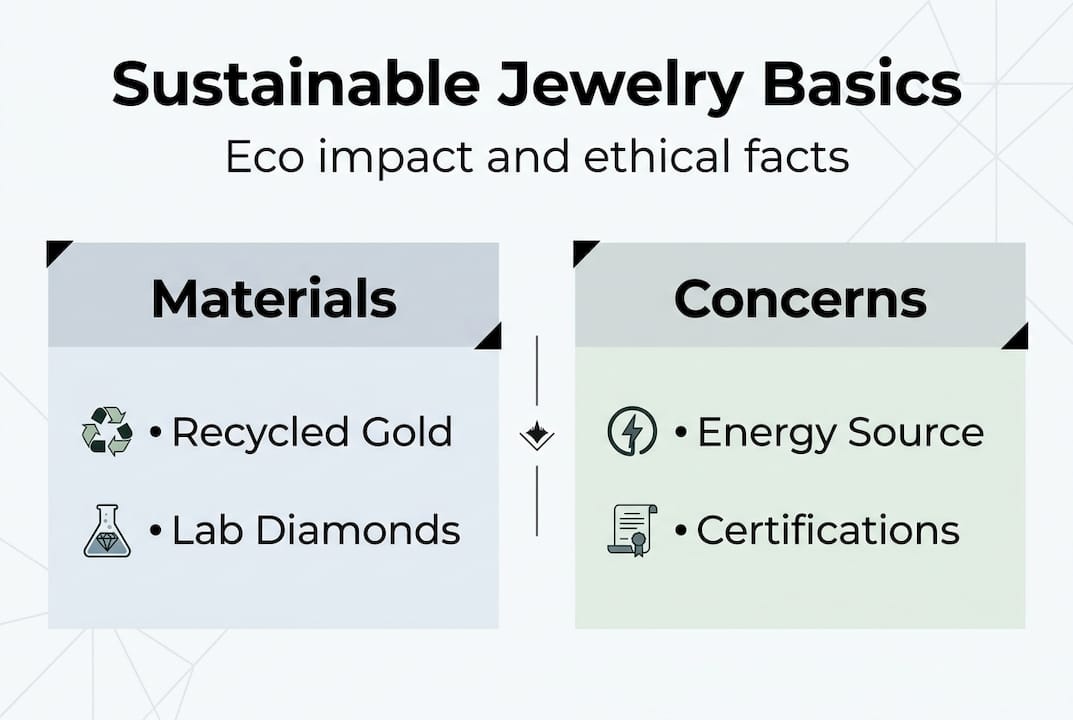
The biggest misconception is that all lab-grown and recycled jewelry is automatically eco-friendly. It is not. Lab-grown diamonds can carry up to 600 kg of CO2 per carat when produced using fossil fuel energy. Recycled gold can be used to launder illicit metals, obscuring the true origin of the material. The label alone proves nothing.
Here is a practical comparison to guide your thinking:
| Option | Pros | Cons |
|---|---|---|
| Lab-grown diamond | Lower environmental impact, conflict-free, lower cost | Resale value lower than mined; energy source matters |
| Mined diamond | Established resale market, perceived rarity | High environmental cost, ethical risk in supply chain |
| Recycled gold | 99% lower carbon footprint, existing material | Source verification needed; laundering risk if unverified |
| New mined gold | Widely available | High environmental and ethical cost |
Steps to avoid being misled:
- Request third-party certification documentation, not just verbal claims.
- Ask specifically which certifying body issued the certification and verify it independently.
- Confirm the energy source used in lab-grown diamond production.
- Check whether recycled metals are sourced from verified refiners with documented chain of custody.
- Compare the jeweler’s sourcing story against their pricing. Genuinely ethical production has real costs.
On resale value: lab-grown diamonds do carry lower secondhand prices than mined stones currently. But for buyers whose priority is wearing something beautiful and ethically sound, the comparison to lab-grown vs natural diamonds is less about resale and more about what the piece represents.
Pro Tip: Search for the jeweler’s certifications directly on the certifying body’s website. IGI and GIA both have public verification tools that confirm whether a certificate is genuine.
Aligning values and luxury: How to choose and where to start
With a clear picture of the landscape, choosing sustainable jewelry becomes a structured process rather than a leap of faith.
The two core technologies behind lab-grown diamonds are HPHT (High Pressure High Temperature) and CVD (Chemical Vapor Deposition). Both HPHT and CVD processes enable custom, made-to-order designs with minimal material waste, which is a significant advantage over mass-produced mined alternatives.
Here is a practical framework for vetting any jeweler:
- Verify certifications first. Ask for IGI or GIA grading reports for stones and RJC or Fairmined certification for metals.
- Ask about energy sources. Specifically request information on the power supply used in lab-grown diamond production.
- Request supply chain documentation. A transparent jeweler can name their suppliers and show the chain of custody for materials.
- Explore customization options. Made-to-order design reduces inventory waste and gives you full traceability.
- Evaluate the design process. A jeweler who walks you through material choices is demonstrating the transparency that ethical luxury requires.
When meeting with a jeweler, request the following:
- Grading certificates for all stones
- Metal sourcing documentation or refiner credentials
- Energy source information for lab-grown stones
- A clear explanation of the custom design process and timeline
- References or examples of past ethical sourcing practices
Our sustainable jewelry shopping tips and ethical luxury jewelry examples offer concrete starting points for buyers ready to move from research to purchase.
Our perspective: The future of luxury is ethical, personal, and transparent
Here is what we believe most luxury jewelry conversations still miss: the old definition of luxury was built on scarcity and opacity. Rare materials, exclusive access, and a supply chain no one questioned. That model worked when buyers had no alternative and no information.
Both of those conditions have changed. The affluent buyer in 2026 has access to lab-grown diamonds that are physically and chemically identical to mined stones, produced with a fraction of the environmental cost, and fully traceable from creation to setting. Choosing a mined diamond under these conditions is not a statement of quality. It is a statement of indifference.
We think rethinking luxury in jewelry means treating ethical transparency the same way you treat diamond clarity: as a non-negotiable quality standard. A piece that cannot be traced is not a luxury item. It is an unknown. True luxury in 2026 is personal, intentional, and honest about where it comes from. That is the standard we hold ourselves to, and the one we encourage every serious buyer to demand.
Discover ethical luxury with Eternal Carat
Translating these values into action means choosing jewelers who transparently share your priorities. At Eternal Carat, every piece we offer is built on verified sourcing, certified lab-grown stones, and recycled precious metals where possible.
Whether you are designing a custom engagement ring from scratch or selecting a finished piece, our team provides full documentation on every material used. Our appointment-only location in Parker, Colorado offers a private consultation experience for clients who want to see stones and designs in person. Explore our full range of lab-grown diamond jewelry or start with something like our sustainable gold and diamond earrings to experience the quality firsthand. Ethical luxury is not a compromise. It is an upgrade.
Frequently asked questions
What is the environmental impact of lab-grown diamonds compared to mined diamonds?
Lab-grown diamonds use 85 to 97% less water and produce up to 97% fewer carbon emissions when powered by renewable energy. The gap is significant enough to make the choice straightforward for environmentally conscious buyers.
Are recycled metals in jewelry always more sustainable?
Recycled gold has a dramatically lower carbon footprint than newly mined gold, but buyers should verify the source. Recycled gold can be used to launder illicit metals, so documented chain of custody from a certified refiner is essential.
How can I ensure a jewelry purchase is truly sustainable?
Request third-party certifications such as IGI, GIA, RJC, or Fairmined, and ask specifically about the energy source used in lab-grown production. Transparency in these two areas separates genuine sustainability from marketing language.
Will lab-grown diamonds retain value over time?
Lab-grown diamonds currently carry lower resale values than mined stones, though demand for ethical luxury is growing steadily. For most buyers, the lower resale value is outweighed by the ethical, environmental, and cost advantages the stones offer.


