

Affluent consumers in Denver increasingly seek fine jewelry that reflects their values, yet verifying sustainability claims remains challenging. With rising demand for ethical sourcing and transparency, shoppers need clear guidance to navigate certifications, lab-grown options, and custom design processes. This guide equips you with practical knowledge to confidently select sustainable jewelry that combines luxury with environmental responsibility, whether you’re choosing an engagement ring or commissioning a bespoke piece that honors both craftsmanship and conscience.
Table of Contents
- Understanding Sustainability In Fine Jewelry: What You Need To Know
- Choosing Lab-Grown Diamonds And Gemstones For Eco-Conscious Luxury
- How To Personalize Your Sustainable Jewelry: The Custom Ring Process
- Verifying Authenticity And Sustainability: Certifications And Traceability Tools
- Explore Custom Sustainable Jewelry Options At Eternal Carat
Key takeaways
| Point | Details |
|---|---|
| Verified traceability builds trust | Supply chain transparency through blockchain and certifications ensures ethical sourcing |
| Lab-grown diamonds reduce impact | These stones offer 90% lower environmental footprint with 40-60% cost savings |
| Customization increases satisfaction | Personalized designs deliver higher buyer confidence despite 20-30% premium |
| Certifications add market value | SCS-007 certified diamonds command 8-15% premiums among conscious consumers |
| Expert consultations boost confidence | Professional guidance increases ring buyer confidence by over 50% |
Understanding sustainability in fine jewelry: what you need to know
Sustainable jewelry encompasses ethical sourcing, fair labor practices, and environmental stewardship throughout the entire production chain. This means verifying where materials originate, how workers are treated, and what environmental impact results from extraction to final polish. Traceability and transparency build trust with eco-conscious consumers who demand accountability.
Key certifications provide third-party verification of sustainability claims. Fairmined certifies that gold comes from mines meeting strict environmental and social standards. Fairtrade ensures miners receive fair wages and work in safe conditions. SCS Global Services offers comprehensive sustainability certification covering environmental impact, social responsibility, and product transparency. These stamps of approval help you distinguish genuine commitment from marketing rhetoric.
Modern traceability technologies revolutionize how we verify jewelry origins. Blockchain systems create permanent, tamper-proof records tracking gemstones and metals from source to sale. This digital ledger allows you to confirm your diamond’s journey, verify ethical mining practices, and ensure transparency throughout the supply chain. Some retailers now provide QR codes linking to complete provenance documentation.
When evaluating sustainability claims, investigate these critical factors:
- Gemstone origin and mining or lab creation methods
- Metal sourcing practices and recycled content percentages
- Manufacturing facility certifications and labor conditions
- Packaging materials and shipping carbon offsets
- Company transparency about supply chain partners
Many buyers mistakenly assume all “eco-friendly” jewelry meets the same standards. In reality, sustainability exists on a spectrum. Some brands focus solely on recycled metals while ignoring gemstone ethics. Others emphasize carbon neutrality but overlook labor conditions. Understanding the complete supply chain from mining or lab creation through distribution helps you make informed choices aligned with your values.
Pro Tip: Request detailed sourcing documentation before purchasing. Reputable jewelers readily provide certification copies, origin reports, and supply chain transparency statements. Hesitation to share this information signals potential greenwashing.
The most effective approach combines multiple verification methods. Cross-reference certifications with independent research, ask specific questions about sourcing practices, and prioritize retailers offering complete traceability. This multilayered verification protects against misleading claims while supporting genuinely sustainable businesses. For deeper insights into ethical choices, explore sustainable engagement rings explained.
Choosing lab-grown diamonds and gemstones for eco-conscious luxury
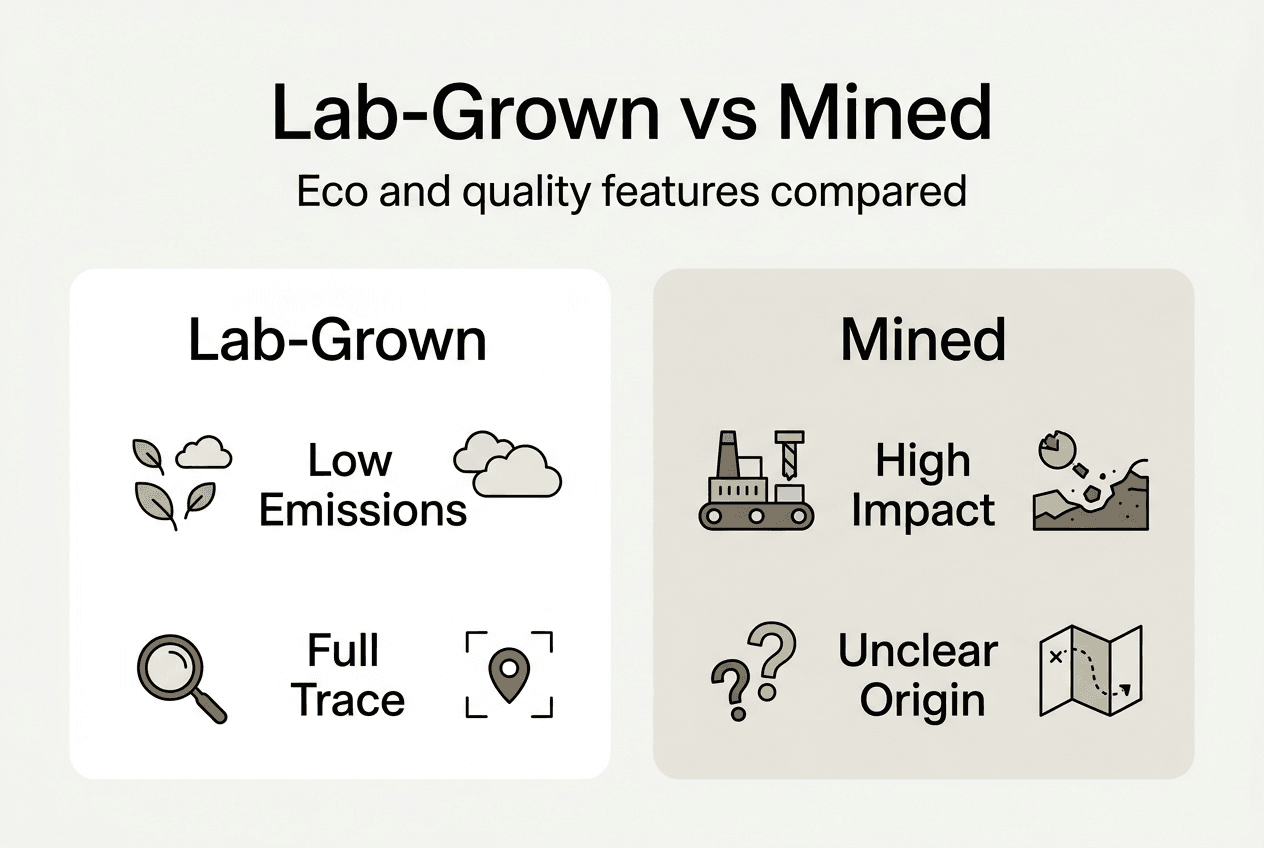
Lab-grown diamonds represent a transformative shift in sustainable luxury jewelry. These stones possess identical physical, chemical, and optical properties to mined diamonds but reduce environmental impact by 90% compared to traditional mining operations. The controlled laboratory environment eliminates land disruption, habitat destruction, and water pollution associated with diamond extraction.

Cost advantages make lab-grown diamonds particularly appealing for affluent buyers seeking value without compromising quality. You’ll typically find 40-60% price savings and approximately 30% carbon footprint reduction compared to equivalent mined stones. This significant difference allows you to invest in larger carat weights, superior cuts, or additional custom design elements while maintaining budget discipline.
| Feature | Lab-Grown Diamonds | Mined Diamonds | | — | — | | Environmental Impact | 90% lower carbon emissions | High land and water disruption | | Cost Comparison | 40-60% less expensive | Premium pricing | | Quality & Appearance | Identical to mined | Identical to lab-grown | | Traceability | Complete supply chain records | Often incomplete documentation | | Ethical Concerns | Minimal labor issues | Potential conflict sourcing |
Market acceptance among conscious consumers continues accelerating. Lab-grown diamonds transform sustainable luxury for modern couples who refuse to compromise between ethics and elegance. Millennials and Gen Z buyers particularly value transparency and environmental responsibility, driving mainstream adoption across all jewelry categories.
When selecting lab-grown stones, consider these factors:
- Certification from reputable labs like IGI or GIA confirming quality
- Growth method, with CVD and HPHT each offering distinct advantages
- Color and clarity grades matching your aesthetic preferences
- Cut quality maximizing brilliance and light performance
- Retailer reputation for ethical practices and customer service
Lab-grown gemstones extend beyond diamonds. Sapphires, emeralds, and rubies created in controlled environments offer the same sustainability benefits. These alternatives provide vibrant color options for custom designs while maintaining ethical sourcing standards. The technology continues advancing, producing increasingly sophisticated stones that rival natural specimens in every measurable characteristic.
Pro Tip: Compare certification reports side by side when evaluating lab-grown options. Focus on cut quality first, as this factor most dramatically impacts visual appeal regardless of color or clarity grades.
The environmental mathematics prove compelling. Traditional diamond mining moves approximately 250 tons of earth per carat produced, consuming vast water resources and generating substantial carbon emissions. Laboratory creation reverses this equation, using precise energy inputs in controlled facilities often powered by renewable sources. This fundamental difference explains why sustainability-focused buyers increasingly choose lab-grown stones.
For comprehensive information about advantages and investment potential, review key benefits of lab grown diamonds and understand why lab-grown diamonds play a crucial sustainability role in modern jewelry markets.
How to personalize your sustainable jewelry: the custom ring process
Custom sustainable jewelry creation combines artistic vision with ethical sourcing, resulting in pieces that reflect both personal style and environmental values. The process requires careful planning but delivers unmatched satisfaction through truly one-of-a-kind designs. Understanding each step helps you navigate customization confidently while maintaining sustainability standards.
- Initial consultation to discuss design vision, budget parameters, and sustainability priorities
- Material selection including ethically sourced metals and certified lab-grown or recycled stones
- Design sketching with CAD renderings showing multiple perspectives and detail views
- Approval and refinement incorporating your feedback and technical adjustments
- Production with regular updates documenting progress and quality checkpoints
- Final inspection, certification documentation, and presentation in sustainable packaging
Budget considerations matter when planning custom work. Custom rings cost 20-30% more than comparable ready-made options but deliver substantially higher buyer satisfaction through personalization. This premium covers design expertise, individualized attention, and the flexibility to specify every detail from metal alloy to stone placement.
Ensuring ethical sourcing during customization requires active engagement. Specify your preference for recycled metals, request documentation confirming lab-grown stone origins, and verify that manufacturing partners maintain fair labor practices. Reputable jewelers welcome these conversations and provide transparent answers backed by certification copies and supply chain records.
“Customization and personalization are highly valued by affluent consumers, driving demand for bespoke sustainable jewelry that reflects individual values and style preferences.”
Expert consultation dramatically improves outcomes. Professional guidance boosts ring buyer confidence by over 50%, helping you navigate technical decisions about stone quality, setting durability, and design feasibility. Experienced jewelers identify potential issues before production begins, saving time and preventing costly revisions.
Common questions during custom projects include:
- Timeline expectations, typically ranging from 6-12 weeks depending on complexity
- Revision policies allowing design adjustments before final production
- Warranty coverage protecting against manufacturing defects
- Resizing options and future maintenance recommendations
- Certification documentation proving stone quality and metal purity
Avoid these frequent pitfalls when commissioning custom sustainable jewelry. Don’t skip the detailed design approval phase, rushing into production without confirming every specification. Never compromise on certification to reduce costs, as documentation proves both quality and ethical sourcing. Resist overly trendy design elements that may feel dated quickly, instead focusing on timeless aesthetics that honor your investment.
Pro Tip: Request a physical wax model or 3D printed prototype before final production. This tangible preview reveals proportions and dimensions that digital renderings cannot fully capture, allowing refinement before committing to precious materials.
The custom engagement ring process transforms abstract ideas into heirloom-quality pieces. By combining your creative vision with expert craftsmanship and verified sustainable materials, customization delivers jewelry that tells your unique story while honoring environmental and social responsibility. Learn more about personalizing wedding rings for sustainable love in 2026.
Verifying authenticity and sustainability: certifications and traceability tools
Authenticity verification protects your investment while confirming sustainability claims meet rigorous standards. Multiple certification systems exist, each addressing different aspects of ethical jewelry production. Understanding these frameworks helps you evaluate claims critically and select pieces backed by credible third-party validation.
SCS-007 certification provides comprehensive sustainability assessment covering environmental impact, social responsibility, and product transparency. SCS-007 certified diamonds command market premiums of 8-15% among environmentally conscious consumers who value verified credentials. This certification examines energy consumption, waste management, labor conditions, and supply chain traceability throughout the entire production lifecycle.
Fairmined certification focuses specifically on artisanal and small-scale mining operations. This standard ensures miners receive fair compensation, work in safe conditions, and implement environmental protection measures. Fairmined gold carries a premium reflecting these ethical commitments, with proceeds supporting mining community development and environmental restoration projects.
Fairtrade certification extends beyond mining to encompass entire supply chains. This framework guarantees minimum prices for miners, prohibits child labor, and requires environmental safeguards. Fairtrade jewelry supports sustainable livelihoods while promoting responsible resource extraction and processing practices.
| Certification | Primary Focus | Market Premium | Verification Scope | | — | — | — | | SCS-007 | Comprehensive sustainability | 8-15% | Full lifecycle assessment | | Fairmined | Artisanal mining ethics | 10-20% | Mining operations and communities | | Fairtrade | Supply chain fairness | 5-12% | End-to-end production chain | | RJC | Industry standards | Baseline | Responsible business practices |
Blockchain technology revolutionizes traceability in jewelry supply chains. This distributed ledger system creates permanent, tamper-proof records documenting each transaction and transfer. You can verify your diamond’s journey from laboratory or mine through cutting, polishing, and retail sale. Some platforms integrate with certification databases, providing instant access to quality reports and sustainability documentation.
Modern consumers demand transparency beyond sparkle and clarity when choosing luxury jewelry. This expectation drives retailers to adopt advanced traceability systems and pursue rigorous certifications. The competitive advantage of verified sustainability grows as younger buyers prioritize environmental and social responsibility alongside traditional quality metrics.
Regulatory trends accelerate certification importance. Mandatory ESG reporting and growing millennial purchasing power suggest sustainability certification addresses emerging market demands that will only intensify. Governments worldwide consider legislation requiring supply chain transparency and environmental impact disclosure, making early adoption of certification systems a strategic advantage.
Before purchasing, verify claims through these practical steps:
- Request copies of all relevant certifications and quality reports
- Cross-reference certificate numbers with issuing organization databases
- Research the jeweler’s reputation through independent reviews and industry associations
- Ask specific questions about sourcing practices and supply chain partners
- Compare sustainability claims against industry benchmarks and standards
Pro Tip: Legitimate certifications include unique identification numbers verifiable through issuing organization websites. Always confirm certificate authenticity independently rather than relying solely on retailer-provided documentation.
The convergence of certification systems and traceability technology creates unprecedented transparency in jewelry markets. By leveraging these tools, you protect against greenwashing while supporting genuinely sustainable businesses. For additional insights into ethical investment and quality assurance, explore why invest in lab diamonds and discover why choose lab grown jewelry for your collection.
Explore custom sustainable jewelry options at Eternal Carat
Eternal Carat specializes in lab-grown diamond jewelry and custom engagement rings that align perfectly with sustainable and ethical values. Our curated collection features ethically sourced materials, verified certifications, and expert craftsmanship designed for discerning buyers who refuse to compromise between luxury and responsibility. Each piece reflects our commitment to transparency, quality, and environmental stewardship.
Our personalized consultation services guide you through every decision, from selecting certified lab-grown stones to designing bespoke settings that capture your unique vision. We provide complete traceability documentation, certification copies, and detailed sourcing information for every component. Whether you’re drawn to our lab-grown marquise diamond floral leaf stud earrings or envisioning a completely custom creation, our Parker location offers a private, secure environment for exploring options that honor both your aesthetic preferences and sustainability commitments.
Frequently asked questions
What is sustainable jewelry and why is it important?
Sustainable jewelry prioritizes ethical sourcing, environmental care, and fair labor throughout production. It matters because traditional mining causes significant ecological damage and often involves exploitative labor practices. By choosing sustainable options, you support responsible businesses while minimizing environmental impact. Certifications and transparency help verify genuine commitment beyond marketing claims.
How do lab-grown diamonds compare to mined diamonds in sustainability?
Lab-grown diamonds reduce environmental impact by up to 90% compared to mined alternatives. They eliminate land disruption, habitat destruction, and water pollution associated with traditional mining operations. These stones offer identical beauty and quality while providing substantial cost savings and complete traceability. The controlled production environment ensures ethical labor conditions and transparent supply chains.
What should I look for when customizing sustainable fine jewelry?
Verify ethical sourcing of all metals and stones used in your custom piece through certification documentation. Consider that personalization typically costs 20-30% more but delivers significantly higher satisfaction through unique design. Use expert consultations to ensure your choices align with sustainability goals while meeting aesthetic preferences. Focus on timeless design elements that reflect your personal values and will remain meaningful for decades.
How can I verify the authenticity and sustainability claims for jewelry?
Look for reputable certifications like SCS-007, Fairmined, and Fairtrade that provide third-party verification. Request complete supply chain traceability information including blockchain records when available. Review seller transparency about materials, labor practices, and environmental impact through detailed documentation. Understand that regulatory trends increasingly demand higher ESG reporting standards, making certification more valuable for future resale and authenticity confirmation.
Recommended
- Ethical engagement ring shopping guide for Denver 2026 – Eternal Carat
- Sustainable jewelry explained: ethical luxury guide 2026 – Eternal Carat
- Design custom pendants with ethical luxury in Denver – Eternal Carat
- Custom jewelry benefits for ethical luxury in 2026 – Eternal Carat
- How to choose candles for eco-friendly wellness in 2026 – mi KALMA


