

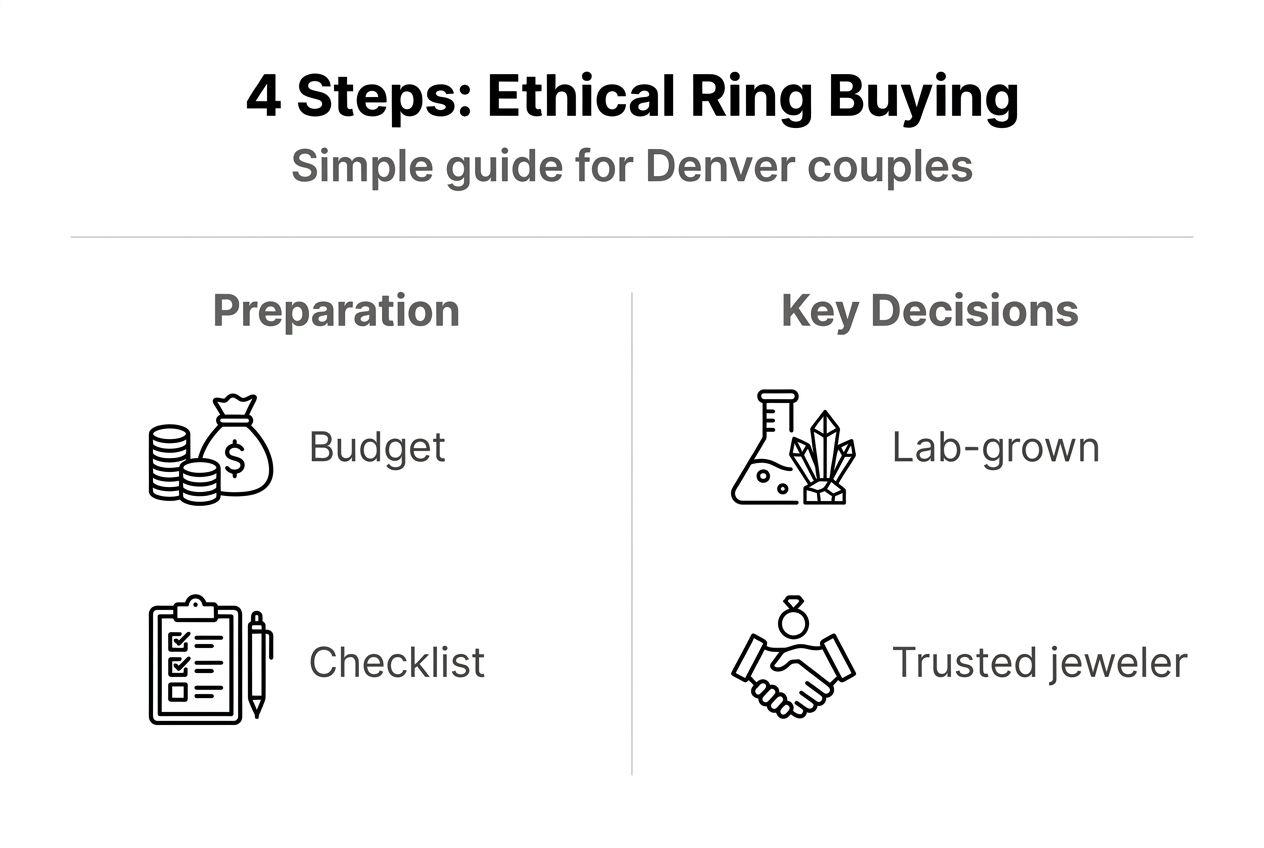
Shopping for an engagement ring is one of life’s most meaningful purchases, yet about 28% of couples regret their decision due to overlooked customization and ethical concerns. Denver couples seeking sustainable luxury face a maze of choices between mined and lab-grown diamonds, custom design timelines, and verification standards. This guide delivers a clear, step-by-step process to navigate ethical ring shopping with confidence, ensuring your investment reflects both your values and your partner’s unique style.
Table of Contents
- Prerequisites: What You Need Before You Start
- Step 1: Define Your Ethical And Style Priorities
- Step 2: Research And Choose Trusted Retailers And Consultations
- Step 3: Custom Design And Personalization Process
- Step 4: Verification And Final Purchase Safeguards
- Common Mistakes And How To Avoid Them
- Timeline And Expected Outcomes
- Experience Ethical Luxury With Eternal Carat
- FAQ
Key takeaways
| Point | Details |
|---|---|
| Ethical impact | Lab-grown diamonds dramatically reduce environmental harm and eliminate conflict labor risks compared to mined stones. |
| Private consultations | Appointment-only Denver jewelers provide personalized service, transparency, and expert guidance for custom designs. |
| Timeline planning | Custom engagement rings require 4-8 weeks from consultation to delivery, so early planning prevents delays. |
| Verification essentials | Always confirm diamond certification from recognized labs and review ethical sourcing documentation before purchase. |
| Common pitfalls | Neglecting ethics verification, underestimating timelines, and skipping trade-in options lead to buyer regret and higher costs. |
Prerequisites: what you need before you start
Before stepping into a jeweler’s showroom or booking a consultation, you need foundational knowledge to make informed decisions. Start by clarifying your ethical priorities. Do you prefer lab-grown diamonds for their sustainability benefits, or are you open to exploring other ethical sourcing options? Understanding your non-negotiables helps filter choices quickly.
Next, establish a realistic budget that accounts for both the diamond and custom design work. Premium ethical materials and personalized craftsmanship carry costs, but planning ahead prevents sticker shock. Research shows lab-grown diamonds typically cost 30-40% less than mined equivalents, giving you more flexibility for customization.
You’ll also benefit from learning basic jewelry terminology. Knowing terms like carat weight, cut quality, clarity grades, and color scales helps you communicate clearly with jewelers and understand their recommendations. This vocabulary prevents misunderstandings and ensures your vision translates accurately into the final design.
Finally, map out your timeline. Custom engagement rings take 4-8 weeks to complete, so if you’re planning a proposal date, work backward to determine when you need to start shopping. Consider these preparation steps:
- Define your ethical values and non-negotiable features
- Set a comprehensive budget including design fees
- Learn diamond grading basics and jewelry terms
- Calculate backward from your proposal date to set shopping deadlines
- Gather inspiration photos showing styles your partner admires
Pro Tip: Create a simple checklist of must-have features versus nice-to-have details before your first consultation to keep discussions focused and productive.
Step 1: define your ethical and style priorities
With preparation complete, you’re ready to articulate exactly what matters most in your ring. The first decision centers on diamond origin. Lab-grown diamonds have significantly lower environmental impact and nearly eliminate conflict and labor exploitation risks inherent in mined stones. They’re chemically identical to mined diamonds, offering the same brilliance and durability at a fraction of the ethical cost.
Compare your options systematically:
| Factor | Lab-Grown Diamonds | Mined Diamonds |
|---|---|---|
| Environmental impact | Minimal carbon footprint | Extensive land disruption and energy use |
| Ethical concerns | Transparent, conflict-free production | Risk of conflict zones and labor issues |
| Cost | 30-40% less expensive | Premium pricing |
| Quality | Identical physical and chemical properties | Identical physical and chemical properties |
| Certification | IGI, GIA, GCAL available | IGI, GIA available |
Beyond ethics, your ring must reflect your partner’s personal style. Observe what jewelry they currently wear. Do they prefer classic solitaires, vintage-inspired halos, or modern geometric designs? Consider their daily lifestyle too. Active professionals might need lower-profile settings that won’t catch on clothing or equipment.
Balance your priorities using this framework:
- List your top three ethical requirements in order of importance
- Identify your partner’s preferred metal type and setting style
- Determine which features are essential versus flexible
- Evaluate how much customization you want versus selecting from existing designs
- Assess trade-offs between cost savings and specific features
Understanding lab-grown versus natural diamonds helps you make confident choices aligned with both values and aesthetics. The sustainability role of lab-grown diamonds extends beyond environmental benefits to include fair labor practices and supply chain transparency.
Pro Tip: Take photos of jewelry your partner wears regularly and bring them to consultations to help jewelers understand style preferences and size requirements accurately.
Step 2: research and choose trusted retailers and consultations
Finding the right jeweler transforms your shopping experience from transactional to collaborative. Focus on Denver retailers offering private, appointment-only consultations rather than walk-in showrooms. This personalized approach gives you dedicated time with experts who can answer questions, explain options, and guide design decisions without pressure or distractions.
Verify credentials before booking. Look for jewelers with established reputations, transparent sourcing policies, and expertise in lab-grown diamonds. Check online reviews, but also ask for references from recent custom design clients. A reputable jeweler should readily provide certification information and explain their ethical sourcing process in detail.
Prioritize specialists in sustainable engagement rings who understand both the technical aspects of diamond quality and the ethical considerations important to conscious buyers. These experts can walk you through the custom engagement ring process step by step, setting realistic expectations for timeline and costs.
During your research phase, prepare these questions:
- What certifications do you provide for lab-grown diamonds?
- Can you document the origin and production methods of your stones?
- What is your typical custom design timeline from consultation to delivery?
- Do you offer trade-in programs for existing jewelry or precious metals?
- What payment security measures and return policies do you maintain?
Demand transparency at every stage. Vague answers about sourcing or reluctance to provide certification details are red flags. Ethical jewelers welcome questions and provide comprehensive documentation because they’re proud of their supply chains.
Review expert engagement ring buying tips to understand current best practices and avoid common retailer pitfalls. The right jeweler partnership makes the difference between a stressful purchase and a joyful creative collaboration.
Pro Tip: Schedule consultations at two or three different jewelers to compare approaches, pricing structures, and communication styles before committing to one for your custom design.
Step 3: custom design and personalization process
Once you’ve selected your trusted jeweler, the creative journey begins. Understanding each phase helps you stay engaged and ensures the final ring exceeds expectations. Typical timelines range from 4 to 8 weeks for custom engagement ring completion, so patience and clear communication are essential.
The custom engagement ring process unfolds in distinct stages:
- Initial consultation: Share your vision, budget, and style preferences while the jeweler provides expert guidance on feasibility and options.
- Design development: Review sketches or CAD renderings showing your ring from multiple angles, providing feedback until the design perfectly matches your vision.
- Stone selection: Choose your specific diamond based on certification, cut quality, and personal priorities with expert input on optimal specifications.
- Manufacturing approval: Sign off on final design details, metal selection, and craftsmanship specifications before production begins.
- Production phase: Skilled artisans create your ring with regular progress updates from your jeweler on timeline and any adjustments.
- Final inspection and delivery: Review the completed ring together, verify it matches approved specifications, and receive all certification documentation.
Technology enhances this process significantly. Many jewelers use CAD software to create photorealistic 3D renderings, letting you visualize the ring before manufacturing starts. This eliminates guesswork and ensures complete satisfaction with proportions, stone placement, and overall aesthetics.
Consider these personalization opportunities:
- Incorporate heirloom stones or metals from family jewelry
- Add custom engraving inside the band with meaningful dates or phrases
- Select unique stone shapes or settings that reflect personality
- Trade in existing precious metals to reduce costs and environmental impact
- Choose ethical metal options like recycled gold or platinum
Stay proactive throughout the process. Respond promptly to jeweler questions, attend scheduled check-ins, and don’t hesitate to ask for clarification on any aspect of design or production. Clear, frequent communication prevents misunderstandings and keeps your project on schedule.

Step 4: verification and final purchase safeguards
As your custom ring nears completion, verification becomes critical to protect your investment and ensure ethical compliance. Every diamond should include certification from a recognized gemological laboratory. The most trusted labs include GIA (Gemological Institute of America), IGI (International Gemological Institute), and GCAL (Gem Certification and Assurance Lab).
Your certification document provides essential information:
- Precise measurements and carat weight
- Cut, color, and clarity grades from trained gemologists
- Confirmation of lab-grown origin with production method details
- Unique identification number matching laser inscription on the diamond
- Laboratory contact information for independent verification
Beyond diamond certification, request documentation proving ethical sourcing. Reputable jewelers provide transparency about where stones were grown, the energy sources used in production, and third-party audits confirming sustainability claims. Vague marketing language without supporting documentation should raise concerns.
Understand the security measures protecting your purchase:
- Secure payment processing with fraud protection and encryption
- Comprehensive insurance coverage during design and after delivery
- Clear return and exchange policies with reasonable timeframes
- Written warranties covering craftsmanship defects
- Detailed invoices itemizing every component and service
Study lab-grown diamond quality guides to understand grading standards and make informed decisions about specifications. When you’re ready to finalize your purchase, review how to buy lab-grown diamonds for comprehensive buying strategies. Understanding why invest in lab diamonds reinforces the long-term value of your ethical choice.
Beware of red flags signaling potential problems. Unverified stones, reluctance to provide documentation, pressure tactics rushing your decision, or significant price discrepancies without clear explanation all warrant caution. Trust your instincts and don’t compromise on verification standards to save time or money.
Common mistakes and how to avoid them
Even informed buyers make preventable errors that compromise satisfaction or create unnecessary stress. Learning from others’ experiences helps you navigate the process smoothly. Research shows about 28% of couples experience regret over their engagement ring purchase due to overlooked customization options and ethical concerns.
Certification negligence tops the list of costly mistakes. Skipping independent verification or accepting vague sourcing claims leads to authenticity disputes and potential financial loss. Always insist on complete documentation from recognized laboratories before finalizing any purchase, regardless of the jeweler’s reputation or your timeline pressure.
Timeline miscalculation creates avoidable stress and disappointment. Custom designs require patience, and rushing the process compromises quality or forces you to settle for less-than-ideal options. Plan backward from your proposal date, adding buffer time for unexpected delays or design revisions.
Ethical shortcuts undermine the entire purpose of choosing lab-grown diamonds. Some buyers prioritize cost savings over genuine ethical sourcing, selecting stones without proper sustainability documentation. This defeats the purpose and may lead to post-purchase regret when you discover the environmental or labor practices behind your ring.
Overlooking trade-in opportunities wastes money and resources:
- Existing jewelry can offset 20-25% of new ring costs
- Recycling precious metals reduces environmental impact
- Heirloom stones add sentimental value when incorporated into new designs
- Metal trade-ins provide immediate budget relief without external financing
Other frequent errors include inadequate communication with jewelers leading to design misunderstandings, failure to photograph or document the original vision causing creative drift, and neglecting to verify jeweler credentials before signing contracts. Common mistakes in major purchases often follow similar patterns across industries: rushing decisions, skipping verification, and inadequate planning.
The difference between a cherished ring and a regretted purchase often comes down to three factors: thorough verification, realistic timeline planning, and unwavering commitment to ethical standards throughout the process.
Protect yourself by maintaining detailed records, asking questions until you fully understand every aspect, and never compromising on the ethical standards that motivated your lab-grown diamond choice in the first place.
Timeline and expected outcomes
Setting realistic expectations for timing and costs ensures satisfaction throughout your ethical engagement ring journey. Understanding typical timelines helps you plan appropriately and avoid unnecessary stress from unrealistic deadlines.
Custom engagement rings generally require 4 to 8 weeks from initial consultation to final delivery. This timeline breaks down into distinct phases: consultation and design approval typically take 1-2 weeks, stone sourcing and verification require another 1-2 weeks, manufacturing consumes 2-3 weeks, and final inspection with delivery takes the remaining time.
Transparency and clear communication significantly increase buyer satisfaction. Couples who maintain regular contact with their jeweler, receive progress updates, and participate actively in design reviews report higher satisfaction rates and fewer regrets about their purchase decisions.
Financial expectations align with your ethical choices:
| Cost Factor | Traditional Mined | Lab-Grown Ethical | Savings |
|---|---|---|---|
| 1-carat diamond | $5,000-$8,000 | $1,500-$3,000 | 60-70% |
| Custom setting | $2,000-$4,000 | $2,000-$4,000 | None |
| Total ring cost | $7,000-$12,000 | $3,500-$7,000 | 50% average |
| With metal trade-in | N/A | $2,800-$5,600 | Additional 20-25% |
Lab-grown diamonds deliver substantial cost advantages, typically reducing expenses by 30-40% compared to equivalent mined stones. This savings creates opportunities for larger stones, more elaborate settings, or simply staying within budget while maximizing quality.
Trading in existing precious metals can offset 20-25% of your new custom engagement ring costs. This option appeals to environmentally conscious buyers who value resource efficiency alongside ethical sourcing. Many Denver jewelers accept gold, silver, platinum, and existing diamond jewelry as trade-in value toward new purchases.
Expect these outcomes from a well-executed ethical ring shopping process: a custom ring perfectly aligned with your partner’s style and your shared values, complete certification documentation providing peace of mind, significant cost savings compared to traditional mined diamond alternatives, and the satisfaction of supporting sustainable luxury that doesn’t compromise on quality or beauty.
Experience ethical luxury with Eternal Carat
Your journey toward the perfect ethical engagement ring deserves a partner who shares your commitment to sustainability, quality, and personalized service. Eternal Carat specializes in lab-grown diamond jewelry and custom engagement rings designed for couples who refuse to compromise between ethics and luxury.
Our appointment-only Parker location provides the private, expert consultation experience Denver couples need for confident decision-making. We guide you through every step of the custom design process, from initial vision to final verification, ensuring your ring reflects both your values and your partner’s unique style. Our transparent sourcing, comprehensive certification, and collaborative design approach eliminate the guesswork and stress from engagement ring shopping.
Trade-in programs welcome your existing jewelry and precious metals, reducing costs while supporting sustainable resource use. Every lab-grown diamond comes with complete certification from recognized gemological laboratories, backed by our commitment to ethical luxury that never sacrifices brilliance or durability. Explore our curated collection and custom design services, including pieces like our 14k yellow gold lab-grown diamond stud earrings, to experience the quality and craftsmanship that define Eternal Carat.
FAQ
What makes lab-grown diamonds ethical compared to mined diamonds?
Lab-grown diamonds eliminate the environmental devastation and human rights concerns associated with mining operations. They require significantly less energy, produce minimal carbon emissions, and guarantee conflict-free origins with complete supply chain transparency. Chemically and physically identical to mined diamonds, they deliver the same beauty and durability while supporting sustainable luxury practices.
How long does the custom engagement ring process usually take in Denver?
Custom engagement ring timelines span 4 to 8 weeks from your first consultation to ring delivery in Denver. This includes design development, stone selection, manufacturing, and quality verification stages. Planning ahead prevents proposal deadline stress and ensures adequate time for design refinements that perfect your vision.
What should I verify before finalizing purchase to ensure authenticity and ethics?
Always confirm your diamond includes certification from GIA, IGI, or GCAL with detailed grading information and unique identification numbers. Request documentation proving lab-grown origin and ethical production methods with third-party sustainability audits. Review payment security measures, return policies, and craftsmanship warranties in writing before signing any agreements. Consult quality guides for lab-grown diamonds and buying strategies for comprehensive verification checklists.
Can existing jewelry or metals be used to offset costs when designing a custom ring?
Absolutely. Many Denver jewelers accept trade-ins of gold, silver, platinum, and diamond jewelry toward new custom designs. Trading in precious metals reduces costs by 20-25% while supporting environmental sustainability through resource recycling. This eco-friendly approach maximizes your budget efficiency and adds sentimental value when incorporating heirloom materials into new designs.
Recommended
- Modern engagement rings: Ethical luxury examples in 2026 – Eternal Carat
- Expert Ring Tips 2026: 50% Boost in Buyer Confidence – Eternal Carat
- Top 7 Custom Engagement Rings 2026 for Luxury Seekers – Eternal Carat
- Custom Engagement Ring Process: Ethical Luxury Redefined – Eternal Carat
- Gift Wrap Etiquette: Sustainable Luxury for 2025 – Nicholas & Rose Limited


