

Every year, over 60 percent of American couples in cities like Denver choose lab-grown diamonds for engagement rings, drawn by the promise of ethical sourcing and uncompromising beauty. With a growing focus on sustainability and personalized luxury, selecting a high-quality stone requires careful attention to grading standards and trusted certification. This guide reveals how modern couples can confidently invest in exquisite lab-grown engagement rings that match their values and unique style.
Table of Contents
- Step 1: Assess Key Diamond Grading Factors
- Step 2: Review Certification and Ethical Origins
- Step 3: Compare Brilliance and Cut Quality
- Step 4: Verify Clarity and Color Standards
- Step 5: Confirm Authenticity and Final Value
Quick Summary
| Key Point | Explanation |
|---|---|
| 1. Understand the Four Cs | Evaluate diamonds based on color, cut, clarity, and carat weight for informed decision-making. |
| 2. Verify Certification Reports | Always request detailed grading reports from recognized institutions like GIA or IGI to confirm quality and authenticity. |
| 3. Compare Brilliance Through Cut Quality | Assess a diamond’s ability to reflect light by examining cut quality, proportions, and symmetry under professional lighting. |
| 4. Evaluate Clarity and Color Grades | Review clarity and color grades; aim for VS1 to SI1 clarity and D to G color for optimal visual appeal and value. |
| 5. Confirm Authenticity and Value | Ensure the diamond’s authenticity through reliable grading reports and consider market factors for accurate valuation before purchase. |
Step 1: Assess Key Diamond Grading Factors
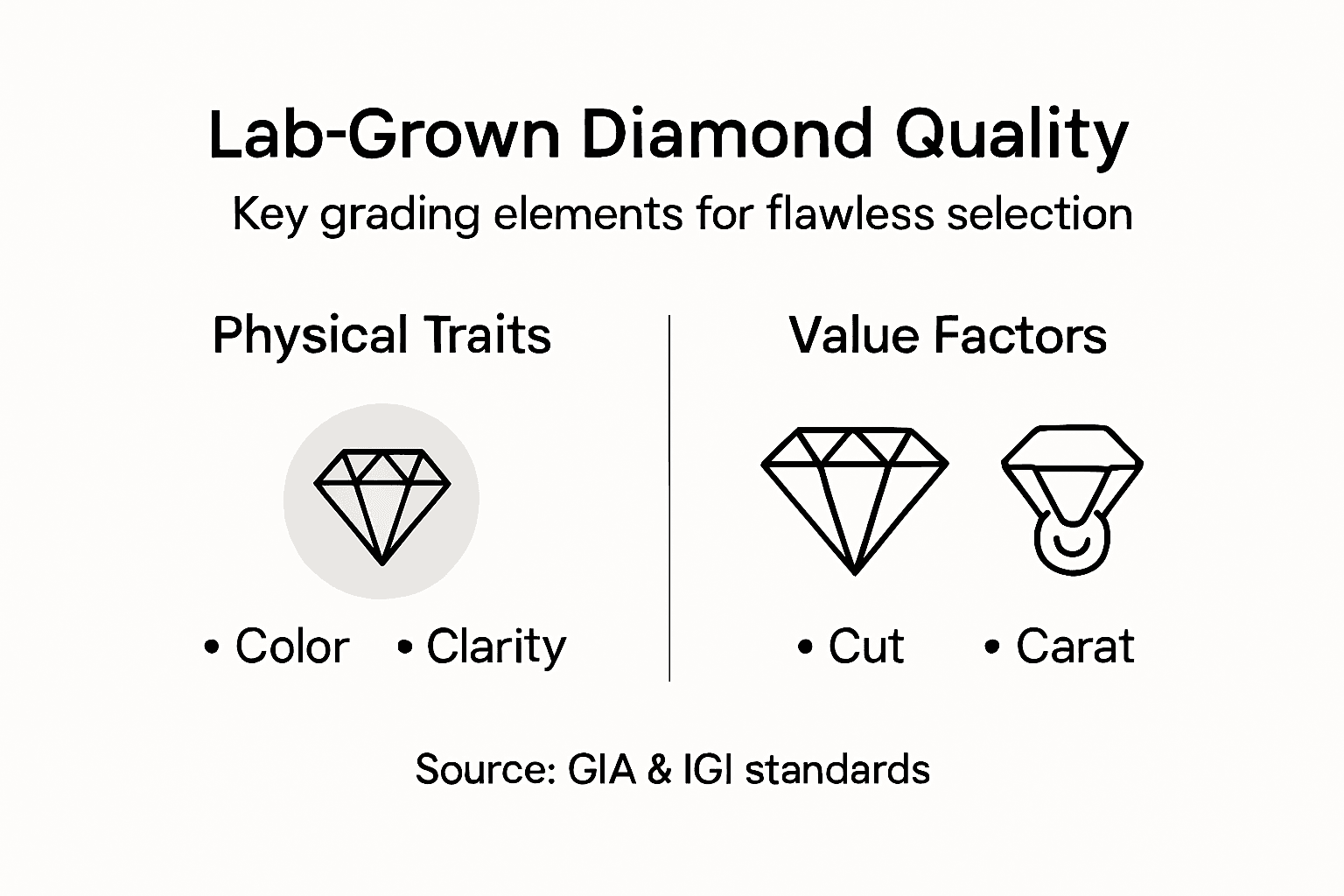
Understanding how to evaluate lab-grown diamonds requires mastering the Four Cs—color, cut, clarity, and carat weight. These universal grading standards help you make an informed purchase by providing an objective assessment of diamond quality.
The Gemological Institute of America grading system allows precise evaluation of lab-grown diamonds using identical standards applied to natural stones. Color grades range from D (colorless) to Z (light yellow or brown), with D being the most valuable. Cut quality determines a diamond’s brilliance by analyzing proportions, symmetry, and polish. Clarity measures internal and external imperfections, ranging from Flawless (no inclusions visible under 10x magnification) to Included (visible imperfections). Carat weight represents the diamond’s size and directly impacts pricing.
When shopping for lab-grown diamonds, request a complete grading report from recognized institutions like GIA or IGI to understand the specific characteristics of your potential purchase. Each diamond has a unique combination of these factors, making individual assessment crucial for finding your perfect stone.
Here’s a quick overview of the Four Cs and how they influence lab-grown diamond quality:
| Grading Factor | What It Measures | Impact on Value |
|---|---|---|
| Color | Presence of color or tint | Higher grades mean more value |
| Cut | Proportions, polish, symmetry | Best cuts maximize brilliance |
| Clarity | Visible internal/external flaws | Fewer flaws increase price |
| Carat Weight | Stone size | Larger carats boost cost significantly |
Expert Tip: Always compare multiple diamond certificates and view stones under professional lighting to accurately assess their true qualities.
Step 2: Review Certification and Ethical Origins
Navigating the world of lab-grown diamonds requires understanding their certification and ethical sourcing. In this step, you will learn how to verify a diamond’s origin and ensure its sustainable production through comprehensive documentation and expert verification.
The International Gemological Institute certification process provides critical insights into a diamond’s authenticity and ethical background. Each lab-grown diamond report includes detailed information about the gem’s production method, origin verification, and specific characteristics. These comprehensive reports help you confirm that your diamond meets high standards of transparency and sustainability. CIBJO ethical guidelines further reinforce consumer confidence by mandating clear disclosure about diamond production methods and preventing deceptive trade practices.
When reviewing certification, focus on reports from recognized institutions like IGI or GIA. These documents should clearly state the diamond’s lab-grown status, specify production methods, and provide a complete analysis of the stone’s physical properties. Authenticity markers, technological origin details, and complete manufacturing transparency are key elements to examine when evaluating your potential purchase.
Pro Tip: Request digital and physical certification copies and verify their authenticity directly with the issuing gemological institution before making your final selection.
Use this table to understand certification focus areas for lab-grown diamonds:
| Certification Aspect | What to Check | Why It Matters |
|---|---|---|
| Origin | Lab creation evidence | Ensures diamond is truly lab-grown |
| Production Method | Reported process type | Reveals quality and transparency |
| Authenticity Markers | Serial numbers, micro-engraving | Verifies stone matches certificate |
| Certification Source | Recognized lab name | Trusted grading increases confidence |
Step 3: Compare Brilliance and Cut Quality
Understanding a lab-grown diamond’s brilliance requires a deep dive into its cut quality and light performance. This step will help you evaluate the diamond’s ability to capture and reflect light, ensuring you select a stone that sparkles with maximum radiance.
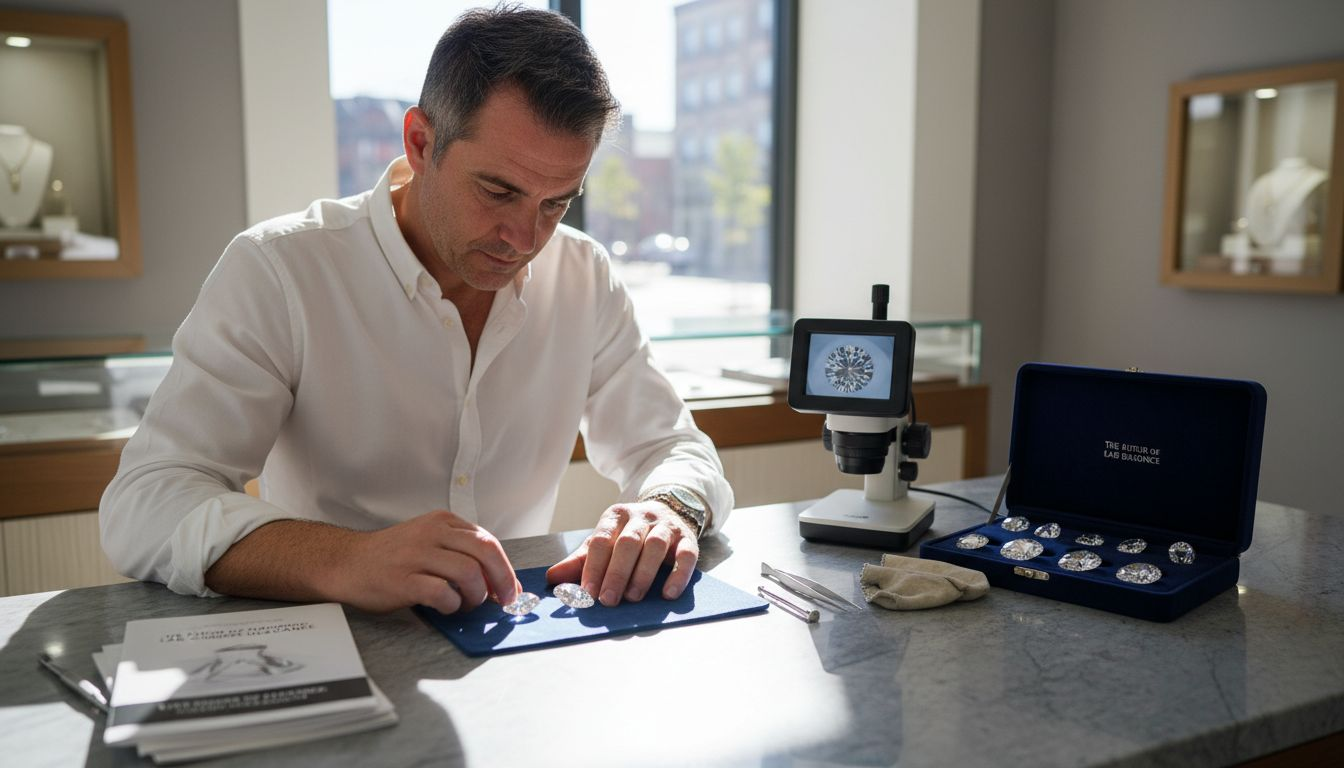
The GIA diamond cut grading criteria provide a comprehensive framework for assessing a diamond’s optical performance. Cut quality encompasses multiple technical elements including crown and pavilion angles, symmetry, and polish that directly impact how light travels through the stone. Professional gemologists analyze these precise measurements to determine a diamond’s ability to reflect and refract light creating that coveted brilliant sparkle. IGI certification standards further validate these assessments by rigorously evaluating light performance across round brilliant diamonds.
When comparing brilliance, focus on three key optical characteristics: brightness (white light reflection), fire (colored light dispersion), and scintillation (sparkle when the diamond moves). Request detailed cut grade reports that break down these elements, paying close attention to proportions and symmetry. Examine diamonds under different lighting conditions and from multiple angles to truly appreciate their light performance and unique optical qualities.
Pro Tip: Always view potential diamonds under professional jeweler lighting and request a 360degree video to fully assess their cut quality and brilliance.
Step 4: Verify Clarity and Color Standards
Evaluating a lab-grown diamond’s quality requires a precise understanding of clarity and color grading systems. This step will help you interpret professional assessments and confidently select a diamond that meets your aesthetic and quality expectations.
IGI diamond grading standards provide a comprehensive framework for assessing clarity and color with remarkable consistency. Clarity grades range from Flawless (no internal or external imperfections visible under 10x magnification) to Included (visible imperfections that impact transparency). Color grades progress from D (completely colorless) to Z (noticeable yellow or brown tints). CIBJO global standards ensure these evaluations remain consistent worldwide, allowing you to compare diamonds across different laboratories and regions.
When reviewing clarity and color, request detailed gemological reports that break down specific characteristics. Pay close attention to the placement and size of inclusions, as well as the overall color distribution. Even minor variations can significantly impact a diamond’s brilliance and value. Look for diamonds with clarity grades between VS1 and SI1, which offer an excellent balance between visual appeal and affordability, and color grades between D and G for the most desirable colorless appearance.
Pro Tip: Request professional lighting examination and magnified images to accurately assess a diamond’s true clarity and color characteristics.
Step 5: Confirm Authenticity and Final Value
The final stage of selecting a lab-grown diamond involves verifying its authenticity and determining its true market value. This crucial step protects your investment and ensures you understand the precise characteristics of your chosen gemstone.
Diamond grading reports from recognized labs provide comprehensive documentation that confirms a diamond’s origin, quality, and specific characteristics. These reports include detailed information about the diamond’s laboratory creation, including precise measurements, inclusion mapping, and objective quality assessments. Advanced gemological testing methods help experts distinguish lab-grown diamonds through sophisticated techniques like fluorescence pattern analysis and internal growth structure observations.
To determine final value, consider multiple factors beyond the basic grading report. Evaluate the diamond’s market positioning, current demand for specific characteristics, and how its unique properties compare to similar stones. Pay attention to the certification source, as reports from globally recognized institutions like GIA or IGI carry more weight. Request a comprehensive valuation that includes a detailed breakdown of the diamond’s qualities, market comparables, and potential long term investment potential.
Pro Tip: Always request a digital copy of the full grading report and have an independent gemologist review the documentation before making your final purchase decision.
Elevate Your Lab-Grown Diamond Experience with Eternal Carat
Choosing the perfect lab-grown diamond demands attention to the Four Cs, certification authenticity, and stellar brilliance — all challenges highlighted in the “Lab-Grown Diamond Quality Guide for Flawless Selection.” At Eternal Carat, we understand your desire for expert guidance in navigating clarity grades, cut quality, certification details, and ethical sourcing. Our personalized services ensure every aspect from diamond origin verification to final value assessment is transparent and tailored to your highest expectations.
Discover how our bespoke custom design options and knowledgeable consultations can bring your vision of flawless luxury to life with ethically sourced stones that meet rigorous standards. We invite you to explore our curated collection online or visit our secure Parker, Colorado location for a private experience grounded in trust, expertise, and sustainability.
Ready to make an informed choice and own a diamond that truly shines in brilliance and value?
Start your journey with Eternal Carat today.
Explore our trusted solutions and expert insights at Eternal Carat and experience the difference of working with a jeweler who prioritizes quality, clarity, and ethical luxury. Secure your appointment or browse our fine jewelry collections to find the perfect lab-grown diamond that matches your unique style and standards.
Frequently Asked Questions
What are the Four Cs in lab-grown diamond evaluation?
The Four Cs are color, cut, clarity, and carat weight. Understanding these factors allows you to assess the quality of lab-grown diamonds and make informed purchasing decisions.
How can I verify the certification of a lab-grown diamond?
You can verify a diamond’s certification by checking for reports from recognized institutions. Ensure the report clearly states the diamond’s lab-grown status and includes details about production methods and authenticity markers.
What should I focus on when evaluating a diamond’s cut quality?
When evaluating cut quality, focus on the diamond’s proportions, symmetry, and polish, as these factors impact its ability to reflect light and create brilliance. Request detailed cut grade reports for better insights.
How do I assess a diamond’s clarity and color grading?
To assess clarity and color grading, request gemological reports that provide detailed characteristics of the diamond. Pay attention to the clarity grade and color scale to understand their visual impact and overall value.
What steps can I take to confirm a lab-grown diamond’s authenticity and value?
To confirm authenticity, obtain a complete grading report that details the diamond’s characteristics and production method. Analyze market comparables and consider its unique qualities before finalizing your purchase decision.


