
Finding a wedding ring that tells your unique love story while honoring your values can feel overwhelming. You want something meaningful, beautiful, and sustainable, not just another mass-produced design. This guide walks you through every step of creating personalized wedding rings featuring lab-grown diamonds, from choosing your stone to verifying quality, so you can wear a symbol that truly reflects both your commitment and your ethics.
Table of Contents
- What You Need To Personalize Your Wedding Rings
- Step-By-Step Guide To Designing Your Personalized Wedding Ring
- Avoiding Common Mistakes And Ensuring Quality In Personalized Wedding Rings
- What To Expect After Personalizing Your Wedding Rings
- Explore Custom Lab-Grown Diamond Rings At Eternal Carat
- Frequently Asked Questions
Key takeaways
| Point | Details |
|---|---|
| Lab-grown diamonds are the sustainable choice | Over 52% of couples opted for a lab-grown stone in recent years, combining ethics with beauty. |
| Personalization starts with clear priorities | Select your diamond shape, setting style, and budget before design to streamline the process. |
| AI design tools accelerate customization | Technology helps create multiple ring concepts simultaneously, reducing revision time and costs. |
| Typical custom budgets range $2,000 to $4,000 | Most clients stick within this range for original pieces balancing quality and affordability. |
| Popular shapes include round, oval, and pear | These timeless cuts offer versatility and brilliance for personalized engagement rings. |
What you need to personalize your wedding rings
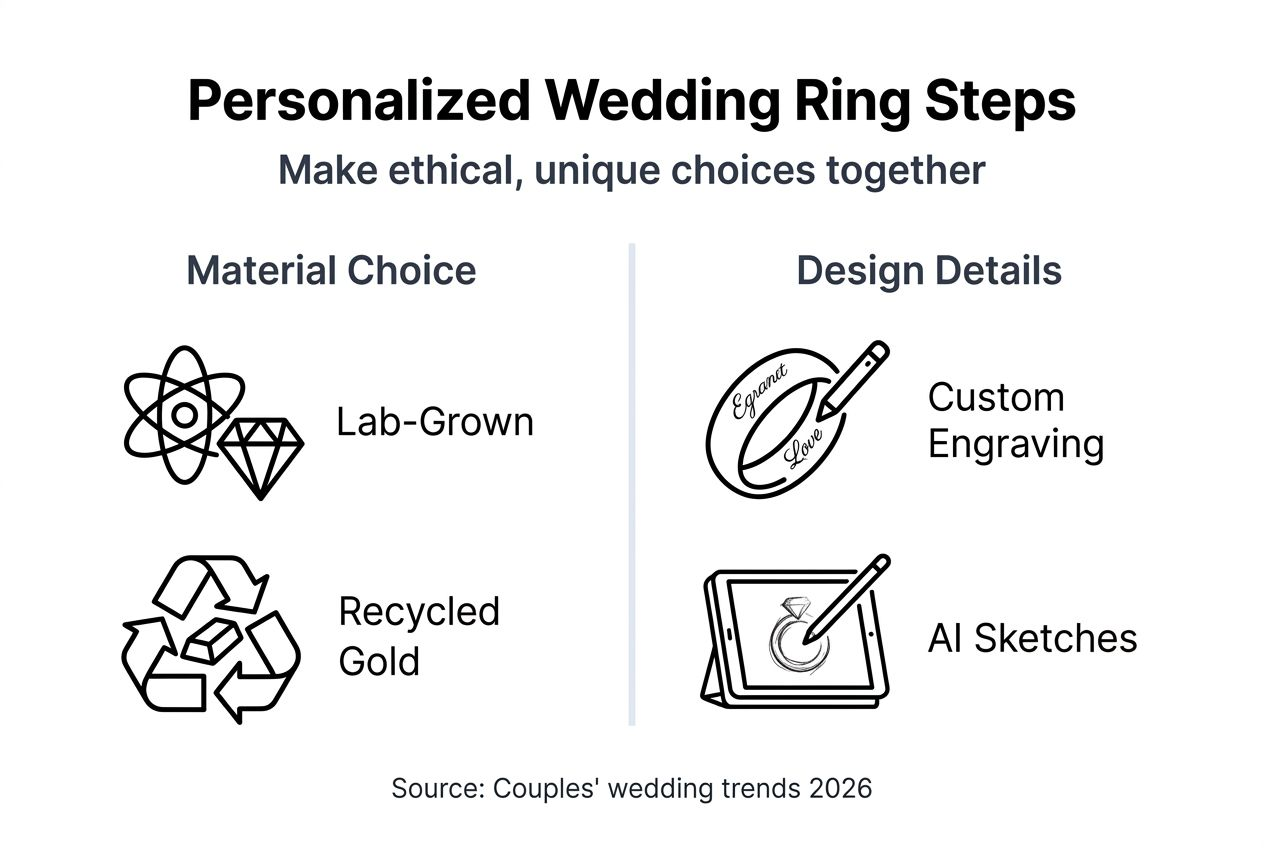
Before you start designing, gather your priorities and preferences to guide the personalization process. The first decision involves choosing between lab-grown and natural diamonds. Lab-grown diamonds offer identical beauty with significantly lower environmental impact, and 52% of couples opted for a lab-grown stone according to recent wedding research. Understanding the lab-grown vs natural diamonds comparison helps you make an informed choice aligned with your values.
Your budget shapes every subsequent decision in the customization journey. Most clients stick within the $2,000 to $4,000 range for an original piece, though prices vary based on carat size, setting complexity, and metal choice. Setting this boundary early prevents scope creep and helps your jeweler recommend realistic options. Read our lab-grown diamond buying tips to maximize value within your budget.
Next, consider which diamond shape resonates with your style. Round cuts remain the most popular choice for their classic brilliance, while oval and pear shapes have gained momentum for their elongating effect and modern appeal. Think about lifestyle factors too: active lifestyles may benefit from lower profile settings that won’t snag on clothing or equipment.
List any sentimental elements you want incorporated into your design:
- Meaningful dates or coordinates for engraving
- Family heirloom stones to reset in a new design
- Symbolic motifs reflecting shared interests or heritage
- Specific metal preferences like rose gold or platinum
- Accent stones or side details that enhance the center diamond
Pro Tip: Lab-grown diamonds are nearly indistinguishable from natural to the naked eye, offering identical hardness, brilliance, and fire at a fraction of the environmental cost. They undergo the same grading standards and come with the same certifications as mined stones.
Step-by-step guide to designing your personalized wedding ring
Follow this structured approach to transform your vision into a wearable reality while staying on budget and timeline.
-
Create a design brief outlining your vision. Write down your style preferences, must-have features, and deal breakers. Include reference images from magazines or social media that capture the aesthetic you’re drawn to, even if you want something different in details. This document becomes your north star throughout the design process.
-
Explore options using AI-assisted design tools. Modern technology has revolutionized custom jewelry creation. AI-assisted workflows can reduce revision churn in jewelry design, leading to cost savings and faster completion. While traditional workflows often generate one design direction at a time, AI-assisted workflows generate multiple directions early, letting you compare styles side by side before committing to extensive hand rendering.
-
Refine your favorite concepts with your jeweler. After AI tools help narrow down directions, work with your jeweler to perfect proportions, adjust stone sizes, and finalize details. This iterative process benefits from clear communication: be specific about what you like and dislike in each revision. Browse custom jewelry design examples to see how other couples translated their visions into finished pieces.
-
Select final elements with precision. Choose your band width, thickness, and comfort fit options. Decide on the exact diamond specifications: shape, carat weight, color grade, and clarity grade that fit your budget. Pick your metal type and finish, whether polished, matte, or mixed textures. Finalize any engraving text, keeping it concise for readability.
-
Approve the final design and technical specifications. Review detailed drawings or 3D renderings showing exact dimensions and stone placements. Confirm the timeline for production, typically 4 to 8 weeks depending on complexity. Request a written quote itemizing all costs to avoid surprises. Check out custom jewelry inspirations for ideas on finishing touches.
The efficiency difference between traditional and AI-assisted design workflows becomes clear when you compare key metrics:
| Metric | Traditional Workflow | AI-Assisted Workflow |
|---|---|---|
| Initial concepts generated | 1 to 2 directions | 5 to 10 directions |
| Time to first review | 7 to 10 days | 1 to 2 days |
| Revision cycles needed | 3 to 5 rounds | 1 to 3 rounds |
| Cost impact | Higher hand-rendering fees | Reduced revision costs |
| Design exploration | Sequential, limited | Parallel, comprehensive |
Pro Tip: Early exploration with AI helps keep budget on track and leads to swifter approvals because you see more possibilities upfront, reducing the chance you’ll request major changes after investing in detailed hand rendering. This front-loaded visualization prevents costly mid-project pivots.
Avoiding common mistakes and ensuring quality in personalized wedding rings
Even with a solid plan, certain pitfalls can derail your custom ring project or lead to disappointing results.
Avoid these frequent errors:
- Skipping diamond certification. Always insist on grading reports from recognized laboratories that verify your stone’s characteristics. Reputable jewelers provide these automatically, but confirm before finalizing your purchase.
- Rushing the design approval process. Take time to review each iteration carefully. Small details like prong placement or band thickness significantly impact daily wearability and long-term satisfaction.
- Ignoring metal quality standards. Verify the purity of your chosen metal, whether 14K, 18K, or platinum. Lower purity may save money initially but can cause durability issues or skin reactions.
- Overlooking setting security. Ensure prongs are substantial enough to hold your stone securely, especially for active lifestyles. Bezel settings offer more protection than traditional prong settings for larger stones.
- Failing to communicate clearly. Vague feedback like “make it more elegant” confuses jewelers. Instead, specify what you want changed: “increase the band width by 1mm” or “reduce the halo size to better proportion with the center stone.”
Verify craftsmanship and diamond authenticity through multiple checkpoints. Review your jeweler’s portfolio and client testimonials to assess their track record. Request to see completed pieces similar to your design vision before committing. Learn about lab-created diamonds advantages to understand quality markers specific to lab-grown stones.
To the naked eye, it’s near impossible to spot the difference between lab-grown and natural diamonds. Only specialized equipment used by gemologists can detect the subtle growth patterns that distinguish them. This means your lab-grown diamond delivers identical visual impact and durability at a fraction of the environmental cost.
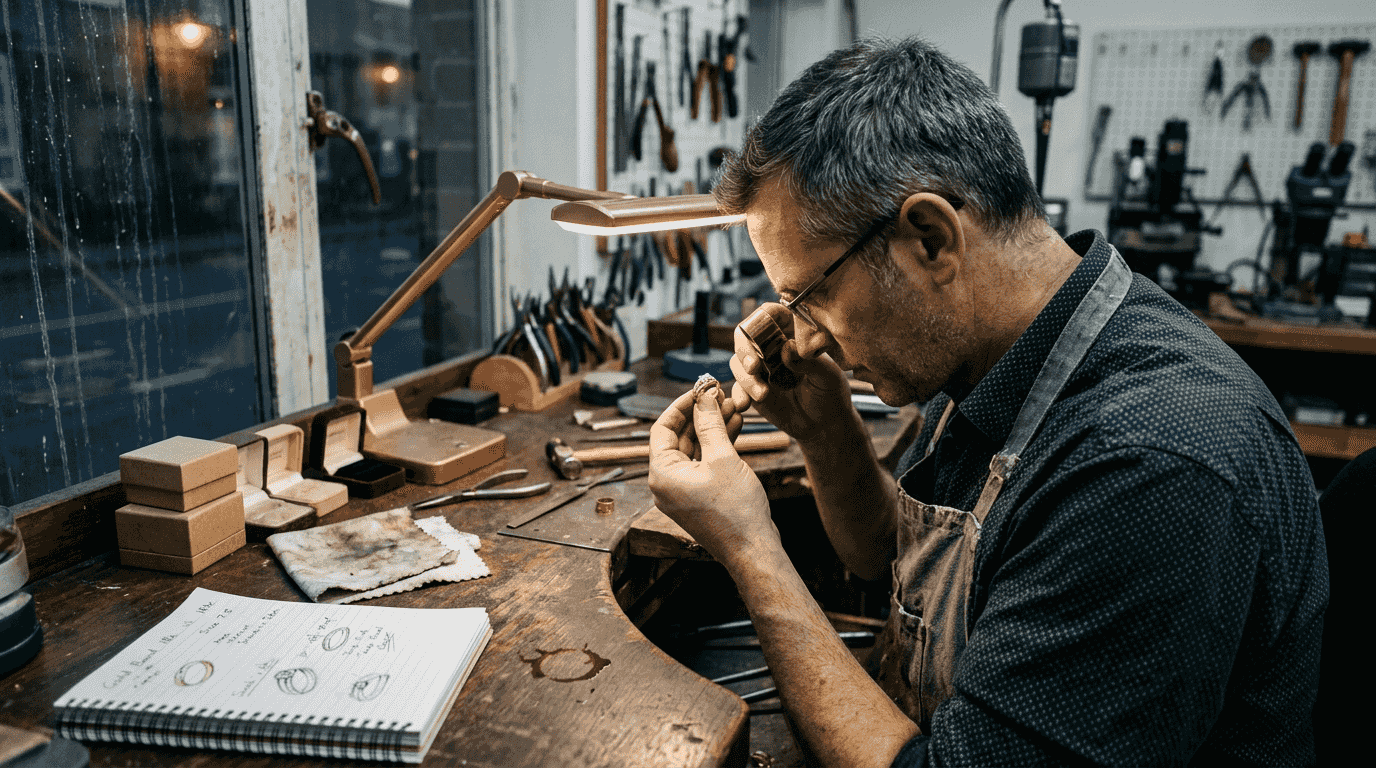
Inspect the finished piece carefully before final acceptance. Check that all stones are secure and properly aligned. Verify engraving is legible and correctly spelled. Examine the finish quality, looking for consistent polish or texture across all surfaces. Test the ring’s fit and comfort, ensuring it slides on easily but stays secure.
What to expect after personalizing your wedding rings
Once you’ve completed the design and production process, your personalized wedding rings will reflect your unique story and values in ways ready-made options never could.
Expect these outcomes from your custom lab-grown diamond rings:
- Delivery timelines between 4 to 8 weeks. Complex designs with intricate details or multiple stones require more production time. Simple solitaires may arrive sooner, while vintage-inspired halos or pavé settings need additional craftsmanship hours.
- Larger stones than typical ready-made options. While most orders are around one to three carats for ready-made rings, customization often leads to larger sizes because lab-grown diamonds offer more carat weight within the same budget as smaller natural stones.
- Timeless shapes with modern appeal. Round stones are the most popular diamond shape, with ovals and pear shapes also gaining popularity for their elegant proportions and versatility across different hand shapes and sizes.
- A ring that tells your specific story. Every element you chose, from the setting style to the engraved message, carries personal meaning that mass-produced designs can’t replicate. This emotional connection deepens your attachment to the piece.
- Significant environmental benefits. By choosing lab-grown diamonds, you’ve reduced the carbon footprint associated with your engagement ring while supporting innovation in sustainable luxury goods.
Your personalized ring becomes a conversation starter that lets you share both your love story and your commitment to ethical consumption. Friends and family will notice the unique details that set your ring apart from conventional designs. Explore the best lab-grown diamond rings 2026 to see how your custom piece compares to current trends and innovations in sustainable jewelry.
The investment in customization pays dividends in long-term satisfaction. You’ll never wonder if someone else is wearing an identical ring, and you’ll appreciate the craftsmanship every time you glance at your hand. The personalization process itself becomes part of your engagement story, adding depth to the symbolism your rings carry throughout your marriage.
Explore custom lab-grown diamond rings at Eternal Carat
Your personalized wedding ring deserves the expertise and ethical commitment that define Eternal Carat’s approach to fine jewelry. We specialize in bespoke engagement and wedding rings featuring sustainable lab-grown diamonds that match your values without compromising on beauty or quality.
Our team guides you through every design decision, from selecting your ideal diamond to finalizing intricate setting details that make your ring truly one of a kind. Whether you start with a concept from our curated collection or build completely from scratch, we ensure your vision translates into a wearable masterpiece crafted with precision and care. Discover our custom lab-grown engagement rings and explore complementary pieces like our 14K yellow gold lab-grown diamond earrings that complete your sustainable jewelry collection.
Frequently asked questions
How can I tell if a diamond is lab-grown or natural?
Lab-grown and natural diamonds look virtually identical without specialized equipment. To the naked eye, it’s near impossible to spot the difference between lab-grown and natural diamonds. Only gemological laboratories with advanced instruments can detect the growth patterns that distinguish them.
What budget should we set for a custom lab-grown wedding ring?
Most personalized lab-grown rings cost between $2,000 and $4,000, balancing quality and customization. Many clients stick within the $2,000 to $4,000 range for an original piece, though your final price depends on carat size, metal choice, and setting complexity. Lab-grown diamonds typically cost 30% to 40% less than natural diamonds of equivalent quality, letting you maximize size or invest in intricate settings.
How does AI improve the custom ring design process?
AI helps create many design options quickly, saving time and keeping your project within budget. AI-assisted workflows generate multiple directions early, reducing revision churn and costs compared to traditional one-at-a-time rendering approaches. You see more possibilities before committing to expensive hand rendering, leading to faster decisions and fewer expensive mid-project changes.
Why choose lab-grown diamonds for wedding rings?
Lab-grown diamonds offer significant carbon footprint reduction and ethical sourcing advantages over mined alternatives. Lab-created diamonds have 85% less carbon footprint compared to natural diamonds, eliminating mining-related environmental damage and ensuring transparent supply chains. You get identical beauty, hardness, and brilliance while supporting sustainable innovation in luxury goods.
Recommended
- 7 Inspiring Examples of Custom Jewelry Designs for Couples – Eternal Carat
- 6 Inspiring Examples of Custom Jewelry for Modern Couples – Eternal Carat
- Modern Engagement Ring Styles: Sustainability Meets Luxury – Eternal Carat
- Modern Engagement Ring Trends: Style Meets Sustainability – Eternal Carat
- Creative anniversary gifts for unforgettable moments 2026 | Amorlune


