

Many shoppers believe carat defines a diamond’s size, but it actually measures weight. A metric carat equals 200 milligrams, meaning two diamonds with identical carat weights can appear completely different depending on their cut and shape. Understanding carat weight empowers you to make smarter, more ethical buying decisions when selecting engagement rings and fine jewelry. This guide explains how carat weight affects diamond value, appearance, and why it matters for Denver buyers seeking sustainable luxury.
Table of Contents
- What Is Carat Weight And Why It Matters
- How Carat Weight Affects Diamond Appearance And Value
- Carat Weight’s Role In Rarity And Ethical Value For Denver Buyers
- Tips For Choosing The Right Carat Weight For Your Engagement Ring
- Explore Ethical Lab-Grown Diamond Rings At Eternal Carat
- Frequently Asked Questions About Carat Weight
Key takeaways
| Point | Details |
|---|---|
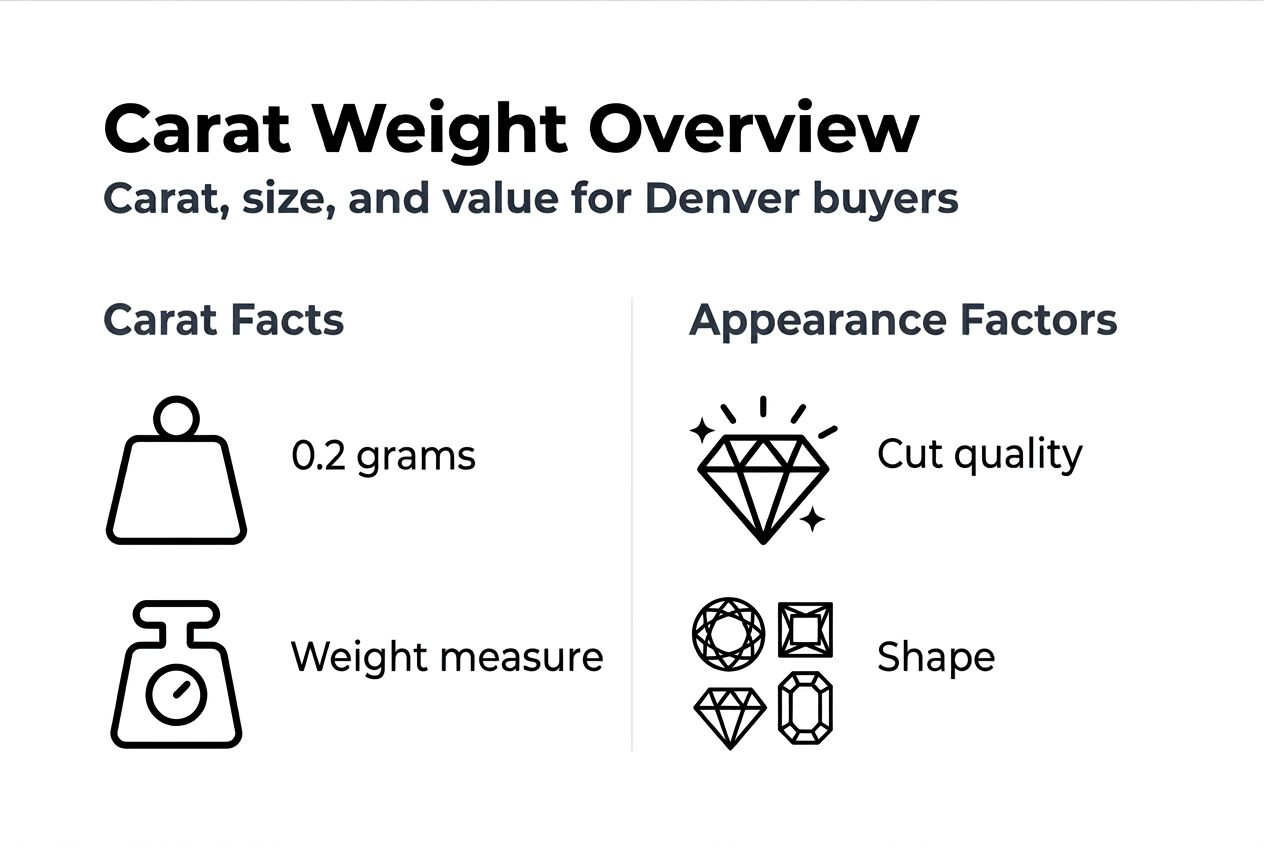
| Carat measures weight, not size | A carat equals 0.2 grams, so diamonds of equal weight can look different based on cut and proportions. |
| Cut quality drives sparkle and brilliance | Superior cut makes diamonds appear larger and more beautiful than carat weight alone. |
| Rarity increases exponentially with weight | Larger carat weights become dramatically rarer and more expensive per carat. |
| Visual size depends on multiple factors | Shape, depth, table size, and setting style all influence how large a diamond appears. |
| Ethical sourcing matters at every carat | Lab-grown diamonds offer identical beauty and quality while supporting sustainable values. |
What is carat weight and why it matters
Carat weight serves as the universal standard for measuring diamond weight, with one metric carat equaling exactly 200 milligrams. This precise measurement provides consistency across global diamond markets, allowing buyers and sellers to communicate value accurately. The metric system ensures that whether you purchase a diamond in Denver, New York, or Mumbai, a one-carat stone always weighs the same.
Many people mistakenly assume carat describes physical dimensions like diameter or surface area. However, carat exclusively measures mass. Two diamonds weighing exactly one carat can display vastly different visual dimensions depending on how they’re cut and shaped. This distinction matters enormously when you’re evaluating diamond carat in lab grown jewelry and comparing options.
Weight matters for valuation because larger rough diamonds occur far less frequently in nature. As carat weight increases, rarity compounds exponentially rather than linearly. A two-carat diamond costs significantly more than double the price of a one-carat stone of equal quality. This pricing structure reflects geological scarcity and the challenge of finding larger gem-quality crystals.
“Carat weight establishes a foundation for understanding diamond value, but it represents just one element in comprehensive quality assessment alongside cut, color, and clarity.”
Understanding this measurement system helps you ask better questions when shopping. You’ll focus on how weight interacts with other quality factors rather than fixating on a single number. This knowledge becomes particularly valuable when exploring ethical alternatives that deliver exceptional value without compromising on beauty or craftsmanship.
How carat weight affects diamond appearance and value
Carat weight doesn’t guarantee visual size because cut proportions and shape dramatically influence how large a diamond appears when viewed from above. A shallow-cut one-carat diamond spreads wider across the top, creating more surface area, while a deeply cut stone of the same weight appears smaller. Cut quality variations create different appearances even at identical carat weights.
A well-proportioned one-carat round brilliant diamond typically measures approximately 6.5 millimeters in diameter. However, elongated shapes like marquise, oval, and pear distribute weight differently, often appearing larger than round diamonds of equal carat weight. This optical effect occurs because elongated cuts maximize surface area visible from the top view.
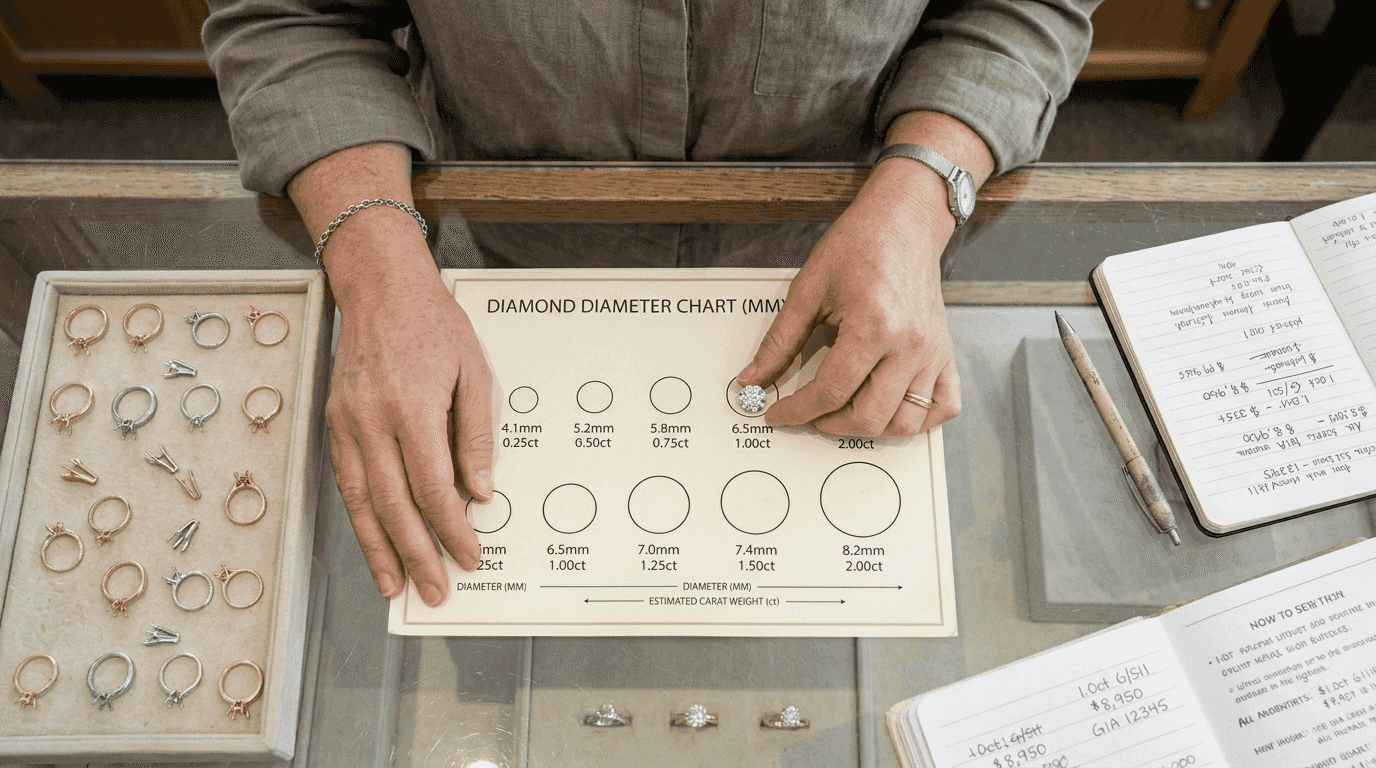
| Shape | 1.00 Carat Dimensions | Visual Spread |
|---|---|---|
| Round Brilliant | 6.5 mm diameter | Standard baseline |
| Princess | 5.5 mm square | Smaller face-up |
| Oval | 7.7 x 5.7 mm | Larger appearance |
| Marquise | 10.0 x 5.0 mm | Maximum spread |
| Emerald | 6.5 x 5.0 mm | Moderate spread |
Several factors shape how diamonds appear beyond simple weight measurements:
- Cut angles: Pavilion and crown angles determine light performance and visual dimensions
- Table size: Larger tables increase face-up appearance but can reduce brilliance
- Pavilion depth: Deeper pavilions hold more weight below the girdle, invisible when mounted
- Girdle thickness: Thicker girdles add weight without contributing to visual size
- Polish and symmetry: Superior finishing maximizes light return and perceived quality
Diamond sparkle, brilliance, fire, and scintillation depend primarily on cut quality, not carat weight. A superbly cut 0.75-carat diamond outshines a poorly cut one-carat stone every time. Light performance creates the visual magic that makes diamonds captivating, and only precise proportions unlock this potential.
Pro Tip: Prioritize excellent or ideal cut grades over slightly higher carat weight. A smaller, perfectly cut diamond delivers more brilliance and appears larger than a bigger stone with mediocre proportions.
Value increases non-linearly as carat weight rises because larger stones become exponentially rarer. Price per carat jumps at certain thresholds, particularly at half-carat intervals like 0.50, 1.00, 1.50, and 2.00 carats. Smart buyers explore weights just below these thresholds to maximize value. Comparing lab-grown diamond rings reveals how this pricing structure creates opportunities for informed shoppers.
Understanding the relationship between weight, appearance, and cut quality transforms how you evaluate diamonds. You’ll recognize that superior cut proportions deliver more beauty per dollar than simply chasing higher carat numbers. This knowledge empowers you to select stones that truly perform.
Carat weight’s role in rarity and ethical value for Denver buyers
Carat weight significantly influences rarity because nature produces far fewer large gem-quality crystals than smaller ones. For every 10,000 one-carat diamonds, nature yields only a handful of three-carat stones meeting comparable quality standards. This scarcity drives exponential price increases as weight climbs, making larger diamonds investment-grade assets.
The legendary Four Cs work together as integrated value drivers rather than independent variables:
- Carat weight: Establishes rarity and foundation price point
- Cut quality: Determines light performance and visual beauty
- Color grade: Affects warmth or iciness of appearance
- Clarity grade: Influences transparency and inclusion visibility
- Certification: Provides independent verification of all quality factors
Ethical sourcing has become essential for Denver’s environmentally conscious luxury buyers. Lab-grown diamonds offer identical physical, chemical, and optical properties to mined stones while eliminating the environmental and social costs of mining. You can select larger carat weights without ethical compromise, as laboratory production scales efficiently to create stunning stones at various sizes.
“Diamond beauty and value emerge from harmony among all characteristics, not isolated focus on weight. The most desirable stones balance carat, cut, color, and clarity to create maximum visual impact and lasting value.”
Colorado buyers increasingly prioritize sustainability alongside luxury, seeking pieces that reflect personal values. Lab-grown options deliver exceptional quality while supporting responsible consumption. This alignment between ethics and aesthetics creates a compelling value proposition for discerning shoppers who refuse to compromise on either dimension.
Understanding lab-grown diamond quality helps you evaluate options confidently. These stones undergo identical grading processes as mined diamonds, receiving certifications from respected gemological laboratories. You can compare carat weights, cut grades, and other factors using the same criteria, making informed decisions based on comprehensive quality assessment.
Rarity considerations shift when exploring lab-grown stones because production doesn’t face geological constraints. This change democratizes access to larger carat weights, allowing more buyers to afford stunning stones that would cost exponentially more if mined. The savings can fund superior cut quality, better settings, or simply provide better overall value.
Tips for choosing the right carat weight for your engagement ring
Selecting the perfect carat weight requires balancing multiple priorities to create maximum value within your budget. Follow these steps to make a confident, informed decision:
- Establish your total budget: Determine how much you can comfortably invest in the complete ring, including both diamond and setting.
- Prioritize cut quality: Allocate budget toward excellent or ideal cut grades before maximizing carat weight.
- Consider near-threshold weights: Explore diamonds slightly below popular weights like 0.90 instead of 1.00 carat for substantial savings.
- Evaluate shape and spread: Choose elongated cuts if you want maximum visual size at a given carat weight.
- Factor in setting style: Select mounting designs that enhance perceived size through smart use of halos, side stones, or thin bands.
- Review ethical sourcing: Confirm your diamond aligns with sustainability values through lab-grown or certified conflict-free options.
Well-cut 0.90-carat diamonds appear nearly identical to one-carat stones while commanding lower prices because they fall just below the psychological threshold. This strategy lets you invest savings into superior color or clarity grades, creating an overall more beautiful stone. The visual difference proves imperceptible to everyone except professional gemologists with calibrated instruments.
Settings dramatically influence how large diamonds appear on the hand. Thin bands make center stones look bigger by creating size contrast. Halo designs surround the main diamond with smaller accent stones, amplifying visual presence. Cathedral mountings elevate stones higher, increasing prominence. Exploring various diamond settings reveals how smart design choices enhance carat weight impact.
Pro Tip: Choosing slightly under one carat, such as 0.90 or 0.95 carats, delivers virtually identical appearance while saving 15-20% compared to full one-carat pricing. This strategy applies at every major threshold.
GIA research confirms that cut quality represents the most complex and influential factor in diamond light performance. A superbly cut smaller diamond outperforms a poorly cut larger stone in every meaningful way. Brilliance, fire, and scintillation create the visual magic that makes diamonds special, and only precise proportions unlock these qualities.
Your finger size also affects ideal carat selection. Smaller hands showcase 0.75 to 1.25-carat diamonds beautifully, while larger hands may prefer 1.50 carats and above for proper proportion. Try on various sizes to understand how different weights look on your specific hand. This hands-on evaluation prevents surprises and ensures complete satisfaction.
Balance remains key when optimizing across multiple factors. A 0.80-carat diamond with excellent cut, G color, and VS1 clarity often delivers more beauty and value than a 1.20-carat stone with good cut, J color, and SI2 clarity. Total visual performance matters more than any single specification. Thoughtful evaluation across all quality dimensions creates the best outcome.
Explore ethical lab-grown diamond rings at Eternal Carat
After understanding how carat weight influences diamond value and appearance, you’re ready to explore stunning options that align with your ethical values. Eternal Carat specializes in lab-grown diamond jewelry and custom engagement rings combining certified quality, sustainable sourcing, and expert craftsmanship. Our collection offers the perfect balance of beauty, value, and environmental responsibility.
Our ethically sourced lab-grown diamonds deliver exceptional benefits:
- Certified quality with comprehensive grading reports from respected gemological laboratories
- Customizable cuts and carat weights tailored to your vision and budget
- Sustainable and eco-friendly production without environmental or social compromise
- Superior value allowing larger, higher-quality stones at accessible price points
- Expert guidance to navigate cut, carat, color, and clarity decisions
Every piece in our collection reflects our commitment to transparency, craftsmanship, and sustainable luxury. Whether you’re designing a custom engagement ring or selecting from our curated pieces like our 14k yellow gold marquise diamond stud earrings, you’ll receive personalized service and certified quality.
Pro Tip: Consult with Eternal Carat’s experts to find the perfect balance of carat weight, cut quality, and ethical value. Our team helps you maximize beauty and significance within your budget while ensuring every purchase supports your values.
Frequently asked questions about carat weight
What does carat weight really mean for diamond size?
Carat measures weight, not physical dimensions, with one carat equaling 0.2 grams. Two diamonds of identical carat weight can appear different sizes based on cut proportions and shape. Understanding this distinction helps you evaluate visual appearance beyond simple weight numbers.
Can two diamonds with the same carat weight look different?
Yes, cut quality and shape dramatically affect appearance at identical carat weights. A shallow-cut diamond spreads wider, appearing larger, while a deep-cut stone looks smaller from above. Shape also matters, with elongated cuts like oval and marquise maximizing face-up size compared to round brilliants.
How does carat weight influence diamond price and rarity?
Larger carat weights increase rarity exponentially, driving price per carat higher at each threshold. A two-carat diamond costs much more than twice the price of a one-carat stone because nature produces far fewer large gem-quality crystals. This scarcity creates the non-linear pricing structure.
Is it better to prioritize carat weight or cut quality?
Cut quality should take priority because it determines brilliance, fire, and overall beauty. A smaller, excellently cut diamond outshines a larger, poorly cut stone every time. Light performance creates the visual magic that makes diamonds captivating, so invest in superior cut proportions first.
How do ethical considerations relate to carat weight in diamond buying?
Lab-grown diamonds provide identical beauty and quality at all carat weights while eliminating environmental and social costs of mining. This option lets you select larger stones without ethical compromise, as laboratory production scales efficiently. Choosing sustainable options aligns your purchase with environmental values without sacrificing luxury or quality.


