

Demand for bespoke jewelry among high-net-worth individuals has increased 30% in five years, signaling a major shift in how affluent consumers approach luxury purchases. Today’s discerning buyers, especially couples in Colorado seeking engagement rings, prioritize pieces that tell their unique stories while aligning with their values around sustainability and fair labor. Custom jewelry offers far more than aesthetic appeal. It delivers personalized symbolism, ethical sourcing transparency, and environmental responsibility that mass-produced alternatives simply cannot match. This comprehensive guide explores why custom, ethically crafted jewelry has become the gold standard for modern luxury consumers who refuse to compromise on quality, meaning, or conscience.
Table of Contents
- Understanding Why Affluent Colorado Consumers Prefer Custom Jewelry
- Differentiating Ethical And Sustainable Practices In Luxury Jewelry
- The Unique Emotional And Symbolic Value Of Custom Engagement Rings
- Combining Ethical Sourcing With Personalization: Practical Benefits And Considerations
- Experience Custom Ethical Luxury With Eternal Carat
- Frequently Asked Questions
Key takeaways
| Point | Details |
|---|---|
| Personalization drives value | Custom jewelry allows affluent consumers to create unique pieces reflecting individual stories, with 70% prioritizing personalization in luxury goods. |
| Ethical sourcing matters | Consumers increasingly demand transparency, with 75% willing to pay premiums for ethically sourced materials ensuring fair labor and safe conditions. |
| Emotional connection increases | Custom engagement rings with personalized elements boost perceived value by up to 40% and strengthen emotional attachment for couples. |
| Sustainable materials available | Lab-grown gemstones and recycled metals provide eco-friendly alternatives that maintain luxury quality while minimizing environmental impact. |
| Expert guidance essential | Working with specialists ensures proper certifications, material selection, and design execution that align with personal values and aesthetic preferences. |
Understanding why affluent Colorado consumers prefer custom jewelry
The luxury jewelry landscape has transformed dramatically over the past decade. Affluent consumers no longer settle for off-the-shelf pieces that thousands of others might own. Instead, they seek jewelry that serves as a tangible expression of their identity, values, and life milestones.
Customization in jewelry benefits extend far beyond simple engraving or stone selection. True bespoke design allows you to participate in every creative decision, from metal type and gemstone cut to intricate design details that carry personal significance. This level of involvement creates pieces that feel authentically yours rather than mass-produced commodities.
Market data confirms this shift in consumer priorities. Research shows 70% of affluent consumers prioritize personalization in luxury goods, viewing customization as a hallmark of true luxury. This preference reflects a broader cultural movement away from conspicuous consumption toward meaningful acquisition.
Several key factors drive this preference for custom jewelry:
- Individual expression through design elements that reflect personal aesthetics and life experiences
- Exclusivity that ensures no one else owns an identical piece
- Quality control over materials, craftsmanship, and ethical sourcing
- Investment value from superior materials and timeless, personalized design
- Storytelling potential that transforms jewelry into wearable narratives
Custom design jewelry meaning options range from incorporating birthstones representing family members to designing patterns inspired by shared memories or cultural heritage. Colorado’s affluent consumers particularly value this ability to merge Rocky Mountain aesthetics with personal symbolism, creating pieces that honor both place and person.
Differentiating ethical and sustainable practices in luxury jewelry
Many consumers use “ethical” and “sustainable” interchangeably when discussing jewelry, but these terms have distinct meanings in the jewelry industry. Understanding the difference helps you make informed purchasing decisions aligned with your specific values.
Ethical jewelry focuses primarily on human welfare throughout the supply chain. This encompasses fair wages, safe working conditions, no child labor, and respect for indigenous rights in mining communities. When you choose ethically sourced pieces, you support supply chains that treat workers with dignity and compensate them fairly for their labor.
Sustainable jewelry emphasizes environmental stewardship. This includes minimizing water usage, reducing carbon emissions, preventing habitat destruction, and utilizing recycled or lab-created materials. Sustainable practices ensure that your beautiful piece doesn’t come at the cost of irreversible ecological damage.
The most responsible luxury brands integrate both approaches:
- Sourcing materials from certified mines with verified labor practices
- Using recycled precious metals to reduce new mining demand
- Offering lab-grown gemstones that eliminate mining entirely
- Maintaining transparent supply chains with third-party audits
- Supporting community development in traditional mining regions
Consumer demand for these practices has skyrocketed. Data reveals 75% of luxury consumers willing to pay more for ethically sourced materials, demonstrating that modern affluence includes social and environmental consciousness. This willingness to invest in responsible luxury has pushed previously opaque supply chains toward unprecedented transparency.
“True luxury in 2026 means knowing your jewelry’s complete story, from mine or lab to your hand, with confidence that every step honored both people and planet.”
Sustainable jewelry ethical luxury guide 2026 provides deeper exploration of how leading jewelers verify their ethical and environmental claims. Look for certifications from organizations like Fairtrade Gold, Responsible Jewellery Council, and SCS Global Services when evaluating potential partners for your custom piece.
Ethical sourcing jewelry 2026 guide buyers explains specific questions to ask jewelers about their supply chains, helping you distinguish genuine commitment from marketing language.
The unique emotional and symbolic value of custom engagement rings
Engagement rings carry profound emotional weight as symbols of commitment, partnership, and shared future. Custom design amplifies this significance by transforming a beautiful object into a deeply personal narrative.
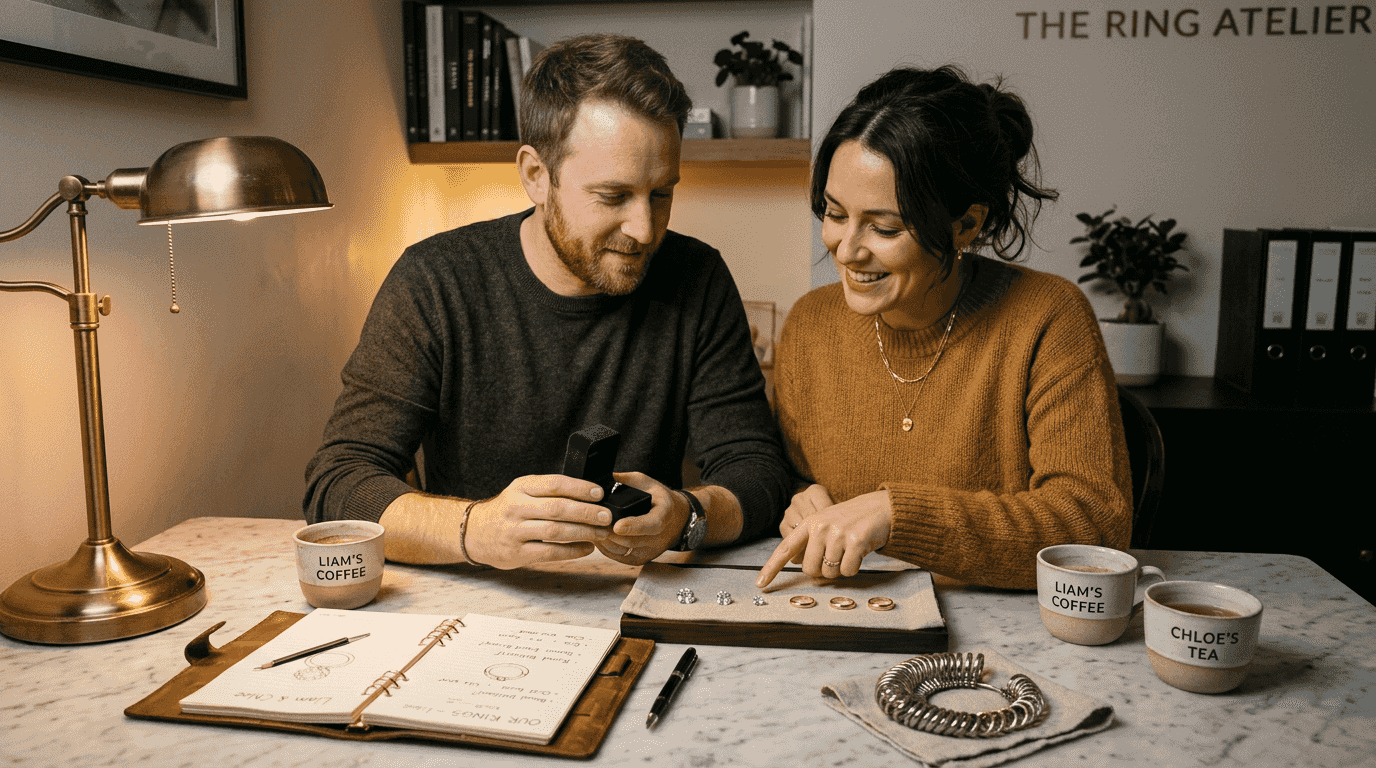
Research confirms this enhanced emotional connection. Studies show 85% of couples with custom engagement rings feel stronger emotional connection to their jewelry compared to those who purchased ready-made options. This attachment stems from the collaborative creative process and the resulting piece’s unique reflection of the relationship.
Custom engagement rings allow couples to encode their love story directly into the design:
- Incorporate gemstones from meaningful locations or family heirlooms
- Design band patterns inspired by significant dates, coordinates, or shared experiences
- Select stone cuts and settings that reflect personal aesthetic preferences rather than trends
- Choose metals and materials aligned with environmental and ethical values
- Create asymmetrical or unconventional designs that celebrate individuality
- Include hidden engravings or design elements with private significance
This personalization dramatically impacts perceived value. Analysis indicates engagement rings with personalized elements increase perceived value by up to 40%, even when controlling for carat weight and material costs. The emotional premium reflects the irreplaceable nature of truly bespoke design.
Pro Tip: Start your custom engagement ring design process at least three months before your planned proposal. This timeline allows for thoughtful collaboration with your jeweler, proper sourcing of ethical materials, and any design refinements without rushed decisions that might compromise your vision.
Why choose custom engagement rings explores additional benefits including perfect sizing, design flexibility, and the romantic gesture of commissioning a one-of-a-kind symbol of your commitment.
Examples of custom engagement rings explained showcases real designs that incorporate personal symbolism, from mountain silhouettes honoring Colorado heritage to constellation patterns marking the night couples met.
Combining ethical sourcing with personalization: practical benefits and considerations
Custom jewelry’s greatest advantage lies in complete control over both design and materials. Unlike mass-produced pieces where you accept predetermined sourcing, custom creation lets you specify exactly which ethical and sustainable materials form your jewelry.
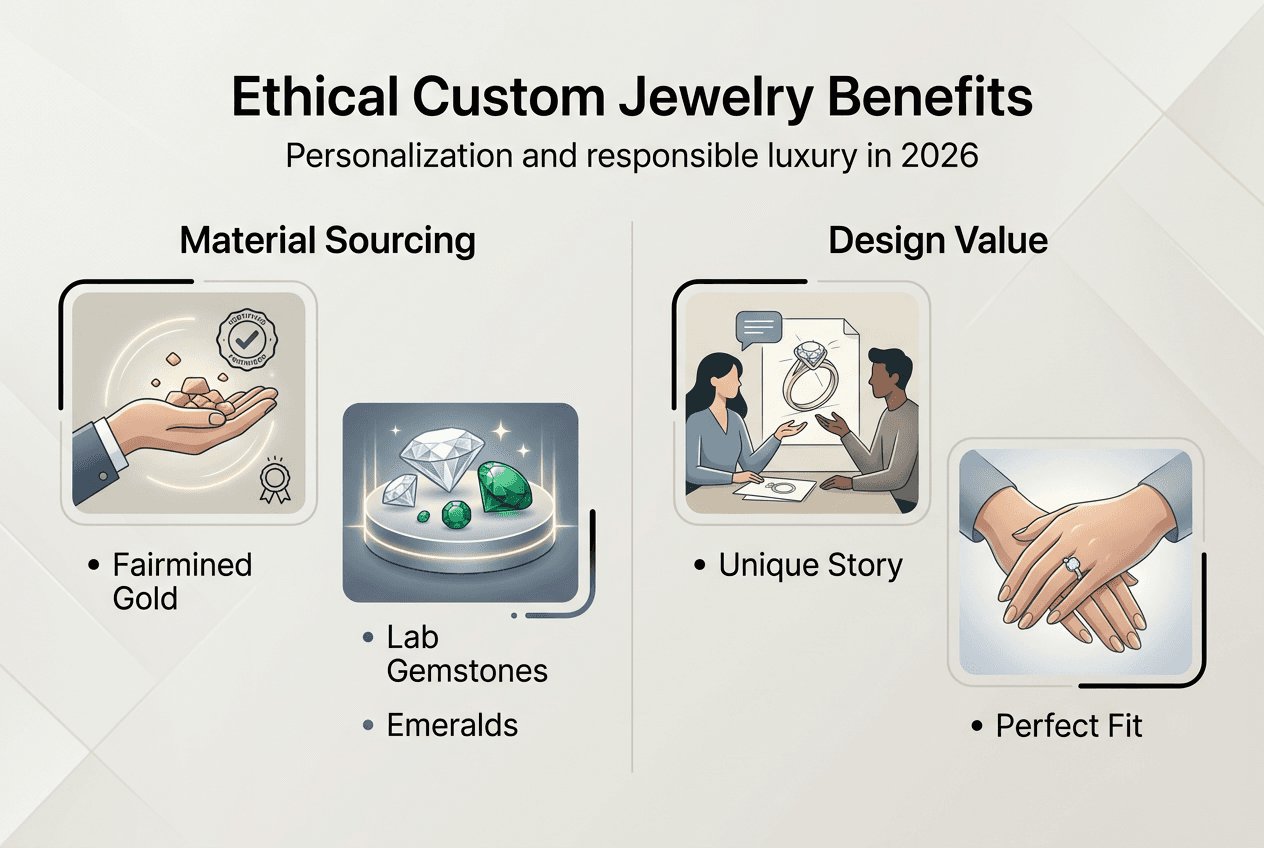
Fairtrade and Fairmined certifications assure ethical sourcing without child labor or unsafe conditions, providing third-party verification of responsible practices. When commissioning custom pieces, you can require these certifications, ensuring your jewelry aligns with your values from mine to finger.
Material selection significantly impacts both environmental footprint and ethical implications:
| Material Type | Environmental Impact | Ethical Considerations | Customization Flexibility | | — | — | — | | Recycled Gold | 99% less energy than new mining | Eliminates new mining labor concerns | Full design freedom, identical to new gold | | Lab-Grown Diamonds | 85% lower carbon footprint | No mining community displacement | Complete cut, clarity, color options | | Fairmined Gold | Reduced habitat destruction | Guaranteed fair wages, safe conditions | Full design freedom with premium cost | | Lab-Grown Gemstones | Minimal water usage | Zero mining-related human rights issues | Wider color range than natural stones | | Recycled Platinum | 95% less energy than new mining | Eliminates new mining labor concerns | Full design freedom, hypoallergenic |
Pro Tip: Lab-grown diamonds and gemstones offer identical physical, chemical, and optical properties to mined stones at 30 to 40% lower cost. This price difference allows you to either save significantly or allocate more budget toward intricate custom metalwork and design complexity.
When working with jewelers on custom ethical pieces, ask these essential questions:
- What certifications verify your metal and gemstone sourcing?
- Can you provide documentation tracing materials to their origin?
- Do you offer lab-grown alternatives for all gemstone types?
- What percentage of your metals comes from recycled sources?
- How do you verify labor practices in your supply chain?
- Can you accommodate specific ethical requirements I prioritize?
Custom jewelry design process walks through typical timelines, collaboration methods, and decision points when creating bespoke pieces with ethical materials.
Lab grown gemstone comparison guide details quality differences, certification standards, and value propositions for various lab-created stones from diamonds to sapphires and emeralds.
Experience custom ethical luxury with Eternal Carat
If you’re ready to create jewelry that reflects both your aesthetic vision and your values, Eternal Carat specializes in exactly this intersection of custom design and ethical luxury. We focus exclusively on lab-grown diamonds and gemstones, offering the same brilliance and durability as mined stones with transparent, sustainable sourcing.
Our Parker, Colorado location provides private, appointment-only consultations where you can explore design possibilities, examine lab-grown stones, and collaborate with specialists who understand both fine jewelry craftsmanship and ethical sourcing. Whether you’re designing lab-grown diamond jewelry and custom engagement rings or seeking elegant everyday pieces like our lab-grown marquise diamond stud earrings, we guide you through every decision with expertise and transparency. Your custom piece deserves the precision, ethics, and personalized attention that define modern luxury.
Frequently asked questions
What makes custom jewelry more ethical than mass-produced pieces?
Custom jewelry allows you to specify exact sourcing requirements, including Fairtrade or Fairmined certifications that guarantee fair wages and safe working conditions. Mass-produced jewelry often uses opaque supply chains where you cannot verify labor practices. With custom pieces, you work directly with jewelers who can document their materials’ origins and ethical certifications. This transparency ensures your purchase supports responsible practices rather than potentially exploitative systems. Learn more about verification standards in our ethical sourcing jewelry 2026 guide buyers.
How does personalization increase the value of custom engagement rings?
Personalization creates emotional value that far exceeds material worth by encoding your relationship’s unique story into the ring’s design. When your engagement ring incorporates symbols, dates, or design elements specific to your partnership, it becomes irreplaceable rather than interchangeable. This personal significance increases both sentimental attachment and perceived value, with research showing custom rings command 40% higher perceived worth than comparable mass-produced alternatives. The collaborative design process itself becomes part of your engagement story. Explore design possibilities in our guide on why choose custom engagement rings.
What sustainable materials are commonly used in custom jewelry?
Recycled precious metals like gold, platinum, and silver form the foundation of sustainable custom jewelry, requiring 95% less energy than newly mined metals. Lab-grown diamonds and gemstones offer identical beauty and durability to mined stones while eliminating habitat destruction, water pollution, and carbon emissions associated with mining. Some designers also incorporate reclaimed vintage components or ethically harvested materials like responsibly sourced pearls. These sustainable options provide full design flexibility without compromising quality or appearance. Our sustainable jewelry ethical luxury guide 2026 details environmental benefits of each material choice.
How long does the custom jewelry design process typically take?
Most custom jewelry projects require eight to twelve weeks from initial consultation to final delivery, though simpler designs may complete faster and complex pieces might need additional time. This timeline includes design consultation and sketching, CAD rendering and approval, material sourcing with ethical certifications, metalwork and stone setting, quality inspection, and final finishing. Starting early ensures you can make thoughtful decisions without rushing, particularly important when sourcing specific ethical materials or unusual gemstones. Complex designs with intricate metalwork or multiple stones naturally require more craftsmanship time.
Are lab-grown diamonds and gemstones lower quality than mined stones?
Lab-grown diamonds and gemstones are chemically, physically, and optically identical to mined stones, possessing the same hardness, brilliance, and durability. They receive identical grading from gemological institutes using the same cut, clarity, color, and carat standards. The only difference lies in origin, with lab-grown stones created in controlled environments rather than extracted from earth. Many consumers actually prefer lab-grown options because controlled creation allows for fewer inclusions and more consistent quality at accessible price points. This quality equivalence means you can choose based on ethics and value rather than compromising on beauty or longevity.
Recommended
- Custom Jewelry Design Process: Creating Ethical Luxury – Eternal Carat
- Modern Jewelry Design Trends: Ethical Luxury Impact – Eternal Carat
- Sustainable jewelry explained: ethical luxury guide 2026 – Eternal Carat
- Custom Design Jewelry: Personal Luxury and Impact – Eternal Carat
- Ethical gemstone selection guide for engagement rings 2026 – Bel Viaggio Designs, LLC


