

You probably assume the diamond in your engagement ring is conflict-free because it came with a certificate. Most consumers believe modern jewelry automatically meets ethical standards, but the reality is far more complex. Understanding ethical sourcing practices helps you make responsible purchases that align with your values while ensuring genuine luxury. This guide will explain industry standards, reveal hidden challenges, and show you how to identify truly ethical jewelry, including lab-grown options that offer transparency without compromise.
Table of Contents
- What Is Ethical Sourcing In Jewelry And Why It Matters
- Industry Standards Protecting Ethical Sourcing: The Kimberley Process And Beyond
- The Rise Of Lab-Grown Diamonds And Their Role In Ethical Sourcing
- How To Verify And Choose Ethically Sourced Jewelry In 2026
- Explore Ethically Sourced Jewelry With Eternal Carat
Key takeaways
| Point | Details |
|---|---|
| Ethical sourcing protects communities | Responsible practices prevent conflict diamonds and support sustainable development in mining regions. |
| Kimberley Process provides baseline protection | This certification scheme establishes industry standards but has limitations buyers should understand. |
| Lab-grown diamonds offer clear advantages | These stones provide traceable, sustainable alternatives with lower environmental and social impact. |
| Verification requires active investigation | Consumers must request certifications, origin details, and traceability documentation before purchasing. |
| Custom jewelry enables ethical control | Bespoke designs let you specify sourcing requirements and work with transparent jewelers. |
What is ethical sourcing in jewelry and why it matters
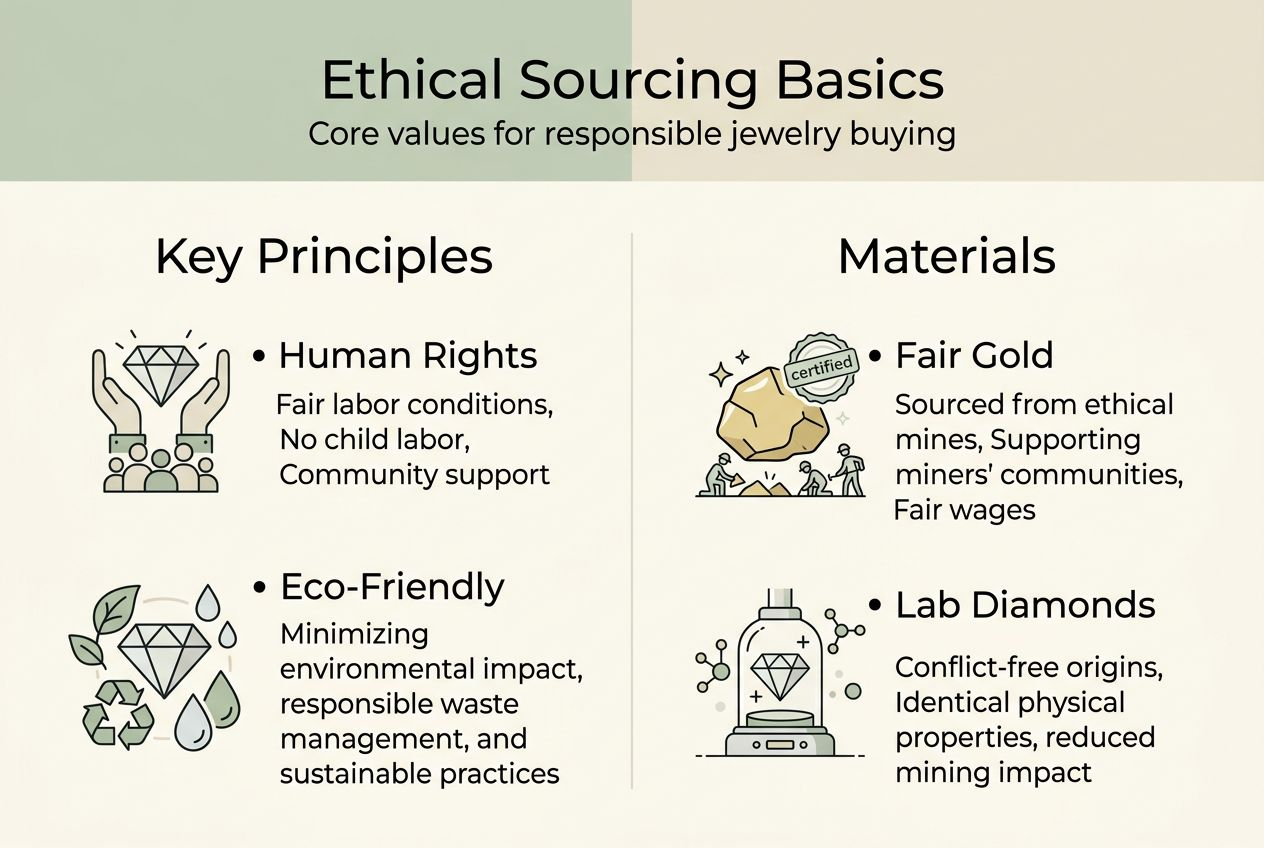
Ethical sourcing means obtaining jewelry materials through practices that respect human rights, protect environments, and support fair labor conditions. It prevents conflict diamonds from funding violence and ensures mining operations don’t exploit workers or devastate ecosystems. For affluent consumers in 2026, ethical sourcing has become essential to maintaining confidence in luxury purchases while aligning spending with personal values.
The importance extends beyond individual conscience. Ethical sourcing significantly influences socioeconomic development in mining communities, creating sustainable livelihoods and improving local infrastructure. When you choose ethically sourced jewelry, you contribute to positive change in regions that have historically suffered from exploitative practices. This impact matters because the jewelry industry touches millions of lives across continents, from artisanal miners to retail customers.
Three fundamental pillars support ethical sourcing practices:
- Environmental sustainability that minimizes habitat destruction and reduces carbon footprints
- Social responsibility ensuring fair wages, safe conditions, and community investment
- Transparency allowing complete traceability from mine or lab to final sale
These principles apply to all jewelry materials, not just diamonds. Gold mining causes significant environmental damage through mercury use and deforestation. Colored gemstones often come from regions with weak labor protections. A comprehensive approach to ethical luxury in 2026 requires scrutinizing every component of your jewelry, from the primary stone to the metal setting. The good news is that responsible options exist across all categories when you know what to look for and which questions to ask.
Industry standards protecting ethical sourcing: The Kimberley Process and beyond
The Kimberley Process Certification Scheme represents the jewelry industry’s primary defense against conflict diamonds. Established in 2003, this international agreement requires participating governments to certify that diamond shipments don’t fund armed conflict. The system works through strict documentation requirements where every diamond export must have a government-issued certificate confirming its conflict-free status. Importing countries verify these certificates before allowing diamonds to enter their markets.
Digital tracking systems have strengthened KPCS effectiveness in recent years. Blockchain technology now enables some suppliers to create immutable records tracking diamonds from mine to retail. Each transaction gets recorded in a distributed ledger that buyers can verify, adding transparency layers that paper certificates alone cannot provide. This technological evolution helps close gaps that previously allowed questionable stones to enter legitimate supply chains.
However, the Kimberley Process has meaningful limitations you should understand:
- It defines conflict diamonds narrowly, excluding human rights abuses and environmental damage
- Enforcement varies significantly between participating countries
- Certificates verify country of origin but not specific mine conditions
- The system doesn’t cover colored gemstones or precious metals
Complementary standards have emerged to address these gaps. The Responsible Jewellery Council certifies companies across the supply chain for broader ethical practices. Fairtrade Gold certification ensures miners receive fair prices and work in safe conditions. For sustainable engagement rings, look for jewelers who combine multiple certifications rather than relying on KPCS alone.
| Certification | Coverage | Limitations |
|---|---|---|
| Kimberley Process | Conflict diamond prevention | Narrow definition, enforcement gaps |
| Responsible Jewellery Council | Supply chain ethics | Voluntary membership |
| Fairtrade Gold | Mining conditions and wages | Limited producer participation |
| SCS-007 | Sustainability standards | New standard with limited adoption |
Pro Tip: Always request specific certification numbers and traceability documentation when purchasing fine jewelry. Legitimate ethical suppliers provide this information readily, while vague claims about responsible sourcing often indicate insufficient verification.
The rise of lab-grown diamonds and their role in ethical sourcing
Lab-grown diamonds have transformed ethical sourcing by offering a transparent alternative to mined stones. These diamonds form in controlled laboratory environments using two primary methods: High Pressure High Temperature (HPHT) and Chemical Vapor Deposition (CVD). Both processes replicate natural diamond formation but complete in weeks rather than billions of years. The result is chemically and optically identical to mined diamonds, with the same brilliance, hardness, and fire that make diamonds desirable.

The environmental advantages are substantial. Lab-grown diamond production uses significantly less water than mining operations and doesn’t require destructive open-pit excavation. Energy consumption varies by facility, but many producers now use renewable power sources to minimize carbon footprints. You get the same luxury without the ecological devastation that accompanies traditional diamond extraction.
Ethical benefits extend beyond environmental considerations. Lab-grown diamonds eliminate concerns about funding conflict or supporting exploitative labor practices. The entire supply chain is traceable because production occurs in regulated facilities rather than remote mining regions with limited oversight. This transparency gives you complete confidence in your purchase’s origins.
Consumer perception has shifted dramatically. What some initially dismissed as inferior now commands respect among discerning buyers who value sustainability alongside luxury. The quality is indistinguishable to the naked eye, and even gemologists need specialized equipment to differentiate lab-grown from mined diamonds. Many affluent consumers now prefer lab-grown stones because they represent innovation and responsibility rather than outdated extraction methods.
Lab-grown diamonds prove that luxury and ethics aren’t mutually exclusive. You can have exceptional quality, stunning beauty, and complete peace of mind about your jewelry’s origins.
Pro Tip: Don’t confuse lab-grown diamonds with cubic zirconia or moissanite. Lab-grown diamonds are real diamonds with identical chemical composition to mined stones, while simulants are different materials that merely resemble diamonds.
Popular applications for lab-grown diamonds include engagement rings where the larger stones traditionally carried premium prices. Custom designs benefit particularly from lab-grown options because you can select higher quality grades within your budget. Lab-grown jewelry choices now span every category from everyday studs to statement necklaces, giving you flexibility to build an entire ethical collection. The sustainability role of lab-grown diamonds continues expanding as production methods improve and consumer awareness grows.
How to verify and choose ethically sourced jewelry in 2026
Verifying ethical sourcing requires active investigation rather than passive trust in retailer claims. Start by requesting specific documentation for any jewelry you’re considering. Legitimate suppliers provide certification numbers, origin details, and traceability information without hesitation. If a jeweler responds vaguely or resists sharing documentation, consider that a red flag indicating insufficient verification of their supply chain.
Compare different certification systems to understand what each actually guarantees. The Kimberley Process covers only conflict diamond prevention, not broader ethical concerns. Responsible Jewellery Council certification addresses more comprehensive practices but relies on voluntary compliance. Fairtrade certification focuses specifically on mining community welfare. The most trustworthy jewelers combine multiple certifications to provide layered protection across different ethical dimensions.
| Verification Method | What It Confirms | Reliability Level |
|---|---|---|
| Certification numbers | Compliance with specific standards | High if verified independently |
| Traceability documentation | Complete supply chain transparency | Very high for blockchain systems |
| Supplier audits | Facility and practice verification | High for third-party audits |
| Retailer transparency policies | Company commitment to disclosure | Moderate, depends on specifics |
Custom jewelry offers unique advantages for ensuring ethical sourcing. When you work with a jeweler on a bespoke design, you can specify exact sourcing requirements from the beginning. This approach lets you choose lab-grown diamonds, recycled metals, or certified Fairtrade gold according to your priorities. The custom jewelry design process becomes an opportunity to align every material choice with your values while creating something uniquely personal.
Follow these five steps to confirm ethical sourcing before any fine jewelry purchase:
- Request written documentation of all certifications and origin information for stones and metals
- Verify certification numbers through issuing organizations’ databases or contact information
- Ask specific questions about supply chain traceability and what visibility the jeweler has
- Research the jeweler’s reputation and look for consistent ethical sourcing commitments
- Compare options from multiple suppliers to identify which provides the most comprehensive verification
Pro Tip: Request origin details for both stones and metals, not just the primary diamond. Many jewelers focus ethical claims on the center stone while using questionable sources for side stones or precious metals, creating an incomplete ethical profile.
The ethical engagement ring shopping process in Denver and other markets has evolved significantly as consumers demand better verification. Jewelers who prioritize transparency now provide detailed sourcing stories for each piece, explaining where materials originated and what standards governed their extraction or production. This level of disclosure should be your baseline expectation in 2026, not a premium service.
Beware of greenwashing where companies make vague sustainability claims without substantive proof. Phrases like “eco-friendly” or “responsibly sourced” mean nothing without specific certifications and traceability documentation. The jewelry industry has recognized that discerning buyers now investigate claims thoroughly, so legitimate ethical suppliers provide concrete evidence rather than marketing language. Your willingness to ask detailed questions and walk away from insufficient answers drives industry improvement toward genuine ethical practices.
Explore ethically sourced jewelry with Eternal Carat
Eternal Carat specializes in lab-grown diamond jewelry and custom engagement rings that exemplify ethical luxury without compromise. Our curated collection features traceable, sustainable materials crafted into stunning designs that rival any traditional fine jewelry. Every piece combines environmental responsibility with the exceptional quality and brilliance you expect from premier jewelry.
Our bespoke design services let you create one-of-a-kind jewelry tailored to your exact specifications and ethical standards. Work directly with our expert designers to select lab-grown diamonds, recycled precious metals, and other sustainable materials that align with your values. We provide complete transparency about sourcing for every component, giving you confidence that your custom piece reflects both your aesthetic vision and your commitment to responsible luxury. Explore options like our lab-grown marquise diamond floral leaf earrings to see how ethical sourcing delivers exceptional beauty.
FAQ
What certifications prove ethical sourcing in jewelry?
The Kimberley Process Certification Scheme provides baseline conflict diamond prevention, while the Responsible Jewellery Council offers broader supply chain ethics verification. Fairtrade Gold certification specifically addresses mining community welfare and fair labor practices. Look for jewelers who combine multiple certifications rather than relying on a single standard, and always verify certification numbers through issuing organizations. Comprehensive ethical luxury guidance helps you understand which certifications matter most for your priorities.
Are lab-grown diamonds truly more ethical than mined ones?
Lab-grown diamonds eliminate concerns about conflict funding, exploitative labor, and environmental destruction associated with mining operations. Production occurs in regulated facilities with complete traceability, giving you transparent supply chains that mined diamonds rarely provide. Energy use varies by producer, but many now use renewable power to minimize carbon footprints. The combination of environmental benefits, labor protections, and supply chain transparency makes lab-grown jewelry choices substantially more ethical than traditional mined alternatives.
How can I trust custom jewelry makers source ethically?
Ask detailed questions about supply chain visibility and request written documentation of all certifications and origin information. Reputable custom jewelers provide specific answers about where materials come from and what standards govern their sourcing. Review their transparency policies and look for consistent ethical commitments across their business practices, not just marketing claims. Working through the custom jewelry design process with a transparent jeweler lets you specify exact sourcing requirements and verify compliance before production begins.
Does ethical sourcing mean sacrificing jewelry quality or beauty?
Ethical sourcing has no negative impact on quality or aesthetics. Lab-grown diamonds are chemically identical to mined stones with the same brilliance and durability. Recycled precious metals maintain the same purity and workmanship as newly mined materials. Many consumers find that ethical jewelry actually offers better value because you’re not paying premiums associated with traditional mining operations. The best ethical jewelers combine responsible sourcing with exceptional craftsmanship, proving that luxury and ethics enhance rather than contradict each other.
Recommended
- Sustainable jewelry explained: ethical luxury guide 2026 – Eternal Carat
- Ethical engagement ring shopping guide for Denver 2026 – Eternal Carat
- Custom Jewelry Design Process: Creating Ethical Luxury – Eternal Carat
- Modern Jewelry Design Trends: Ethical Luxury Impact – Eternal Carat
- The Surprising Impact of Ethical Sourcing in Jewelry – Malibu Vibes Jewelry


