

TL;DR:
- Lab-grown diamonds offer an 80-97% lower carbon footprint than mined diamonds.
- Eco-friendly jewelry prioritizes recycled metals, certified stones, and transparent supply chains.
- Colorado jewelers provide custom, sustainable wedding rings with in-person consultations.
The diamond industry has a reputation for environmental harm, but that story is being rewritten. Lab-grown diamonds carry an 80-97% lower carbon footprint compared to mined stones, meaning couples no longer have to choose between a stunning ring and a clean conscience. Colorado, with its outdoor culture and sustainability mindset, is one of the best states to find eco-friendly wedding jewelry that’s also deeply personal. This guide walks you through what eco-friendly jewelry actually means, how to compare your options, and where to find local and custom pieces that reflect both your love and your values.
Table of Contents
- What makes wedding jewelry eco-friendly?
- Lab-grown vs. mined diamonds: Environmental and ethical impact
- Choosing custom and local: Colorado’s sustainable jewelers
- Design choices and material innovations for eco-wedding jewelry
- Beyond the basics: What most eco-friendly wedding jewelry guides don’t tell you
- Start your sustainable love story with eco-friendly rings
- Frequently asked questions
Key Takeaways
| Point | Details |
|---|---|
| Lower environmental impact | Lab-grown diamonds and recycled metals dramatically cut emissions, water use, and waste compared to mined alternatives. |
| Custom and local options | Colorado jewelers offer personalized sustainable designs and in-person service for a unique ring experience. |
| Transparency is critical | Always check certifications and energy sources to ensure your jewelry is truly eco-friendly. |
| Innovative materials | Modern eco-friendly rings use techniques like 3D printing, biomaterials, and upcycled metals for one-of-a-kind pieces. |
What makes wedding jewelry eco-friendly?
Eco-friendly wedding jewelry isn’t just about skipping mined diamonds. It’s a broader commitment that touches materials, sourcing, production energy, and even what happens to the piece decades from now. Understanding these layers helps you shop with real confidence rather than just trusting a retailer’s marketing language.
At its core, eco-friendly jewelry means the materials and processes used have a measurably lower environmental and social impact than conventional alternatives. That includes the type of metal (recycled gold versus newly mined gold), the gemstone origin (lab-grown versus mined), the energy powering production facilities, and the transparency of the supply chain from raw material to finished ring.
Certifications matter enormously here. Look for stones graded by the Gemological Institute of America (GIA) or the International Gemological Institute (IGI), which verify quality and origin. For lab-grown diamonds specifically, the SCS-007 standard from SCS Global Services certifies genuine sustainability claims, including carbon footprint disclosures and responsible sourcing. Without these credentials, a retailer’s eco-friendly claims are just words.
“Prioritize disclosures on energy sources, certifications, and life cycle analysis for true sustainability.” Transparency isn’t optional; it’s the foundation of any credible eco-friendly claim.
If you’re just starting to explore your options, reading about sustainable engagement rings explained can help you build a solid vocabulary before visiting a jeweler. Denver couples will also find practical, region-specific guidance in this Denver ethical luxury guide.
Here’s a quick-reference checklist for evaluating any piece of wedding jewelry:
- Recycled metals: Look for recycled gold, platinum, or silver to avoid new mining
- Lab-grown or ethically sourced stones: Certifications confirm the claim
- Renewable energy production: Ask how the lab or workshop is powered
- Full life cycle transparency: From raw material to finished piece, every step should be traceable
- Social accountability: Fair wages, safe working conditions, and community investment in supplier operations
These aren’t just nice-to-haves. They’re the actual criteria that separate genuinely eco-friendly jewelry from greenwashed marketing.
Lab-grown vs. mined diamonds: Environmental and ethical impact
Once you understand the criteria, the numbers behind lab-grown and mined diamonds become very hard to ignore. The environmental gap between the two is significant, and for Colorado couples who care about the mountains, rivers, and ecosystems surrounding them, this comparison is worth understanding clearly.
| Factor | Lab-grown diamond | Mined diamond |
|---|---|---|
| Carbon emissions | Up to 97% lower | High per carat |
| Water use | Significantly less | 126 gallons per carat (avg) |
| Land disturbance | Near zero | Extensive open-pit mining |
| Social risk | Low, controlled settings | Variable, conflict risk exists |
| Certification options | GIA, IGI, SCS-007 | GIA, Kimberley Process |
The lab-grown vs. mined impact data shows lab-grown stones drastically reduce waste and land disruption as well. That said, not all lab-grown diamonds are equal. The energy source powering the growth process matters. A diamond grown in a facility running on coal-fired electricity still carries a carbon burden, even if it’s smaller than mining. Facilities using renewable energy produce the cleanest stones available.
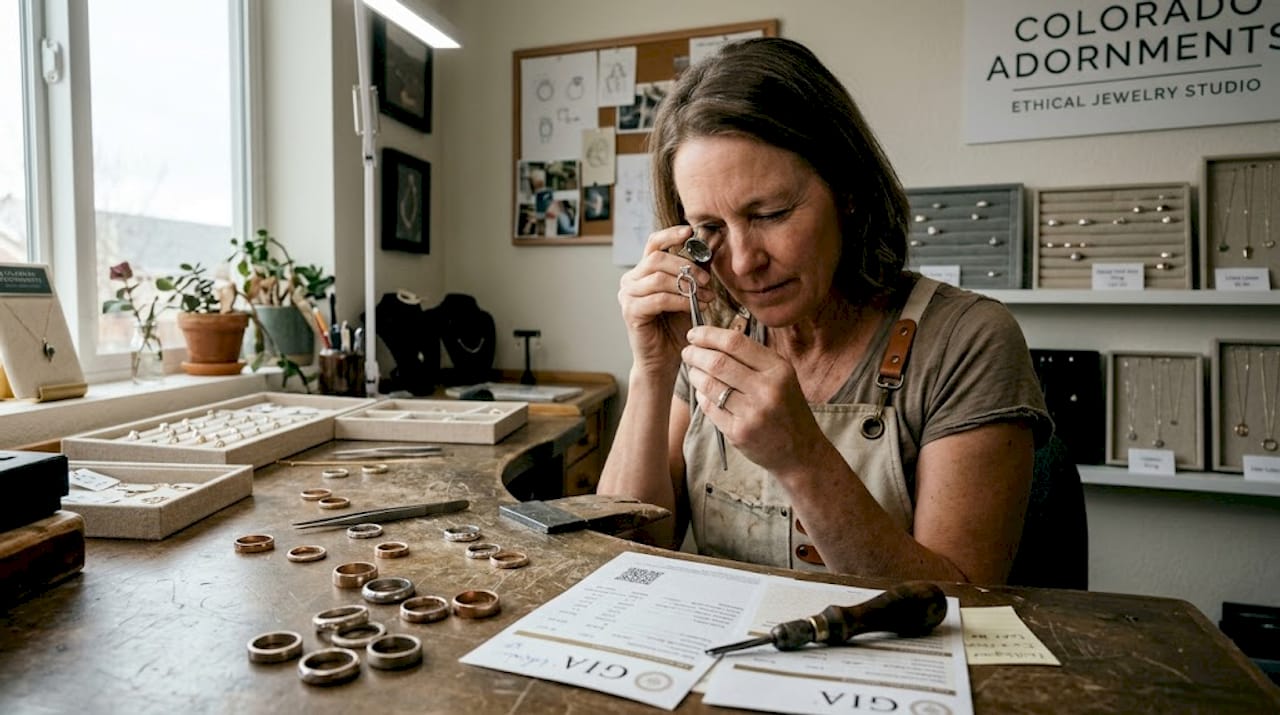
Pro Tip: Ask your retailer directly, “What energy source powers your diamond production?” If they can’t answer, that’s a signal to keep shopping. The best producers are transparent and proud of their energy choices.
For couples weighing this decision carefully, our detailed look at lab-grown vs natural diamonds covers quality, grading, and value side by side. And if you want a deeper explanation of the ethical case, the post on why choose lab-grown diamonds addresses common concerns.
The practical takeaway for Colorado couples is straightforward. A lab-grown diamond gives you the same brilliance, the same hardness, and the same grading standards as a mined stone, with a dramatically smaller environmental footprint. That’s not a compromise. That’s a better deal on every dimension that matters.
Choosing custom and local: Colorado’s sustainable jewelers
Knowing the data is one thing. Finding a jeweler who can actually deliver a custom, sustainable piece in Colorado is the next step. Fortunately, the state has a growing number of retailers worth considering.
| Jeweler | Sustainable offerings | Custom design | Certifications |
|---|---|---|---|
| Bohemi | Lab-grown, recycled metals | Yes | IGI |
| The Diamond Reserve | Lab-grown and ethically sourced | Yes | GIA, IGI |
| Brilliant Earth | Lab-grown, recycled gold, conflict-free | Yes | SCS-007, GIA |
Bohemi, The Diamond Reserve, and Brilliant Earth are among the standout Colorado options for couples seeking personalized, sustainable designs. Each offers in-person consultations, which is a significant advantage when designing a one-of-a-kind piece.
Before walking into any jeweler, prepare your questions. Here’s what to ask:
- Where does your stone come from, and what certifications back that claim?
- Are your metal settings made from recycled gold or platinum?
- Can I see documentation of your supply chain transparency?
- Do you offer in-person design sessions for fully custom rings?
- What happens to scrap metal from my custom piece?
Pro Tip: Bring inspiration photos but stay open to the jeweler’s suggestions on minimalist settings. A simpler setting often means less metal mined, lower cost, and a cleaner aesthetic that ages beautifully.
For more guidance on vetting retailers in the Denver metro area, the ethical diamond shopping in Denver guide and eco-friendly Denver engagement rings resource both offer practical local context. In-person fittings matter, especially for wedding bands where comfort over decades of daily wear is just as important as the visual design.
Design choices and material innovations for eco-wedding jewelry
The design conversation around eco-friendly jewelry has gotten genuinely exciting in recent years. Technology and creativity are combining to give couples options that weren’t possible even five years ago.
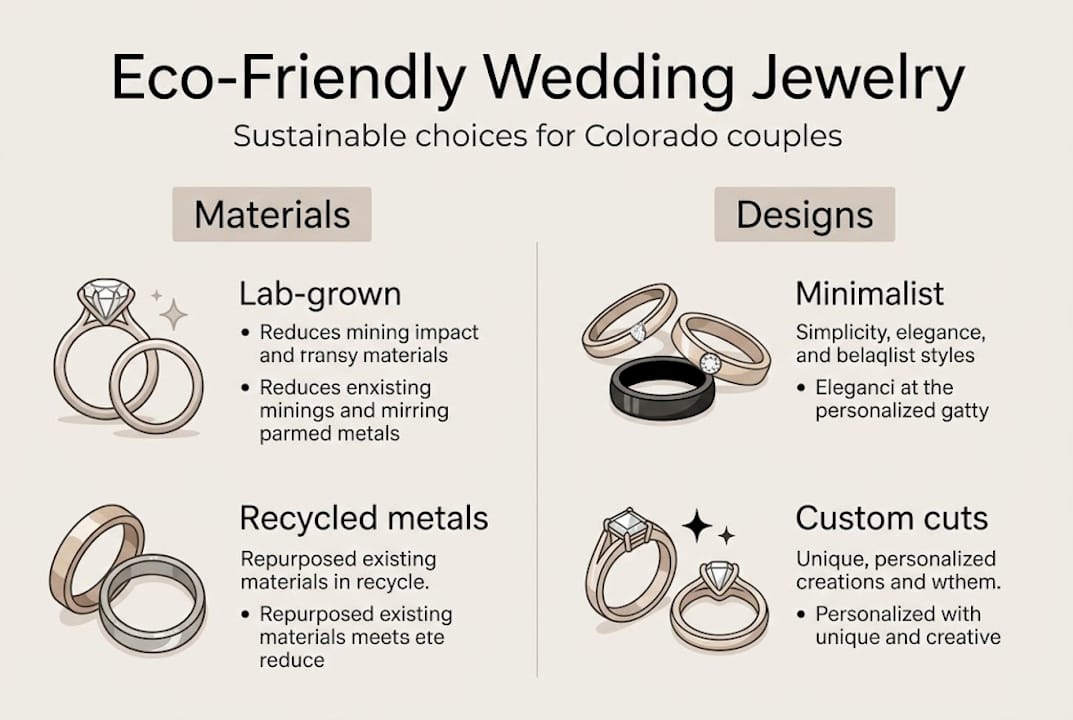
Recycled metals are the easiest starting point. Recycled gold and platinum carry the same quality as newly refined metals but eliminate the need for new extraction. Paired with a lab-grown center stone, a recycled gold band creates a piece with a very low overall footprint.
“3D printing and biomaterials allow for minimalist, low-impact custom jewelry that was simply not achievable with traditional casting methods.” This means intricate, organic forms that use less material and generate less waste.
CAD (computer-aided design) software lets you visualize your ring digitally before anything is physically made, reducing material waste from trial-and-error casting. Many sustainable jewelers now use this as standard practice. It also makes customization far more accessible, since you can refine every detail before production begins.
Here are some innovative design features worth exploring:
- Upcycled heirloom stones: Reset an inherited diamond into a new custom setting
- Organic, free-form bands: Inspired by natural shapes, these use less metal than traditional designs
- Minimalist solitaire settings: Lower material use, timeless style, easier to resize over time
- Dual-purpose wedding bands: Bands designed to stack and function as both engagement and wedding ring
- Engraving instead of stone accents: Adds personalization without additional gemstone sourcing
Lab-grown diamonds expand these creative possibilities because they’re available in a wider range of cuts, colors, and sizes without the scarcity premiums of mined stones. If you want a fancy yellow diamond or a large oval for a bold statement ring, lab-grown options make that attainable. Explore modern sustainable engagement styles for current design trends that align with eco-conscious priorities.
Beyond the basics: What most eco-friendly wedding jewelry guides don’t tell you
Here’s something the standard eco-jewelry guides skip over: resale value is a red herring for wedding jewelry. Lab-grown diamonds do carry lower resale prices than mined stones, and some buyers treat this as a dealbreaker. But wedding rings aren’t investment vehicles. They’re symbols of a commitment meant to last a lifetime. Framing resale as a flaw misses the point entirely. Resale is lower for lab-diamonds but this is irrelevant for sentimental, lifelong pieces where meaning, not market value, is what matters.
The more important nuance that gets buried is energy transparency. Two lab-grown diamonds can look identical on a grading report but have very different carbon footprints depending on where and how they were grown. Asking your retailer about the production energy source is the single most powerful question you can ask. It separates genuine sustainability from performative marketing.
Watch for greenwashing. Phrases like “responsibly sourced” or “ethically mined” without third-party certification behind them are easy claims to make and hard to verify. A real commitment to sustainability shows up in SCS-007 certifications, documented supply chains, and energy disclosure, not just taglines. Our lab-grown diamond buying tips for couples walks through how to read these details before you commit.
Pro Tip: Small customizations like engraving, a minimal prong setting, or skipping pavé side stones can meaningfully lower your piece’s material impact while making it more distinctly yours.
Start your sustainable love story with eco-friendly rings
You now have the knowledge to make a choice that feels as good as it looks. At Eternal Carat, we specialize in exactly what Colorado eco-conscious couples are looking for: stunning lab-grown diamond jewelry paired with custom design services and genuinely transparent sourcing. Our appointment-only Parker, Colorado studio gives you the private, unhurried experience your most important jewelry decision deserves.
Whether you’re starting from scratch or ready to design something completely one-of-a-kind, we’d love to guide you. Our team is here to help you find a piece that carries real ethical brilliance, not just a marketing claim. Book a consultation and let’s create something that tells your story while honoring the world you love.
Frequently asked questions
Are lab-grown diamonds as durable as mined diamonds for wedding rings?
Yes, lab-grown diamonds share identical physical properties with mined diamonds, including the same hardness rating on the Mohs scale, making them equally durable for everyday wear.
How can I verify that my wedding jewelry is truly eco-friendly?
Request certifications like GIA, IGI, or SCS-007 and ask your jeweler for specifics on energy sources and recycled materials used in production.
What makes Colorado jewelers unique for eco-friendly wedding rings?
Colorado jewelers like those highlighted in the Brilliant Earth review offer in-person design consultations, local custom work, and an increasing focus on lab-grown stones and recycled metals.
Is resale value important for lab-grown diamond wedding rings?
Typically, lab-grown diamonds carry lower resale prices, but as noted in expert analysis of lab-diamond resale value, sentimental and lifelong meaning far outweighs resale concerns for most couples choosing wedding jewelry.
Recommended
- Eco-Friendly Engagement Rings: Denver’s Ethical Luxury Guide – Eternal Carat
- Sustainable jewelry shopping guide Denver 2026 – Eternal Carat
- Engagement ring checklist: Colorado luxury & sustainable picks – Eternal Carat
- What is a sustainable jewelry option: eco-friendly guide – Eternal Carat
- Sustainable Living — Hello Charlie


