

Nearly half of American couples now consider ethical sourcing and environmental impact when choosing a diamond for their engagement rings. Sustainability is more than a trend for Millennials and Gen Z—it is a core value that shapes every wedding decision. If you want true style without compromise, understanding lab-grown diamonds can help you find a ring that reflects both your love and your commitment to a better planet.
Table of Contents
- Lab-grown Diamonds Defined And Debunked
- Types Of Lab-grown Diamond Creation Methods
- Key Qualities: Brilliance, Durability, Grading
- Environmental And Ethical Advantages In Jewelry
- Cost, Resale Value, And Market Comparisons
- Common Myths Versus Real-world Experiences
Key Takeaways
| Point | Details |
|---|---|
| Lab-Grown Diamonds are Genuine | Lab-grown diamonds are real stones with identical chemical and physical properties to natural diamonds, created in controlled environments. |
| Ethical and Environmental Benefits | They offer a sustainable alternative, significantly reducing ecological impact and eliminating human rights concerns associated with traditional mining. |
| Cost-Effectiveness | Lab-grown diamonds typically cost 30-50% less than natural diamonds, making them an attractive option for budget-conscious consumers. |
| Quality Assurance | Always ask for certification from recognized gemological institutes to ensure the quality and authenticity of the lab-grown diamonds. |
Lab-grown diamonds defined and debunked
Lab-grown diamonds are scientifically engineered stones created through advanced technological processes that precisely replicate the natural diamond formation conditions. Unlike traditional mined diamonds, these stones are produced in controlled laboratory environments using two primary methods: high-pressure, high-temperature (HPHT) and chemical vapor deposition (CVD). Scientific research from authoritative sources confirms that these diamonds possess identical chemical composition and crystal structures to natural diamonds.
The technological process involves recreating the extreme conditions found deep within the Earth, where carbon atoms are subjected to immense pressure and temperature. Molecular precision is key - lab-grown diamonds are not simulated or fake stones, but genuine diamonds created through sophisticated scientific techniques. Gemological experts from GIA have extensively documented that these diamonds are chemically, physically, and optically indistinguishable from mined diamonds.
One significant advantage of lab-grown diamonds is their ethical and environmental sustainability. Traditional diamond mining often involves significant ecological disruption and potential human rights concerns, whereas lab-created diamonds eliminate these issues. They require substantially less environmental impact, use minimal land resources, and can be produced with traceable, conflict-free origins. Moreover, these stones typically cost 30-50% less than equivalent mined diamonds, making them an attractive option for budget-conscious couples who refuse to compromise on quality or aesthetic appeal.
Pro tip: When purchasing a lab-grown diamond, always request a detailed certification from a recognized gemological institute to verify the stone’s quality and authenticity.
Types of lab-grown diamond creation methods
Two primary technological methods dominate the production of lab-grown diamonds: Chemical Vapor Deposition (CVD) and High-Pressure High-Temperature (HPHT). Comprehensive scientific research reveals these sophisticated techniques recreate diamond formation conditions with remarkable precision, offering modern couples scientifically engineered alternatives to traditionally mined stones.
The Chemical Vapor Deposition method involves introducing carbon-rich gases into a vacuum chamber, where plasma enables carbon atoms to deposit gradually onto a substrate. This intricate process allows diamonds to grow layer by layer over several weeks, creating stones with exceptional purity. In contrast, the High-Pressure High-Temperature approach mimics natural geological conditions by subjecting a diamond seed to extreme heat and pressure, accelerating crystal formation much faster than CVD techniques.
Each method produces diamonds with distinct advantages. CVD diamonds typically demonstrate superior color and clarity, as the controlled environment prevents nitrogen contamination. HPHT diamonds grow more rapidly and can be more cost-effective for larger stone production. Technological experts from research institutions confirm that both methods yield diamonds indistinguishable from natural stones in chemical composition and visual characteristics, providing ethically conscious consumers with genuine, high-quality alternatives.
Here’s a side-by-side overview of lab-grown diamond creation methods:
| Method | Key Process | Typical Advantages | Common Uses |
|---|---|---|---|
| HPHT (High-Pressure High-Temperature) | Diamond seed exposed to intense pressure, heat | Faster growth, suitable for large stones | Commercial jewelry, mass production |
| CVD (Chemical Vapor Deposition) | Carbon-rich gases form diamond layers in vacuum | Superior clarity, less nitrogen | Premium jewelry, precision gems |
Pro tip: Request detailed documentation about the specific creation method when purchasing a lab-grown diamond to understand its unique manufacturing process and characteristics.
Key qualities: brilliance, durability, grading
Lab-grown diamonds boast exceptional optical performance that matches and sometimes surpasses natural diamonds. Advanced gemological research confirms these stones possess identical chemical structures, ensuring they exhibit the same remarkable brilliance, fire, and scintillation that make diamonds so captivating. The controlled laboratory environment actually allows for potentially more consistent crystal formation, resulting in stones with extraordinary clarity and light performance.
Durability remains a hallmark of lab-grown diamonds, with these stones scoring a perfect 10 on the Mohs hardness scale. This means they are equally resistant to scratching and wear as natural diamonds, making them ideal for everyday jewelry that withstands the rigors of daily life. Technological precision in diamond creation enables manufacturers to produce stones with exceptional structural integrity, ensuring long-lasting beauty and resilience.
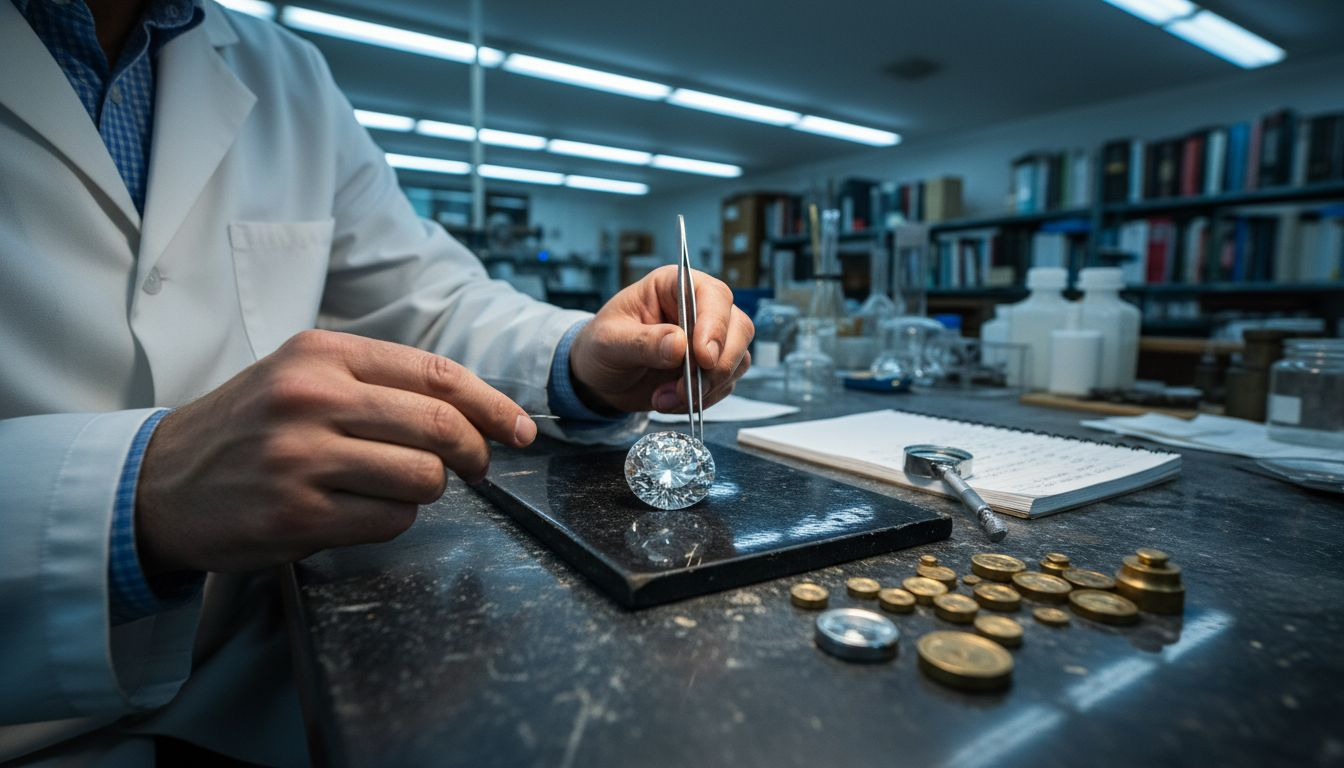
Grading for lab-grown diamonds follows the identical 4Cs criteria used for natural stones: cut, color, clarity, and carat weight. Comprehensive diamond guidance reveals that reputable gemological laboratories like GIA provide detailed certification, clearly distinguishing lab-grown from natural diamonds while maintaining the same rigorous quality assessment standards. Modern consumers can confidently select lab-grown diamonds knowing they will receive a thoroughly evaluated, high-quality gemstone with transparent documentation of its characteristics.
This table compares key qualities of lab-grown versus natural diamonds:
| Attribute | Lab-Grown Diamonds | Natural Diamonds | Impact on Buyer |
|---|---|---|---|
| Chemical Structure | Identical to mined | Natural origin | No discernable difference |
| Hardness | Mohs 10 | Mohs 10 | Durable for daily wear |
| Brilliance | Consistent, high-quality | Varies by source | Reliable visual appeal |
| Price | 30-50% less | Market-dependent | Greater affordability |
Pro tip: Always request a detailed grading report from an independent gemological institute when purchasing a lab-grown diamond to understand its precise quality attributes.
Environmental and ethical advantages in jewelry
Lab-grown diamonds represent a transformative solution for environmentally conscious consumers seeking responsible luxury. Comprehensive academic research reveals that these diamonds dramatically reduce the ecological footprint associated with traditional diamond mining, offering a sustainable alternative that addresses critical environmental concerns. Unlike traditional mining, which can devastate landscapes, consume massive water resources, and generate significant carbon emissions, laboratory diamond production operates with minimal environmental impact.
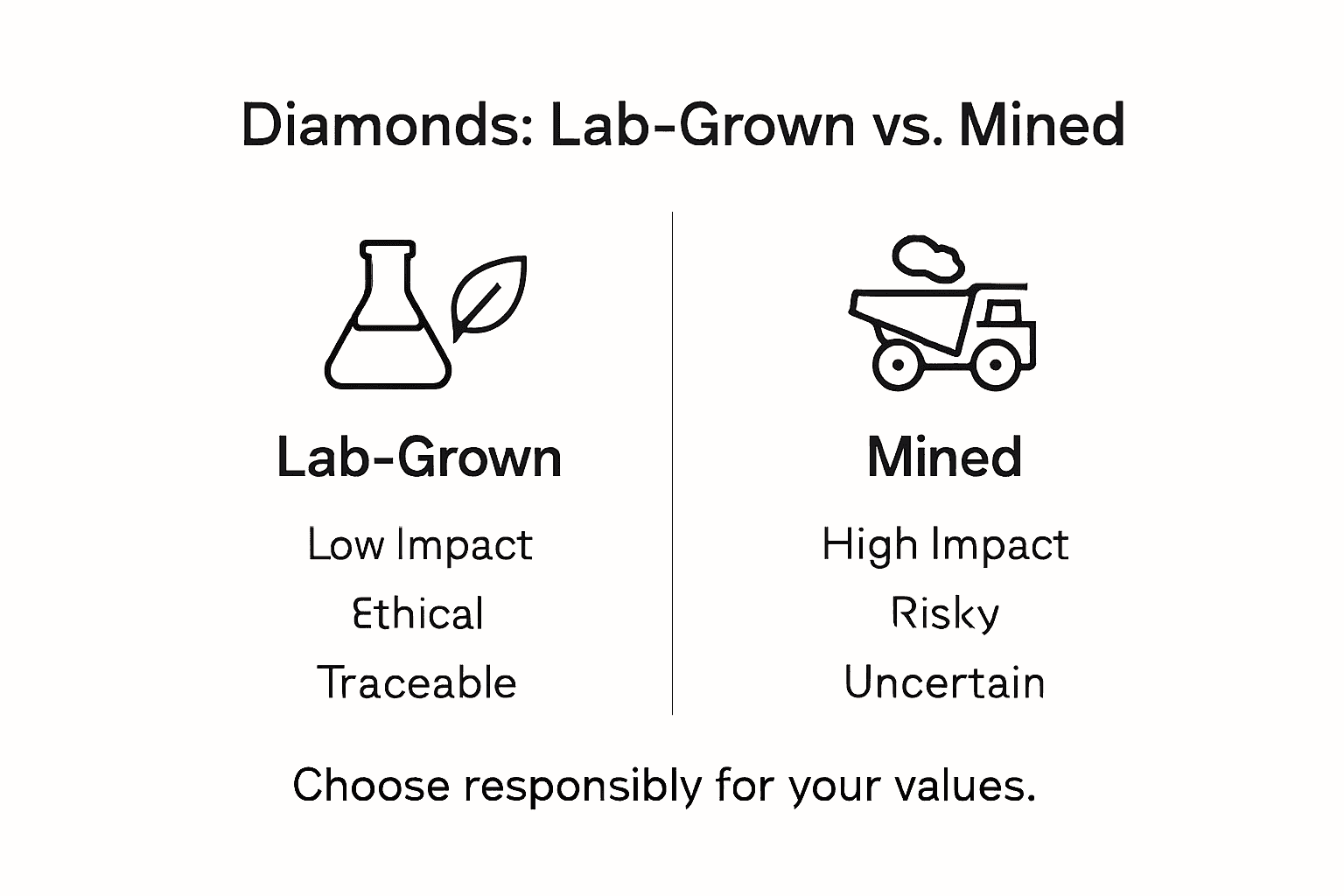
The ethical implications of lab-grown diamonds extend far beyond environmental considerations. Traditional diamond mining has long been associated with complex human rights issues, including potential labor exploitation and conflict financing. Lab-grown diamonds eliminate these systemic problems by providing a transparent, traceable production process that ensures no human suffering is involved in their creation. Sustainable luxury research demonstrates that modern consumers increasingly prioritize ethical sourcing, viewing lab-grown diamonds as a powerful statement of social responsibility and conscious consumption.
Numerous scientific studies highlight the substantial environmental benefits of lab-grown diamonds. These stones typically require approximately 60% less energy consumption and generate significantly reduced carbon emissions compared to mined diamonds. The controlled production environment allows for precise resource management, minimizing waste and environmental disruption. Additionally, lab-grown diamonds can be produced using renewable energy sources, further reducing their overall ecological footprint and presenting an attractive option for environmentally aware couples seeking meaningful, responsible jewelry choices.
Pro tip: Request specific environmental impact documentation when purchasing lab-grown diamonds to understand the precise sustainability metrics of your chosen stone.
Cost, resale value, and market comparisons
Price dynamics have become a critical factor driving the lab-grown diamond market, with comprehensive economic research revealing that these stones consistently cost 30-50% less than natural diamonds. This significant price difference stems from more efficient production processes and reduced supply chain complexity. For budget-conscious millennial and Gen Z consumers, lab-grown diamonds represent an opportunity to secure high-quality, visually stunning gemstones without the traditional financial barriers associated with natural diamond purchases.
Resale value remains a nuanced consideration in the lab-grown diamond market. Current market trends suggest that these stones typically have lower resale potential compared to natural diamonds, primarily due to the emerging nature of the market and increasing production capabilities. Industry market reports indicate that while immediate resale values may be limited, the rapidly expanding market and shifting consumer perceptions are gradually establishing a more robust secondary market for lab-grown diamonds.
The competitive landscape continues to evolve, with lab-grown diamonds challenging traditional market dynamics. Young consumers are increasingly prioritizing value, ethical production, and aesthetic quality over historical notions of diamond investment. This shift is driving market expansion, with lab-grown diamonds capturing growing market share across engagement rings, fine jewelry, and luxury accessories. Technological advancements and increasing consumer awareness are progressively normalizing lab-grown diamonds as a mainstream, desirable alternative to traditionally mined stones.
Pro tip: Consider lab-grown diamonds as a value-driven choice focused on immediate aesthetic and emotional significance rather than long-term financial investment.
Common myths versus real-world experiences
Contrary to widespread misconceptions, lab-grown diamonds are not synthetic imitations but genuine gemstones with identical chemical and physical properties. Comprehensive industry insights reveal that these stones possess the same exceptional brilliance, fire, and optical characteristics as natural diamonds. Many consumers initially believe lab-grown diamonds are somehow inferior, but scientific analysis consistently demonstrates their remarkable quality and authenticity.
One persistent myth suggests that lab-grown diamonds lack emotional or aesthetic value compared to natural stones. Real-world experiences, however, challenge this notion entirely. Modern couples increasingly appreciate lab-grown diamonds for their ethical production, transparent origins, and stunning visual qualities. These diamonds undergo the same rigorous grading processes as natural stones, with gemological institutes providing detailed certifications that validate their exceptional characteristics. The emotional significance of a diamond is determined by its beauty, symbolism, and personal meaning, not its origin.
Consumer perceptions are rapidly evolving as more individuals discover the tangible benefits of lab-grown diamonds. Technological advancements have made these stones virtually indistinguishable from mined diamonds, even to trained gemologists. The combination of lower cost, ethical production, and identical physical properties is transforming how younger generations view diamond purchases. What was once considered an alternative is now becoming a preferred choice for engagement rings and fine jewelry, driven by transparency, sustainability, and exceptional value.
Pro tip: Request a detailed gemological certification and conduct side-by-side comparisons to personally validate the quality of lab-grown diamonds.
Discover the Perfect Lab-Grown Diamond for Your Modern Love Story
Choosing a diamond that reflects your values and style can be challenging in today’s market. The article highlights how lab-grown diamonds offer ethical sourcing, exceptional brilliance, and sustainable craftsmanship without compromising on quality or beauty. For couples who want a stunning symbol of commitment that is both responsible and radiant, understanding the science and benefits behind these gems is essential.
At Eternal Carat, we specialize in helping modern couples find their ideal lab-grown diamonds and custom fine jewelry. Whether you desire an engagement ring, pendant, or earrings, every piece showcases the lasting brilliance and durability described in your reading. Explore our collections and enjoy the peace of mind that comes with traceable, conflict-free gems crafted with precision.

Ready to take the next step toward a timeless and eco-conscious symbol of your love Visit Eternal Carat now to browse our exquisite selection and start designing your perfect piece. Embrace the future of luxury jewelry where sustainability meets elegance.
Frequently Asked Questions
What are lab-grown diamonds and how are they created?
Lab-grown diamonds are scientifically engineered stones created in controlled laboratory environments using two primary methods: High-Pressure High-Temperature (HPHT) and Chemical Vapor Deposition (CVD). Both methods replicate the conditions under which natural diamonds form, resulting in stones that are chemically and physically identical to mined diamonds.
Are lab-grown diamonds ethically sourced?
Yes, lab-grown diamonds eliminate many ethical concerns associated with traditional diamond mining, such as human rights issues and environmental destruction. They offer a transparent and traceable production process, ensuring no human suffering is involved in their creation.
How do lab-grown diamonds compare to natural diamonds in terms of quality?
Lab-grown diamonds possess the same brilliant optical characteristics as natural diamonds, scoring a perfect 10 on the Mohs hardness scale. They are evaluated using the same 4Cs grading criteria (cut, color, clarity, and carat weight) and can even demonstrate superior clarity and color due to the controlled manufacturing environment.
What are the cost differences between lab-grown diamonds and mined diamonds?
Lab-grown diamonds typically cost 30-50% less than equivalent mined diamonds, thanks to more efficient production processes and reduced supply chain complexities. This makes them an attractive choice for couples looking for high-quality diamonds without the high price tag.
Recommended
- 14k White Gold 2.65ctw Lab-Grown Diamond Tennis Bracelet – 6.5" – Eternal Carat
- 14K Yellow Gold 1.0 Cttw Lab-Grown Marquise Diamond Floral Leaf Stud E – Eternal Carat
- Lab Grown Diamond Jewelry & Custom Engagement Rings – Eternal Carat
- IGI 3.17ct G VS1 Cushion – Eternal Carat
- What is Modern Romance? Understanding Love Today – Be Juliet
- What Is Sustainable Fashion? The Complete Overview


