

TL;DR:
- Genuine diamond sustainability is based on verified impacts across environment, water, waste, and social factors.
- The energy source powering lab-grown diamonds significantly affects their true climate footprint.
- Responsible mining requires transparent data on land, water, emissions, and labor practices.
Picking a lab-grown diamond feels like the obvious ethical choice. But here’s the uncomfortable truth: the word “sustainable” on a jewelry tag can mean almost anything. A lab-grown stone grown in a coal-heavy factory may carry a larger carbon footprint than a responsibly mined diamond backed by third-party audits. The difference between genuinely sustainable jewelry and clever marketing often comes down to data you have to ask for. This guide cuts through the noise and gives you a clear framework for evaluating any diamond on real environmental and social grounds, not just the label on the box.
Table of Contents
- Understanding diamond sustainability: Beyond the marketing
- Lab-grown diamonds: The reality behind energy and emissions
- Mined diamonds: Environmental and social impact in focus
- How sustainability is measured: Frameworks and real-world data
- Our perspective: Seeing beyond the ‘lab vs mined’ debate
- Eternal Carat: Your source for truly sustainable diamonds
- Frequently asked questions
Key Takeaways
| Point | Details |
|---|---|
| Sustainability goes beyond marketing | True sustainability considers environmental, social, and governance factors, not just lab vs. mined labels. |
| Energy source is critical | A lab-grown diamond’s impact depends on whether renewable or fossil energy powers production. |
| Mined diamonds must be traceable | Look for proof of responsible practices and third-party sustainability commitments with mined stones. |
| Demand verified impact data | The best brands provide real-world data on footprint, water, and labor—not just ‘eco-friendly’ claims. |
| Ask, compare, decide ethically | Informed shopping means asking smart questions and comparing verified sustainability credentials. |
Understanding diamond sustainability: Beyond the marketing
The word “sustainable” gets applied to diamonds the way “natural” gets applied to food. It sounds meaningful, but without context, it tells you almost nothing. Genuine sustainability isn’t a single attribute. It’s a layered set of verified impacts that span the entire life of a stone, from the moment energy is used to create or extract it all the way through the supply chain and into your hands.
According to expert analysis on diamond sustainability, a diamond’s sustainability is mainly about verified impact across environment, water, waste, and social factors, not just the marketing label attached to it. That’s a critical distinction. It means you can’t evaluate a stone by type alone. You have to look at what actually happened during its production and sale.
The core pillars that define real diamond sustainability include:
- Climate and energy: How much carbon was released to power production or extraction?
- Water usage: Did the process consume or contaminate local water sources?
- Waste and land disturbance: What physical footprint did the operation leave behind?
- Labor and community welfare: Were the workers treated fairly? Did local communities benefit?
These pillars don’t exist in isolation. A diamond can score well on one and poorly on another. That’s why single-attribute claims, like “zero land disruption” for a lab-grown stone, can be accurate and misleading at the same time if they ignore energy use or labor conditions.
“Sustainability frameworks favor traceability and data over single-attribute claims. A verified impact report beats a marketing promise every time.”
Our ethical luxury guide walks through how to apply these pillars when shopping for fine jewelry. The key takeaway here is to think about the whole journey of a diamond, not just its origin story.
Pro Tip: When a retailer uses the word “sustainable,” ask which specific pillars they’re addressing and whether any third-party organization has verified those claims. Vague answers are a red flag.
Lab-grown diamonds: The reality behind energy and emissions
Lab-grown diamonds are made using one of two methods: High Pressure High Temperature (HPHT) or Chemical Vapor Deposition (CVD). Both require significant electricity to run the reactors and maintain the precise conditions needed to grow a gem-quality crystal. And that electricity has to come from somewhere.
As detailed in carbon outcomes for lab diamonds, for lab-grown diamonds, sustainability hinges strongly on how electricity powering growth reactors is sourced because growth is genuinely energy-intensive. A lab in Iceland powered by geothermal energy tells a very different environmental story than a lab in a region where coal dominates the grid. Same diamond, completely different footprint.
To understand how lab-grown diamonds are made and why this energy question matters so much, it helps to see the numbers side by side:
| Production scenario | Energy source | Relative carbon impact |
|---|---|---|
| Lab-grown, renewable grid | Solar, wind, hydro | Very low |
| Lab-grown, fossil-heavy grid | Coal, natural gas | Moderate to high |
| Responsibly mined, certified | Varies by operator | Low to moderate |
| Uncertified mined diamond | Unknown | Potentially high |
The table above shows why blanket statements about lab-grown diamonds being “green” fall apart under scrutiny. Location and energy mix are the real variables. A stone grown with renewable electricity can genuinely claim a lower climate impact. A stone grown on a dirty grid cannot make the same claim honestly.
You can explore the broader sustainability role of lab-grown diamonds for a deeper look at how production choices shape the overall picture. The bottom line is that lab-grown doesn’t automatically mean low-impact. It means potentially low-impact, depending on how and where it was made.
Pro Tip: Ask your retailer directly: what energy source powers the lab that grew your diamonds? A credible brand will have a clear, documented answer.
Mined diamonds: Environmental and social impact in focus
Mined diamonds dominate headlines for their environmental controversies, and some of those concerns are fully warranted. But the story is more nuanced than the headlines suggest. A mined diamond from a well-regulated, transparent operation with strong environmental controls looks nothing like a stone pulled from an unregulated mine with no oversight.
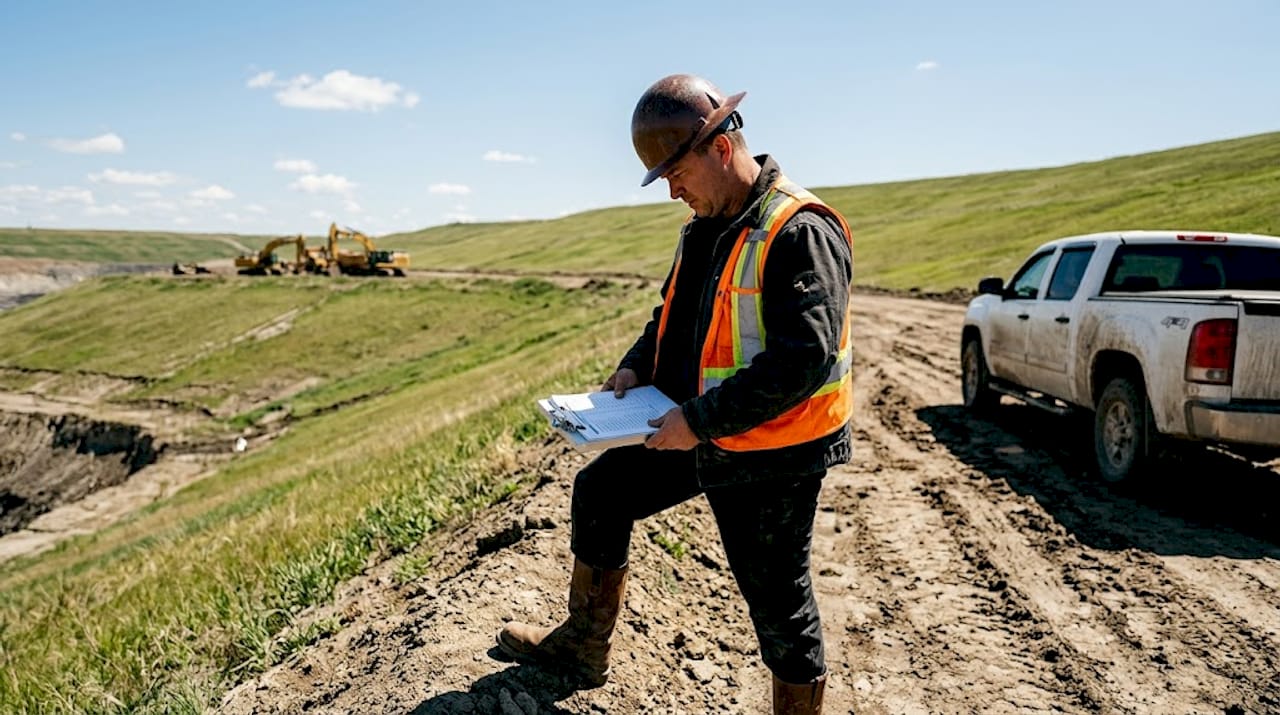
The mined diamond sustainability report from the industry makes clear that sustainability claims for mined diamonds require evidence around land disruption, water impacts, and greenhouse gas emissions from extraction and processing. These aren’t optional disclosures. They’re the foundation of any credible sustainability claim for a mined stone.
Here’s how the key impact areas break down:
| Impact area | What to look for | Red flags |
|---|---|---|
| Land and ecosystem | Restoration plans, biodiversity offsets | No post-mining land plan |
| Water usage | Closed-loop water systems, no contamination data | Open-pit operations near water with no data |
| Carbon emissions | Published scope 1 and 2 emissions | No GHG reporting at all |
| Labor practices | Fair wage certification, safety records | No third-party labor audit |
| Community impact | Local hiring, community investment programs | No community benefit disclosures |
For mined diamonds specifically, the credentials to look for include third-party environmental audits, corporate sustainability reports with actual metrics, and sourcing transparency that traces the stone back to a specific region or mine.
The critical factors when evaluating a mined stone:
- Is the mine operator publishing verified environmental data?
- Does the company hold recognized responsible sourcing certifications?
- Are labor practices independently audited?
- Does the supply chain have visible traceability, not just country of origin?
Our lab-grown vs natural diamonds guide compares both types across these dimensions, and our ethical sourcing guide gives you the specific questions to ask any retailer. The point isn’t that mined diamonds are bad. It’s that they require real evidence, not assumptions.
How sustainability is measured: Frameworks and real-world data
Knowing what matters is step one. Knowing how it’s actually measured is where consumers gain real power. The jewelry industry has developed several frameworks for evaluating environmental and social impact, and they’re becoming more rigorous each year.
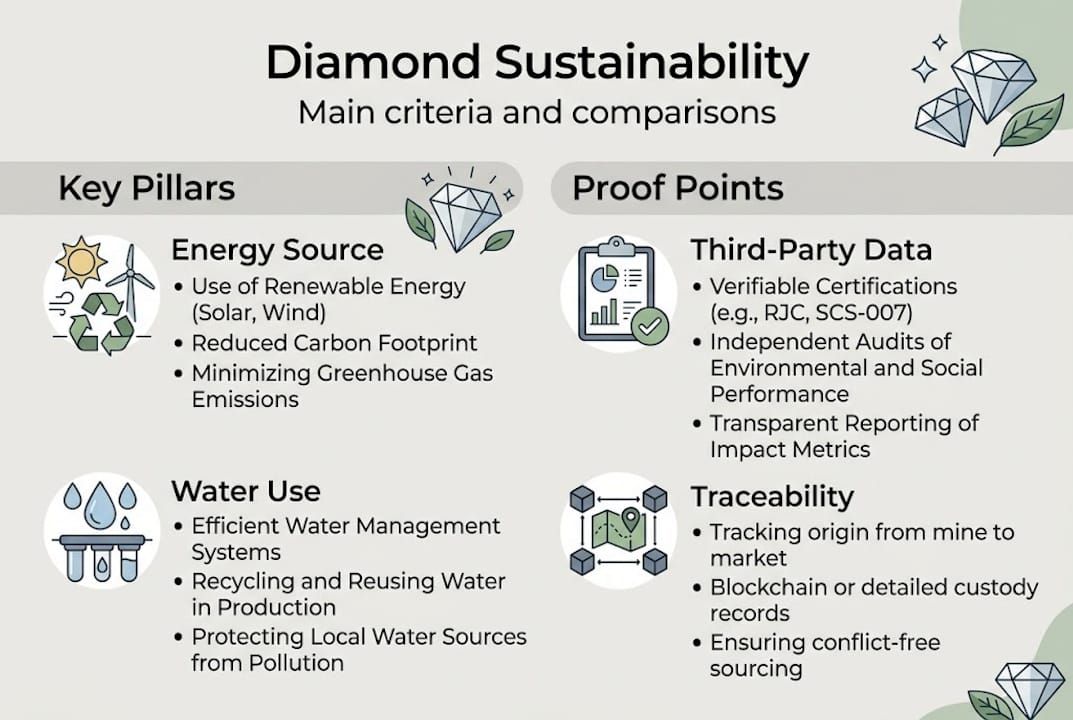
A journal article on jewelry sustainability metrics confirms that leading frameworks converge on lifecycle measurement, specifically carbon footprint and water usage, plus recyclability and governance, rather than single-attribute scoring. That means the best assessments look at everything together, not just one convenient metric.
Here’s how the measurement process typically works in practice:
- Life cycle analysis (LCA): Tracks every stage of a diamond’s journey, from energy used in production to transportation and retail, and assigns a total environmental cost.
- Carbon footprint calculation: Measures greenhouse gas emissions in CO2-equivalent units across all production stages.
- Water impact assessment: Accounts for water consumed, recycled, and potentially contaminated at each stage.
- Recyclability and circularity scoring: Evaluates whether the metal settings, packaging, and other materials can be recovered and reused.
- Governance and transparency rating: Assesses whether the brand publishes data, submits to audits, and discloses supply chain details.
For consumers, the practical application is straightforward: look for brands that publish LCA data or third-party sustainability scores, not just marketing copy. Our guide to eco-friendly jewelry options explains what credible transparency actually looks like in practice.
Pro Tip: If a brand claims sustainability but won’t share specific numbers on carbon or water impact, that silence is itself a data point. Demand clear, verified data, not just green claims.
Our perspective: Seeing beyond the ‘lab vs mined’ debate
We’ve spent considerable time studying diamond sustainability across both categories, and here’s what experience has taught us: the lab vs. mined debate is the wrong frame entirely. It’s a distraction that lets both sides make claims that are technically true and practically misleading at the same time.
The real question isn’t what type of diamond you’re buying. It’s what that specific stone’s production process actually looked like. As research confirms, lab-grown is not automatically low-impact. If the electricity and production practices are fossil-heavy, the climate advantage can shrink or disappear entirely. And mined diamonds are not inherently unethical, but they still require strong evidence on labor and environment.
What we believe matters most is a commitment to traceability and verified data. Sustainability is a process, not a product category. A retailer who can tell you the energy source of the lab, the mine’s environmental audit results, and the supply chain path of your stone is doing it right. One who hands you a pamphlet with a leaf logo is not.
If you want to see what genuinely responsible sourcing looks like in practice, our sustainable jewelry picks reflect exactly those standards. The bar we hold ourselves to is verifiable impact, not just good intentions.
Eternal Carat: Your source for truly sustainable diamonds
You’ve done the research. Now it’s time to shop with that knowledge behind you.

At Eternal Carat, we specialize in lab-grown diamonds sourced with a clear focus on low-carbon energy and verified production practices. We believe transparency isn’t a bonus feature. It’s the baseline. Every piece we offer is backed by honest sourcing conversations, and our expert team can walk you through the specific details of any stone you’re considering. If you’re ready to align your jewelry choices with real values, our sustainable shopping guide is the perfect starting point for your search.
Frequently asked questions
Are all lab-grown diamonds truly sustainable?
No, the sustainability of lab-grown diamonds depends on the energy source and production practices, so always ask for clear data on carbon impact and electricity sourcing.
What should I look for to ensure a diamond is sustainable?
Seek verifiable information on energy use, water impact, labor conditions, and credible third-party certification because verified impact across environment, water, waste, and social factors is what defines real sustainability.
How do lab-grown and mined diamonds compare environmentally?
Lab-grown diamonds often carry lower climate impacts, but only when made with clean energy. Both types require a full review of lifecycle impact and social responsibility, since lab-grown is not automatically low-impact.
What are the main factors in diamond sustainability frameworks?
Leading frameworks point to carbon footprint, water usage, recyclability, and governance transparency as the four most critical metrics for evaluating any diamond or jewelry piece.
Recommended
- What is a sustainable jewelry option: eco-friendly guide – Eternal Carat
- Sustainable jewelry explained: ethical luxury guide 2026 – Eternal Carat
- Sustainable jewelry shopping guide Denver 2026 – Eternal Carat
- Sustainable fine jewelry explained: ethical luxury guide – Eternal Carat
- Sustainable Living — Hello Charlie
- 7 Insights on Sustainable Business Cards: What Matters vs. Marketing – BcardsCreation


