

TL;DR:
- Fine jewelry with gold, platinum, and natural gemstones preserves wealth and offers portable, durable investment benefits.
- It outperforms fashion-oriented luxury items over time, serving as a hedge against inflation and a legacy asset.
- Investing requires certification, documentation, patience, and balancing financial gains with personal significance.
Most luxury purchases lose value the moment you buy them. A designer handbag, a luxury car, even a high-end watch can depreciate sharply over time. Fine jewelry is different. Select pieces anchored in gold, platinum, and rare natural gemstones have historically preserved wealth, hedged against inflation, and passed value across generations. For affluent investors in the Denver metro area who want their money working harder and their lifestyle reflecting their values, fine jewelry offers something rare: a luxury asset you can wear, enjoy, and pass down while it quietly holds its ground in your portfolio.
Table of Contents
- What makes fine jewelry a unique investment?
- Returns, risks, and realities: Understanding the investment landscape
- Natural versus lab-grown: Investment myths, market trends, and ethical angles
- How to invest wisely: Practical steps to building a fine jewelry portfolio
- What most investors in Denver overlook about fine jewelry
- Explore sustainable fine jewelry with Eternal Carat
- Frequently asked questions
Key Takeaways
| Point | Details |
|---|---|
| Jewelry preserves value | Fine jewelry outperforms most luxury goods and can hedge against market volatility. |
| Natural stones yield returns | Certified colored gemstones often deliver 5–15% annual appreciation. |
| Lab-grown for ethics, not profit | Lab-grown diamonds offer sustainable style but rapid depreciation limits investment value. |
| Diversification is key | Limit jewelry to 5–10% of your portfolio for optimal risk and reward. |
| Select, certify, and secure | Invest in branded, certified pieces and secure proper insurance and appraisal. |
What makes fine jewelry a unique investment?
Fine jewelry sits in a category of its own. Unlike a luxury handbag, which is essentially a fashion item with no underlying material worth, a well-crafted piece of fine jewelry carries intrinsic value in its metal and stones. Gold, platinum, investment-grade diamonds, rubies, emeralds, and sapphires all have measurable, tradeable worth that persists regardless of trends. That material floor is what separates fine jewelry from nearly every other luxury good.
As 2026 luxury jewelry trends continue to evolve, one pattern remains constant: pieces built on precious metals and certified stones hold up while fashion-forward accessories fade. Even a handbag investment compared to a comparable jewelry purchase typically shows jewelry outperforming over a 10-year horizon.
Here is why fine jewelry stands apart as an asset class:
- Tangible asset: You can hold it, wear it, store it, and liquidate it without needing a brokerage account
- Inflation hedge: Precious metal prices historically rise alongside inflation, protecting purchasing power
- Portable: Unlike real estate, jewelry can move with you across borders and market conditions
- Durable: A well-maintained piece does not rust, degrade, or expire
- Cross-generational appeal: Jewelry transfers seamlessly as a legacy asset or estate piece
| Asset type | Intrinsic material value | Wearable | Inflation hedge | Resale market |
|---|---|---|---|---|
| Fine jewelry | High | Yes | Strong | Established |
| Luxury handbag | Low | Yes | Weak | Trend-dependent |
| Luxury watch | Medium | Yes | Moderate | Brand-driven |
| Gold bullion | High | No | Strong | Liquid |
“Fine jewelry, particularly pieces with gold, natural diamonds, and colored gemstones, serves as tangible value for affluent investors during economic uncertainty, outperforming soft luxury like handbags due to intrinsic metal value, durability, and resale potential.”
That edge is not accidental. It is structural. The material substance of a fine piece creates a value floor that pure fashion items simply cannot replicate.
Returns, risks, and realities: Understanding the investment landscape
Fine jewelry is not a get-rich-quick play. It rewards patient, informed buyers who treat it as one pillar of a broader strategy. Understanding what to expect keeps you grounded and positioned to benefit.
Historically, colored gemstones like rubies have delivered 5 to 15 percent annual returns at the investment-grade level, with rubies fetching $50,000 to $100,000-plus per carat. Gold has averaged roughly 7 to 10 percent annually over long cycles. Natural diamonds have performed more modestly, partly because lab diamond investment value has reshaped buyer expectations and applied downward pressure on natural stone premiums.
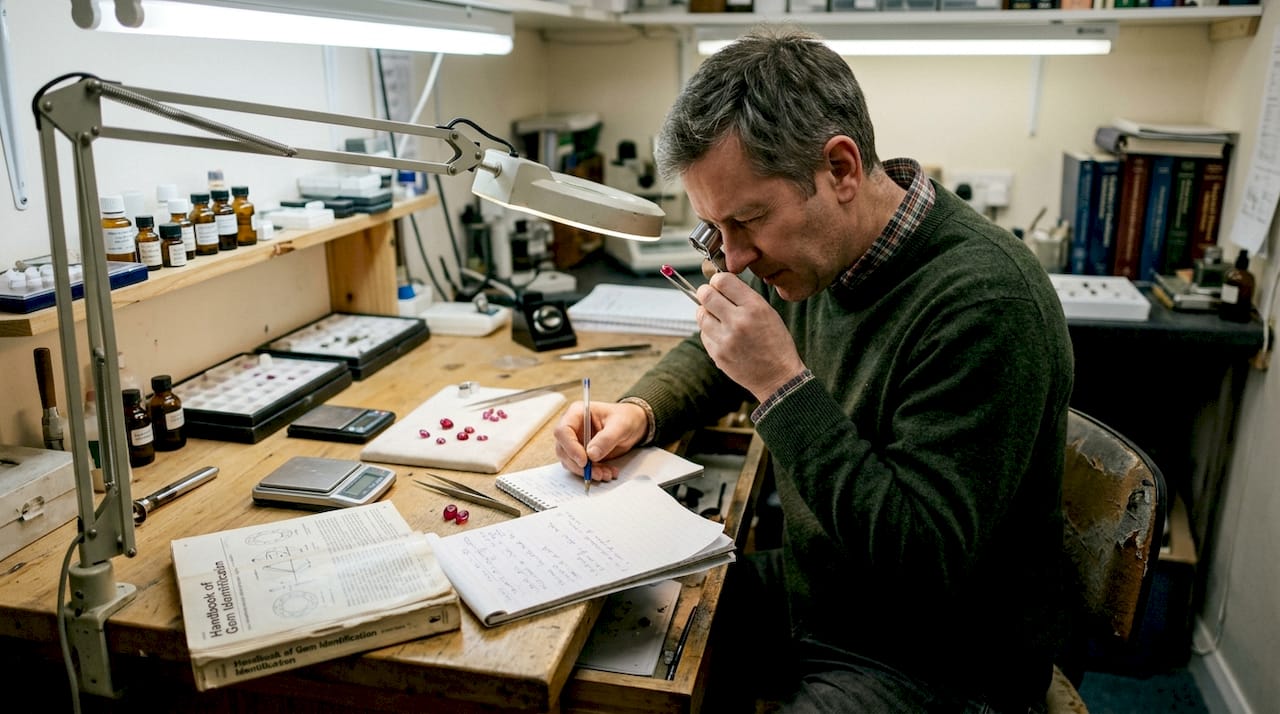
That said, fine jewelry carries real risks you need to plan around. Jewelry is illiquid compared to stocks and ETFs, carries high transaction costs, and generates no income while you hold it. Experts generally recommend capping fine jewelry at 5 to 10 percent of your total portfolio. Think of it as a diversification tool, not your primary growth engine.
Here is a practical return comparison:
| Asset | Avg. annual return | Liquidity | Income generated |
|---|---|---|---|
| S&P 500 index | ~10% | High | Dividends |
| Gold | ~7-10% | High | None |
| Natural colored gems | 5-15% | Low-medium | None |
| Natural diamonds | 1-4% | Low | None |
| Lab-grown diamonds | Depreciating | Low | None |
To invest well, follow these steps:
- Buy only investment-grade, certified pieces from recognized labs like GIA or SSEF
- Budget for a minimum five-year holding period to allow the market to work in your favor
- Appraise and insure every significant piece within 30 days of purchase
- Sell through premium channels such as auction houses or established dealers rather than quick-sale platforms
Pro Tip: Choose pieces with clear certification and documented provenance. This single factor can double your resale negotiating power compared to uncertified stones.
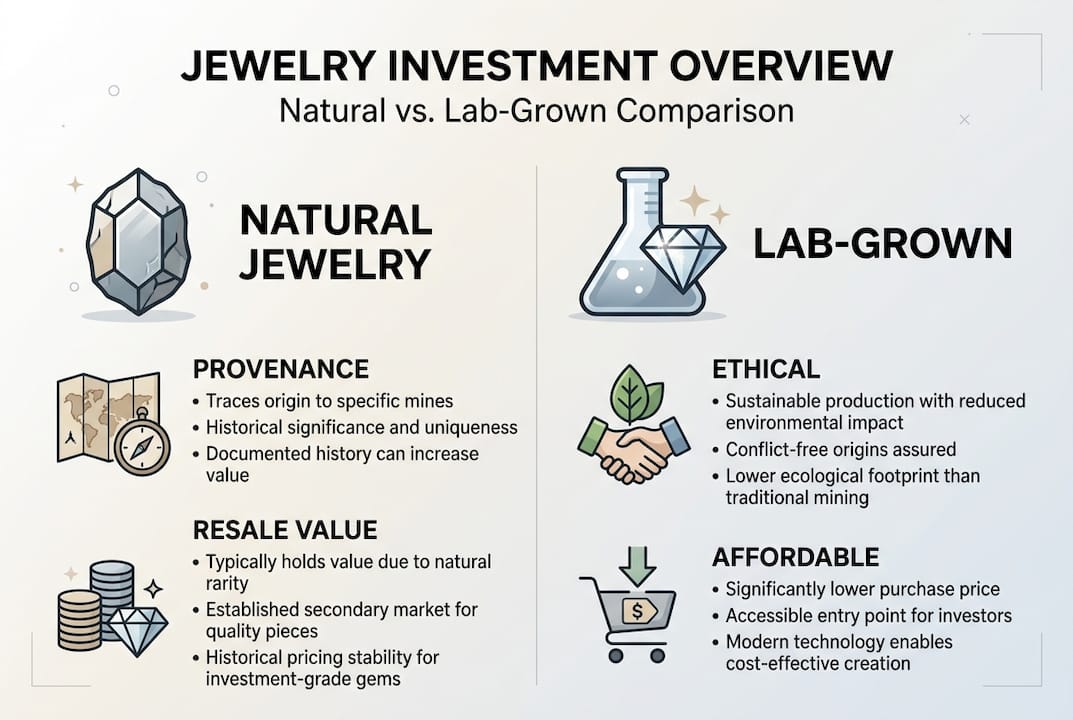
Comparing lab vs natural diamonds on a pure investment basis consistently favors natural colored stones for capital preservation, while lab-grown options shine for ethical wearability at accessible price points.
Natural versus lab-grown: Investment myths, market trends, and ethical angles
The rise of lab-grown diamonds has generated a lot of noise, some of it misleading. Let’s separate what the data actually shows from what marketing would have you believe.
Natural colored gemstones remain the strongest performers for pure investment purposes. Their appreciation is driven by scarcity, and scarcity is not something a laboratory can replicate:
- Burma rubies and Kashmir sapphires command premium prices at auction because no new deposits of comparable quality exist
- Colombian emeralds with strong color saturation have seen sustained demand from collectors and institutions alike
- Branded fine jewelry from storied houses adds a provenance premium that compounds over time
Lab-grown diamonds occupy a very different lane. They are ethically produced, visually identical to mined stones, and far more accessible in price. Exploring lab-created gems’ eco benefits makes clear why so many buyers prefer them for engagement rings and everyday wear. But the market has spoken on their investment trajectory: as production scales, prices fall. The lab-grown market grows at 9.6% CAGR and is projected to reach $59 billion by 2032, but that growth reflects volume and adoption, not appreciation in individual stone value.
For affluent Denver buyers, natural colored gemstones and gold-heavy branded jewelry offer sustainable luxury with genuine value retention. Lab-grown diamonds depreciate rapidly as a commodity, making them a lifestyle choice rather than a financial one.
When comparing diamonds for investment, the clearest framework is this: buy lab-grown for beauty, ethics, and everyday brilliance. Buy natural colored stones when capital preservation matters.
Pro Tip: Enjoy lab-grown jewelry for its sustainability and style, but anchor the investment portion of your collection in certified natural colored gemstones with strong origin documentation.
How to invest wisely: Practical steps to building a fine jewelry portfolio
Knowing the theory is one thing. Building an actual portfolio requires a methodical approach that keeps emotion out of big decisions and documentation at the center of every transaction.
Follow these steps when building or refining your jewelry holdings:
- Define your budget and objectives. Are you building a legacy collection, hedging against inflation, or creating liquidity options? Your goal shapes your buying criteria.
- Focus on certified, untreated natural stones. Treatments like heat or fracture-filling reduce value significantly. Always ask for a lab report from GIA or SSEF before committing.
- Verify origin and branding. Provenance documentation for stones from premium origins, like GIA-certified untreated pieces from Burma or Kashmir, commands measurably higher resale prices.
- Appraise every significant piece regularly. Markets move. An appraisal every two to three years keeps your insurance coverage accurate and your resale expectations realistic.
- Insure everything. Fine jewelry insurance is inexpensive relative to the asset value and essential for portfolio protection.
- Store securely. A bank safe deposit box or insured home safe protects against loss, theft, and environmental damage.
- Plan your resale channel early. Auction houses, specialty dealers, and curated resale platforms each serve different piece types. Know your exit before you buy.
Watch out for these red flags:
- Synthetic or treated stones presented without disclosure
- Missing or vague documentation from the seller
- Pricing that seems too good relative to comparable certified pieces
- Emotional urgency that rushes your due diligence
For guidance on selecting lab-grown jewelry for the wearable portion of your collection, clear criteria exist to help you balance quality and value without sacrificing ethics.
Pro Tip: Target one to three carat natural colored stones from well-documented origins. This range balances strong per-carat appreciation with a realistic buyer pool when it is time to sell.
What most investors in Denver overlook about fine jewelry
Here is a perspective that rarely makes it into investment guides: the returns you can calculate are not always the most important ones.
We have worked with clients across the Denver metro who came in focused purely on resale multiples. Many of them left realizing something else: the ongoing satisfaction of owning a beautifully crafted piece, one that carries a story and reflects a personal value system, adds a dimension of return that no stock ticker captures. That is not sentiment clouding judgment. That is a legitimate factor in a high-quality life.
Denver’s affluent community brings a distinct mindset to luxury purchases. There is a preference for sustainability, authenticity, and pieces that mean something beyond status. That aligns perfectly with the logic of fine jewelry investment. When you buy a certified natural ruby set in a custom gold piece, you are not just diversifying your portfolio. You are creating an ethical jewelry choice that carries personal significance alongside financial purpose.
The investors who navigate this space most effectively are the ones who hold both standards at once: rigorous on documentation and selection, but honest about the joy the piece brings. That balance is where sustainable luxury actually lives.
Explore sustainable fine jewelry with Eternal Carat
You have now seen the data, understood the risks, and mapped the strategy. The next step is finding pieces that meet both your financial criteria and your personal taste.
At Eternal Carat, we offer a curated selection of natural colored gemstones, gold-anchored fine jewelry, and ethically sourced lab-grown pieces, each supported by expert guidance and transparent documentation. Whether you are building an investment-focused collection or designing a bespoke piece that reflects your values, our team in Parker, Colorado is available by appointment for a private, professional consultation. We also offer estate jewelry evaluations and precious metals exchange for clients looking to upgrade or rebalance their holdings with immediate liquidity options. Your next investment-quality piece is closer than you think.
Frequently asked questions
Does fine jewelry really appreciate over time?
Yes. Investment-quality colored gemstones and branded gold jewelry often deliver 5 to 15 percent annually, though results depend heavily on the specific piece, its certification, and prevailing market conditions.
Are lab-grown diamonds a good investment?
Lab-grown diamonds are best suited for ethical, affordable luxury wear rather than long-term investment, since they depreciate rapidly as production volume increases and commodity pricing takes hold.
What percentage of my portfolio should be in jewelry?
Experts recommend capping jewelry at 5 to 10 percent of your total portfolio, using it as a diversification and inflation-hedge tool rather than a primary growth position.
How do I avoid overpaying or buying low-value pieces?
Always purchase GIA or SSEF-certified pieces with full documentation of origin and treatment history, and work exclusively with established dealers who can provide verifiable provenance.
Recommended
- Sustainable fine jewelry explained: ethical luxury guide – Eternal Carat
- Luxury jewelry trends shaping 2026: 5 key shifts – Eternal Carat
- How to choose sustainable jewelry: a step-by-step guide – Eternal Carat
- Custom jewelry benefits for ethical luxury in 2026 – Eternal Carat
- Why invest in custom watches: unique luxury at your price – OP


