

Balancing luxury, ethical sourcing, and personal style when choosing an engagement ring is genuinely complex. You want brilliance and beauty, but you also want to feel good about where your stone came from and how it was made. For Colorado couples especially, there’s an added layer: your ring needs to keep up with an active, outdoor lifestyle while reflecting your values. A clear, structured checklist cuts through the noise so you can move from overwhelmed to confident without second-guessing every decision.
Table of Contents
- Criteria for luxury and sustainable rings: The Colorado framework
- Diamond quality: The 4Cs and why cut comes first
- Lab-grown vs mined: Ethics, cost, and sustainability
- Certification and ethical sourcing: What to demand
- Setting, custom design, and personalization: Colorado luxury tips
- Final checklist: Edge cases, trade-ins, and smart upgrades
- Shop Colorado luxury, sustainable rings effortlessly
- Frequently asked questions
Key Takeaways
| Point | Details |
|---|---|
| Cut is king | Prioritize diamond cut for maximum sparkle and luxury impact. |
| Lab-grown advantages | Lab-grown diamonds offer significant ethical, environmental, and price benefits for Colorado couples. |
| Certifications matter | Always demand GIA/IGI reports and ethical sourcing certificates for peace of mind. |
| Custom design pays off | Personalized settings enhance satisfaction and justify luxury investment. |
| Check upgrade options | Consider resale, trade-in programs, and post-treatment status before final purchase. |
Criteria for luxury and sustainable rings: The Colorado framework
Every great ring decision starts with knowing what you’re actually evaluating. Without a framework, it’s easy to get dazzled by marketing language and miss what truly matters. These are the core criteria that should drive your checklist:
- Diamond quality: Cut, color, clarity, and carat weight
- Ethical sourcing: Lab-grown vs. mined, certifications, and supply chain transparency
- Custom fit: Setting style, metal type, and personalization
- Sustainable materials: Recycled metals, eco-conscious manufacturing
- Lifestyle compatibility: Durability for Colorado’s hiking, skiing, and climbing culture
Colorado couples consistently gravitate toward bezel and low-profile settings because they protect the stone during outdoor activities without sacrificing elegance. These settings also photograph beautifully against mountain backdrops. Following clear ring selection steps from the start saves you hours of back-and-forth with jewelers.
The ethics piece is no longer a niche concern. According to luxury ring buying criteria, 72% of Gen Z buyers now choose lab-grown diamonds specifically for ethical reasons. That’s a majority, not a trend.
Pro Tip: Always view any diamond candidate in at least three different lighting conditions: natural daylight, indoor fluorescent, and dim candlelight. A stone that only sparkles under showroom lights is hiding something.
Diamond quality: The 4Cs and why cut comes first
The 4Cs are cut, color, clarity, and carat. Every jeweler will mention them. What most won’t tell you is that cut is so dominant it can make a smaller, lower-color stone outshine a larger, higher-graded one.
According to GIA’s diamond guidance, prioritizing an Excellent or Very Good cut grade delivers the most visual impact per dollar spent. Here’s how to allocate your attention across the 4Cs:
- Cut: Excellent or Very Good only. This is non-negotiable for luxury.
- Color: G or H grades hit the sweet spot. They appear colorless to the naked eye but cost significantly less than D-F.
- Clarity: VS2 or SI1 strikes the right balance. Inclusions at this grade are invisible without magnification.
- Carat: The 0.9 to 1.5 carat range delivers a luxury appearance while avoiding the sharp price spikes at the 1.0 and 1.5 carat thresholds.
“Cut truly determines sparkle far more than carat.”
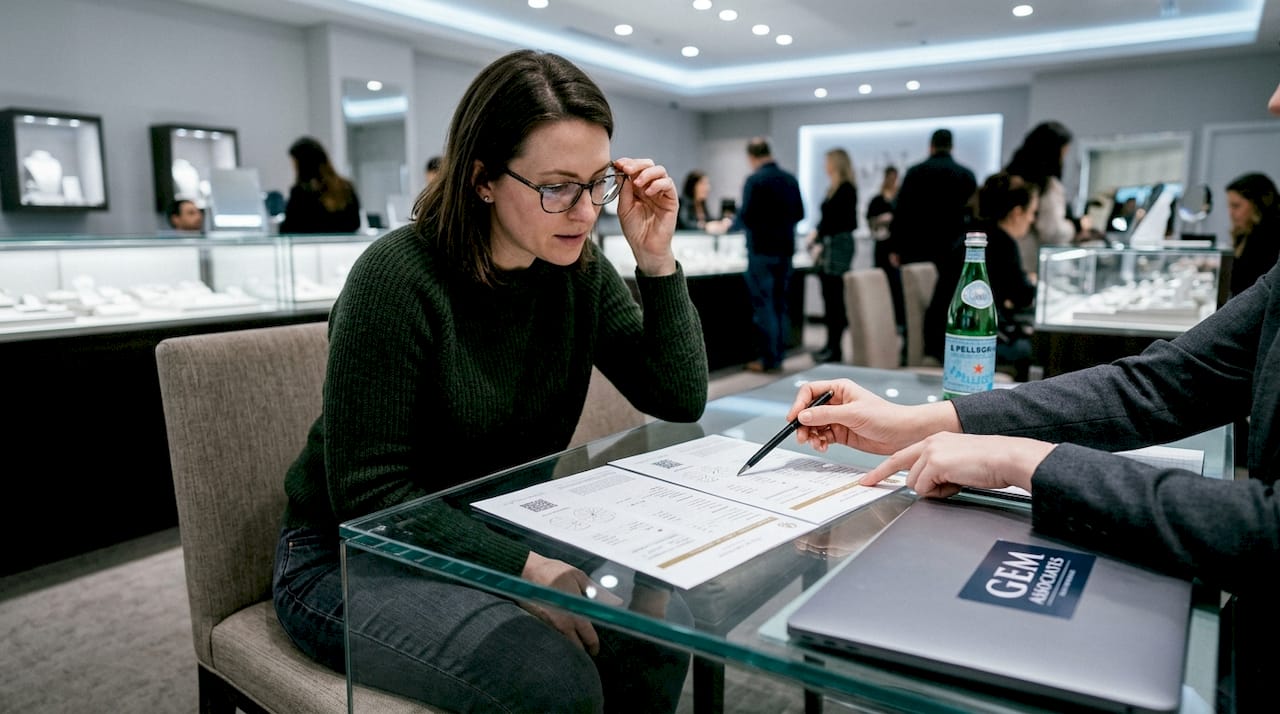
For verified diamond quality, always request the full grading certificate before purchasing. A reputable dealer will provide it without hesitation. These diamond selection tips apply equally to lab-grown and mined stones since the physical properties are identical.
Pro Tip: Ask your jeweler to show you two stones side by side: one with a higher carat but lower cut grade, and one with a lower carat but Excellent cut. The Excellent cut will almost always look more impressive. This single comparison changes how most buyers prioritize their budget.
Lab-grown vs mined: Ethics, cost, and sustainability
Once you’ve locked in your quality criteria, the sourcing decision becomes your next major fork in the road. This is where Colorado’s eco-conscious culture really shows up in buying patterns.
Lab-grown diamonds are physically and chemically identical to mined diamonds. The difference is origin. Lab-grown diamonds reduce carbon footprint by approximately 30% and cost 40 to 60% less than comparable mined stones. That price gap is real and significant.
| Feature | Lab-grown | Mined |
|---|---|---|
| Price | 40-60% lower | Premium pricing |
| Carbon footprint | ~30% lower | Higher impact |
| Ethical confidence | Very high | Varies by source |
| Resale value | Lower | Higher historically |
| Quality | Identical | Identical |
| Rarity | Not rare | Naturally rare |
The lab vs mined debate ultimately comes down to your priorities. If sustainability and savings matter most, lab-grown is the clear choice. If investment potential and natural rarity are important, mined diamonds hold an edge on resale.
For a deeper look at the lab diamond benefits beyond cost, consider that lab-grown stones carry no conflict risk by definition. You can also explore a thorough diamond comparison to see how the two options stack up across every major buying factor. The lab-created diamond advantages are especially compelling for couples who want luxury without compromise.
Colorado buyers are already voting with their wallets. The same data showing 72% Gen Z preference for lab-grown reflects a broader generational shift toward conscious consumption that’s especially visible in eco-forward communities like Denver, Boulder, and Parker.
Certification and ethical sourcing: What to demand
Choosing a lab-grown diamond is a strong ethical start, but certification and sourcing documentation seal the deal. Never skip this step, even with a trusted retailer.
For diamonds, insist on a certificate from the Gemological Institute of America (GIA) or the International Gemological Institute (IGI). These are the two most respected grading bodies globally. For metals, look for Responsible Jewellery Council (RJC) certification or confirmation that the gold or platinum follows Kimberley Process standards.
| Certification | What it covers |
|---|---|
| GIA | Diamond cut, color, clarity, carat |
| IGI | Lab-grown and mined diamond grading |
| RJC | Ethical and responsible supply chain |
| Kimberley Process | Conflict-free diamond sourcing |
According to ethical sourcing standards, you should also verify that your diamond has not undergone post-treatment processes like fracture filling or HPHT color enhancement. These treatments can affect durability and value, and reputable dealers will disclose them upfront.
On the metals side, recycled platinum accounts for about 45% of the market, making it a genuinely accessible sustainable choice. Recycled gold is equally available. Choosing recycled metals avoids new mining entirely, which aligns perfectly with Colorado’s conservation values.
For a full breakdown of what to look for, the ethical sourcing guide covers every layer of the supply chain. You can also review diamond certification info to understand exactly what each report tells you.
Pro Tip: Request documentation at every step of the purchase, from the diamond certificate to the metal sourcing statement. A dealer who hesitates to provide paperwork is a dealer worth walking away from.
Setting, custom design, and personalization: Colorado luxury tips
Your setting is where the ring becomes yours. It’s also where Colorado’s lifestyle demands meet luxury design, and the two don’t have to conflict.
Here’s a step-by-step path to a custom luxury ring:
- Set your total budget before any design conversations begin
- Choose your center stone based on the 4Cs and sourcing criteria above
- Select your metal (recycled platinum, white gold, yellow gold, or rose gold)
- Pick your setting style based on lifestyle and aesthetic preference
- Review the CAD rendering or wax model before final production
- Approve the final piece in person or via high-resolution video
For Colorado’s active couples, these setting styles are worth prioritizing:
- Bezel setting: The stone is fully encircled by metal, offering maximum protection
- Low-profile solitaire: Sits close to the finger, reducing snag risk on gear and gloves
- Tension setting: Modern and sleek, with minimal metal exposure
- Halo with flush sides: Adds visual size without raising the profile significantly
According to GIA’s setting guidance, bezel and low-profile designs consistently outperform prong settings for durability in active lifestyles. The design process workflow at a quality jeweler should walk you through each of these options with visual examples.
Custom design does carry a premium. Custom rings boost satisfaction by a measurable margin, with most couples considering the 20 to 30% premium completely worthwhile for a one-of-a-kind piece. The custom ring value goes beyond aesthetics: a ring designed around your partner’s specific hand shape, lifestyle, and taste is simply more meaningful.
Final checklist: Edge cases, trade-ins, and smart upgrades
You’ve worked through quality, sourcing, certification, and design. Now it’s time to close the loop on the details that most buyers overlook until it’s too late.
Before you finalize your purchase, run through this checklist:
- Confirm the diamond certificate is current and from GIA or IGI
- Verify in writing that no post-treatment has been applied to the stone
- Ask about the retailer’s trade-in or upgrade program
- Check whether the setting can be resized without damaging the stone
- Confirm insurance options and replacement value documentation
- Review the return and warranty policy in detail
- Ask about ongoing maintenance (prong tightening, cleaning, rhodium plating for white gold)
| Checklist item | Why it matters |
|---|---|
| Diamond certificate | Confirms quality and authenticity |
| No post-treatment | Protects long-term durability and value |
| Trade-in program | Enables future upgrades |
| Resizability | Ensures long-term wearability |
| Insurance documentation | Protects your investment |
| Return policy | Provides purchase confidence |
On resale: lab-grown resale value is lower than mined, but emotional value is high and trade-in programs make upgrading straightforward. Many luxury retailers, including those in Colorado, offer trade-in credit toward a larger stone or new design. This is worth asking about explicitly before you buy.
The stepwise selection guide can help you confirm you haven’t missed a step before signing anything.
Shop Colorado luxury, sustainable rings effortlessly
You now have a complete framework: quality criteria, sourcing decisions, certification requirements, setting guidance, and a final checklist. The next step is finding a retailer who can actually deliver on all of it without making you compromise.
At Eternal Carat, we built our entire model around exactly what Colorado couples need. Our curated selection of luxury lab-grown rings covers every setting style, metal type, and carat range discussed in this guide. We offer GIA and IGI certified stones, recycled metal options, and full sourcing transparency at every step. Our appointment-only location in Parker, Colorado gives you a private, pressure-free environment to work through your checklist with an expert. You can also explore our collection online, including standout pieces like our marquise diamond jewelry in 14k yellow gold. Whether you start online or in person, we’re here to make your checklist a reality.
Frequently asked questions
Are lab-grown diamonds truly sustainable?
Yes. Lab-grown diamonds cut carbon footprint by about 30% and eliminate mining impacts entirely while matching mined diamond quality in every measurable way.
What certifications should I insist on for ethical sourcing?
For diamonds, require a GIA or IGI certificate. For metals, look for RJC certification or Kimberley Process compliance to confirm ethical sourcing standards are met.
Which setting styles are best for Colorado’s active couples?
Bezel and low-profile settings are the top choices. They protect the stone during outdoor activities and reduce the risk of snagging, as GIA’s setting research consistently confirms.
Does custom design really add value to luxury rings?
Absolutely. Custom design boosts satisfaction significantly, and most couples find the 20 to 30% premium worthwhile for a ring that’s uniquely theirs.
Should I be concerned about lab-grown diamond resale value?
Resale is lower for lab-grown stones, but trade-in programs for upgrades make it easy to exchange your ring later, and the emotional value of the piece typically outweighs the resale difference.
Recommended
- Ethical engagement ring shopping guide for Denver 2026 – Eternal Carat
- Sustainable jewelry shopping guide Denver 2026 – Eternal Carat
- Modern Engagement Ring Styles: Sustainability Meets Luxury – Eternal Carat
- Modern engagement rings: Ethical luxury examples in 2026 – Eternal Carat
- Jewelry – GothMarket


