

Choosing a lab-grown diamond engagement ring should be exciting, not stressful. Yet many couples in Colorado face uncertainty when verifying quality and ethical sourcing claims. Without proper verification, you risk overpaying for inferior stones or supporting unclear supply chains. This guide walks you through practical steps to confidently verify diamond quality, ensuring your purchase reflects both your values and your investment. You’ll learn essential verification techniques, common pitfalls to avoid, and how to interpret results for a purchase you’ll cherish forever.
Table of Contents
- Key takeaways
- What you need to verify lab-grown diamond quality
- Step-by-step process to verify diamond quality
- Common mistakes to avoid when verifying diamond quality
- Interpreting verification results and making the final decision
- Explore ethically sourced lab-grown diamond jewelry
- FAQ
Key Takeaways
| Point | Details |
|---|---|
| Understand the 4Cs | Learn how cut, clarity, color, and carat influence value and appearance. |
| Verify certificate authenticity | Always request the lab certificate and verify the report number on the issuing lab site to confirm the stone matches the documented details. |
| Inspect with proper lighting | Use daylight or true color lighting and a jeweler’s loupe to compare inclusions, finish, and color with the certification notes. |
| Ethical sourcing verification | Request chain of custody and sourcing documentation to ensure ethical provenance and alignment with your values. |
What you need to verify lab-grown diamond quality
Before examining any diamond, gather the right tools and knowledge. A jeweler’s loupe with 10x magnification lets you inspect inclusions and polish quality up close. Proper lighting matters enormously. Natural daylight reveals true color grades, while fluorescent lighting can distort your perception. A diamond tester confirms physical properties specific to lab-grown stones, though this tool is optional for most buyers.
Understanding the 4Cs forms your foundation. Cut determines how light bounces through the stone, creating brilliance and fire. Clarity measures internal flaws called inclusions. Color grades range from D (colorless) to Z (light yellow). Carat indicates weight, not size. Consumers should review lab-grown diamond certificates and master these fundamentals before shopping.
Certification from reputable labs provides your quality baseline. The International Gemological Institute (IGI) and Gemological Institute of America (GIA) issue detailed reports for lab-grown diamonds. These documents list precise measurements, grades for each of the 4Cs, and unique identification numbers. Always request certification and verify it matches the physical stone.
Create a verification checklist to stay organized:
- Certificate with lab report number
- Jeweler’s loupe or magnification tool
- Natural lighting source
- Diamond specifications from seller
- Ethical sourcing documentation
- Price comparison data
Pro Tip: Photograph the diamond under different lighting conditions during inspection. Compare these images to certified photos to spot discrepancies in color or clarity.
Your lab-grown diamond quality guide selection preparation determines verification success. Many buyers rush this stage and miss critical quality indicators. Spending 30 minutes gathering tools and reviewing certification standards prevents costly mistakes. For comprehensive guidance on selection criteria, explore how to buy lab grown diamonds guide resources that detail what to prioritize.
| Tool/Knowledge | Purpose | Where to Get It |
|---|---|---|
| Jeweler’s loupe | Inspect clarity and cut quality | Online retailers or jewelry supply stores |
| Natural lighting | Assess true color grade | Window with indirect sunlight |
| 4Cs knowledge | Understand quality factors | Educational guides and certification labs |
| Lab certification | Verify authenticity and grades | IGI or GIA official reports |
Step-by-step process to verify diamond quality
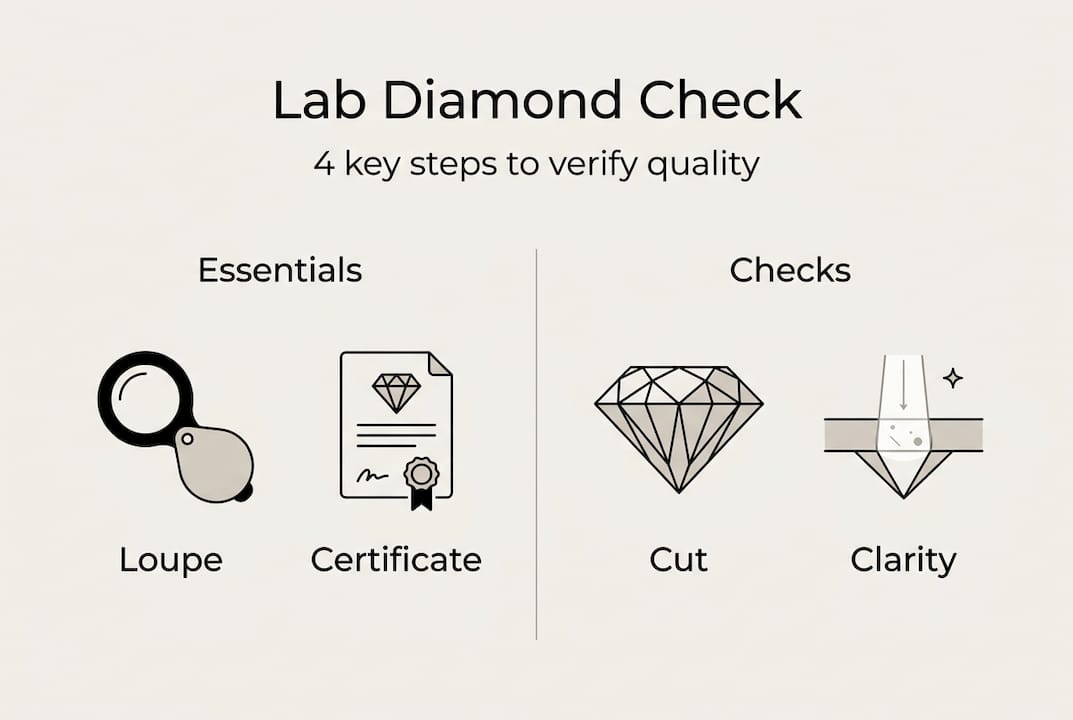
Start by validating the certification number. Visit the issuing lab’s website and enter the report number from your certificate. The online database should display matching details for cut, clarity, color, and carat weight. Mismatched information signals a counterfeit certificate or incorrect stone.
Next, inspect cut quality with your loupe. Examine the diamond’s facets for symmetry and polish. Well-cut stones show precise angles that maximize light return. Look for the table (top flat surface) and check if it’s proportional to the stone’s width. Poor cuts create dark spots or dull areas even in high-clarity diamonds. Checking the 4Cs against certification ensures what you see matches what you’re paying for.
Follow this numbered verification sequence:
- Cross-check certification number on lab’s official website
- Inspect facet alignment and symmetry under magnification
- Examine clarity by identifying inclusions noted on certificate
- Compare color grade in natural daylight against a white background
- Confirm carat weight matches certificate specifications
- Request ethical sourcing documentation and chain of custody
- Calculate price per carat and compare to market benchmarks
Clarity inspection requires patience. Use your loupe to locate inclusions marked on the certificate’s diagram. These natural characteristics should match the documented type and position. If you can’t find the noted inclusions, you may have the wrong stone. Conversely, if you spot inclusions not on the certificate, question the stone’s authenticity.
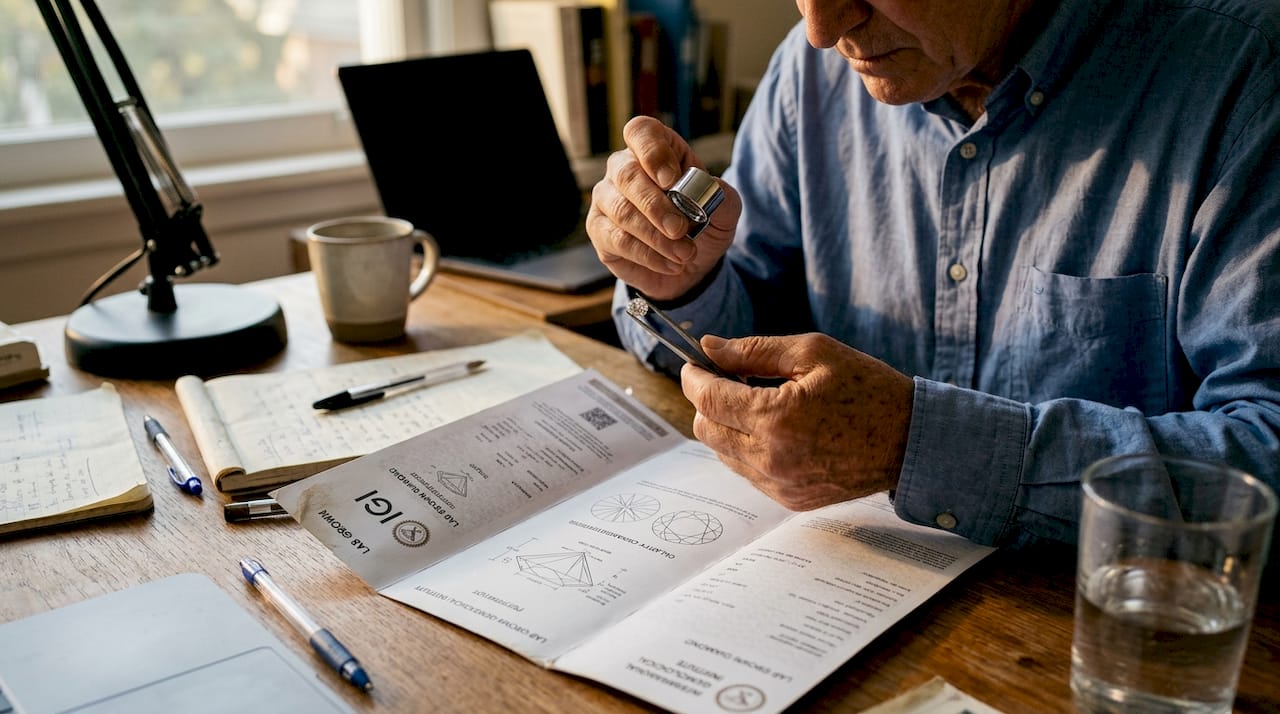
Color grading works best in controlled conditions. Place the diamond table-down on a white surface under natural light. Compare it to color reference stones if available, or use the certificate’s grade as your guide. Even one grade difference affects value significantly. D and E grades appear colorless, while G through J show faint yellow tints visible to trained eyes.
Pro Tip: Ask the jeweler to weigh the diamond in front of you. This simple check confirms carat weight accuracy and builds trust in the transaction.
Ethical sourcing verification separates responsible retailers from questionable ones. Request documentation showing the diamond’s production lab, manufacturing date, and supply chain. Lab-grown diamonds should come with clear origin stories. Retailers committed to sustainability provide this information readily. For detailed purchasing strategies, review lab grown diamond buying tips for couples that emphasize ethical considerations.
Finally, evaluate pricing. Calculate the cost per carat and compare it to similar certified stones from multiple sellers. Prices significantly below market average often indicate quality issues or fraudulent grading. Your diamond carat lab grown jewelry research helps you recognize fair pricing.
Common mistakes to avoid when verifying diamond quality
Many buyers fixate on carat size while ignoring cut quality. A two-carat diamond with poor cut looks dull compared to a well-cut one-carat stone. Cut determines brilliance, the visual impact that makes diamonds captivating. Prioritizing size over cut sacrifices the sparkle that defines diamond beauty.
Skipping certification validation ranks among the costliest errors. Some sellers present fake certificates or alter genuine ones. Without cross-checking the report number online, you can’t confirm authenticity. Many buyers overlook certification authenticity or focus excessively on carat instead of the complete quality picture.
Lighting conditions dramatically affect color perception. Inspecting diamonds under yellow indoor lighting makes them appear warmer than their true grade. Jewelers sometimes use strategic lighting to mask color tints. Always request natural daylight inspection or use standardized lighting conditions for accurate assessment.
Ethical sourcing questions get overlooked in the excitement of selection. Failing to verify production practices means potentially supporting unclear supply chains. Lab-grown diamonds offer ethical advantages over mined stones, but only when produced responsibly. Ask direct questions about manufacturing processes and environmental commitments.
Retailer reputation deserves thorough investigation. Purchasing from unknown sellers without reviews or industry credentials increases fraud risk. Established jewelers with transparent practices provide recourse if issues arise. Check business ratings, customer testimonials, and industry affiliations before committing.
Avoid these verification pitfalls:
- Trusting verbal claims without written certification
- Comparing diamonds under inconsistent lighting
- Accepting vague answers about sourcing and origin
- Rushing the inspection process due to sales pressure
- Ignoring minor discrepancies between stone and certificate
“The most expensive diamond isn’t always the best choice. Smart buyers verify quality independently and prioritize cut excellence over carat weight alone.”
For comprehensive comparisons between lab-grown and natural options, explore lab grown vs natural diamonds comparison resources that highlight quality verification differences.
Interpreting verification results and making the final decision
Once you’ve gathered verification data, systematic comparison guides your choice. Create a simple matrix listing each diamond’s certified grades, price per carat, and ethical sourcing documentation. This visual comparison reveals which stones offer the best value for your priorities.
The interplay between cut and clarity often matters more than carat weight. An excellent cut with VS2 clarity produces stunning brilliance that rivals higher clarity grades. Meanwhile, a poor cut with VVS1 clarity looks lifeless despite its technical superiority. Understanding the interplay of the 4Cs helps balance quality, ethics, and budget effectively.
Consider this comparison framework:
| Diamond | Cut Grade | Clarity | Color | Carat | Price/Carat | Ethical Cert |
|---|---|---|---|---|---|---|
| Option A | Excellent | VS1 | E | 1.2 | $1,200 | Yes |
| Option B | Very Good | VVS2 | F | 1.5 | $1,350 | Yes |
| Option C | Good | VS2 | G | 1.8 | $950 | No |
Option A delivers superior cut quality at moderate size, maximizing visual impact. Option B offers larger size with exceptional clarity but at premium cost. Option C provides size but sacrifices cut quality and lacks ethical verification. Your priorities determine the winner.
Ethical sourcing certifications deserve weight in your decision matrix. Diamonds with documented responsible production align with values many Colorado couples prioritize. This factor differentiates otherwise similar stones and supports sustainable industry practices.
Use this final decision checklist:
- Certification validated through official lab database
- Cut quality meets or exceeds Very Good grade
- Clarity grade appropriate for naked-eye cleanliness
- Color grade suits your metal choice and preferences
- Price per carat falls within market range for specifications
- Ethical sourcing documentation provided and verified
- Return policy and warranty clearly stated
Pro Tip: Trust your visual response. After verifying technical specifications, choose the diamond that captivates you most. Emotional connection matters in a purchase you’ll wear daily.
Balancing objective data with personal preference creates satisfaction. Some buyers prioritize maximum size within budget. Others value colorless grades or flawless clarity. Your how to choose lab grown diamonds research should reflect what matters most to you, not arbitrary industry standards.
Remember that verification protects your investment. The time spent confirming quality prevents regret and ensures your diamond meets expectations for decades. Confident purchases stem from thorough verification, not rushed decisions.
Explore ethically sourced lab-grown diamond jewelry
Now that you understand quality verification, discover diamonds that meet your standards. Eternal Carat specializes in certified lab-grown diamonds with complete transparency about sourcing and production. Every stone comes with authentication you can verify independently, giving you confidence in your choice.
Our custom engagement rings let you apply your new verification knowledge to create something uniquely yours. Work with experienced designers who prioritize cut quality and ethical sourcing. Whether you prefer classic solitaires or intricate settings, we craft rings that showcase diamond brilliance perfectly. Explore our collection of lab-grown diamond jewelry and custom engagement rings featuring stones that pass rigorous quality standards.
For those seeking elegant everyday pieces, our 14K yellow gold lab-grown diamond stud earrings demonstrate how verified quality translates to stunning wearability. Each piece reflects our commitment to sustainable luxury without compromising beauty or value. Visit our Parker, Colorado location by appointment for personalized consultation and hands-on diamond comparison.
FAQ
How can I confirm a lab-grown diamond’s certification is authentic?
Visit the certification lab’s official website and enter the report number from your certificate. The online database will display matching specifications if the certificate is genuine. Verify that all details including cut, clarity, color, and carat match your physical diamond exactly. Any discrepancies indicate potential fraud or stone substitution. For detailed guidance, review lab-grown diamond quality guide selection resources.
What tools do I need to inspect a diamond at home?
A jeweler’s loupe with 10x magnification is essential for examining clarity and cut details. Natural daylight provides accurate color assessment, so inspect near a window with indirect sunlight. A white background helps reveal true color grades without distortion. Optional diamond testers confirm physical properties specific to lab-grown stones, though certification validation matters more. These basic tools enable thorough home inspection before purchase. Learn more through lab-grown diamond quality guide selection articles.
Why is the diamond cut more important than carat weight?
Cut determines how effectively light reflects through the diamond, creating the brilliance and fire that define beauty. A well-cut smaller diamond sparkles intensely, while a poorly cut larger stone appears dull despite its size. Cut quality affects visual impact more than any other factor. Many buyers prioritize carat weight but regret sacrificing cut excellence. For comprehensive cut analysis, explore diamond cut explained sparkle value guides that demonstrate this principle.
How can I ensure my lab-grown diamond aligns with ethical sourcing standards?
Request complete documentation showing the diamond’s production lab, manufacturing processes, and supply chain. Responsible retailers provide transparent information about their sourcing practices and environmental commitments. Look for third-party ethical certifications beyond basic quality reports. Ask specific questions about energy sources used in production and waste management practices. Retailers who hesitate to share this information may lack true ethical standards. Discover comprehensive ethical shopping strategies through ethical engagement ring shopping guide denver 2026 resources.
Recommended
- 6 Essential Lab-Grown Diamond Buying Tips for Couples – Eternal Carat
- Lab-Grown Diamond Quality Guide for Flawless Selection – Eternal Carat
- Best Lab-Grown Diamond Rings – Expert Comparison 2026 – Eternal Carat
- How to Choose Lab-Grown Diamonds for Elegant Jewelry – Eternal Carat
- Gold Chain Ring – Be Juliet


