

Most engagement ring shoppers walk into the process convinced that clarity is the crown jewel of diamond quality. It sounds logical: a cleaner stone must be a better stone. But that assumption quietly costs buyers hundreds, sometimes thousands, of dollars in missed sparkle and misallocated budget. The truth is that diamond cut is the single biggest driver of how beautiful a stone looks on the hand, and Denver shoppers who understand this trade-off walk away with rings that genuinely outshine the competition.
Table of Contents
- Understanding diamond cut: The key to brilliance
- What is diamond clarity and how does it affect value?
- Diamond cut versus clarity: Which should you prioritize?
- Expert strategies for Denver engagement ring buyers
- Find your perfect diamond with Eternal Carat
- Frequently asked questions
Key Takeaways
| Point | Details |
|---|---|
| Cut determines brilliance | A diamond’s cut is the biggest factor in its sparkle and beauty, more than clarity. |
| Eye-clean clarity is key | Most buyers get the best value with VS2 or SI1 stones that appear flawless to the naked eye. |
| Prioritize budget for cut | Focus your budget on an Excellent cut grade before spending more for high clarity levels. |
| GIA certification adds trust | Always look for reputable grading, especially for round brilliant engagement ring diamonds. |
| Shop smart for value | Denver shoppers can maximize both beauty and value by balancing cut and clarity priorities. |
Understanding diamond cut: The key to brilliance
Diamond cut does not refer to a diamond’s shape. It refers to how precisely a diamond’s facets (the flat, polished surfaces) are angled, sized, and aligned to interact with light. A well-cut diamond bounces light back through the top of the stone in a way that creates brightness, fire (the rainbow flashes you see), and scintillation (the sparkle when the stone moves). A poorly cut diamond, regardless of how clean or large it is, leaks light through the bottom and sides, leaving the stone looking dull and lifeless.
GIA grades round brilliant cuts using 7 key factors: brightness, fire, scintillation, weight ratio, durability, polish, and symmetry. This grading system is the most rigorous in the industry and applies specifically to round brilliant diamonds. The grades run from Excellent down to Poor.
| Cut grade | Light performance | Visual impact |
|---|---|---|
| Excellent | Maximum light return | Exceptional brilliance |
| Very Good | Near-maximum return | Strong sparkle |
| Good | Moderate light return | Acceptable brightness |
| Fair | Below average | Noticeably dull |
| Poor | Significant light loss | Flat appearance |
“The difference between an Excellent and a Good cut grade is visible to the naked eye, even without gemological training. It is the first thing people notice.”
For engagement rings, this matters enormously. You want a stone that commands attention across a room, not just under a jeweler’s loupe. Our lab-grown diamond quality guide walks through how cut interacts with other quality factors in both natural and lab-grown stones, giving you a complete picture before you buy.
What is diamond clarity and how does it affect value?
Clarity measures the presence of internal characteristics called inclusions (tiny crystals, feathers, or clouds trapped inside the stone during formation) and external marks called blemishes. The GIA clarity scale runs from Flawless (FL) at the top, through VVS1, VVS2, VS1, VS2, SI1, SI2, and down to Included grades (I1, I2, I3) at the bottom.
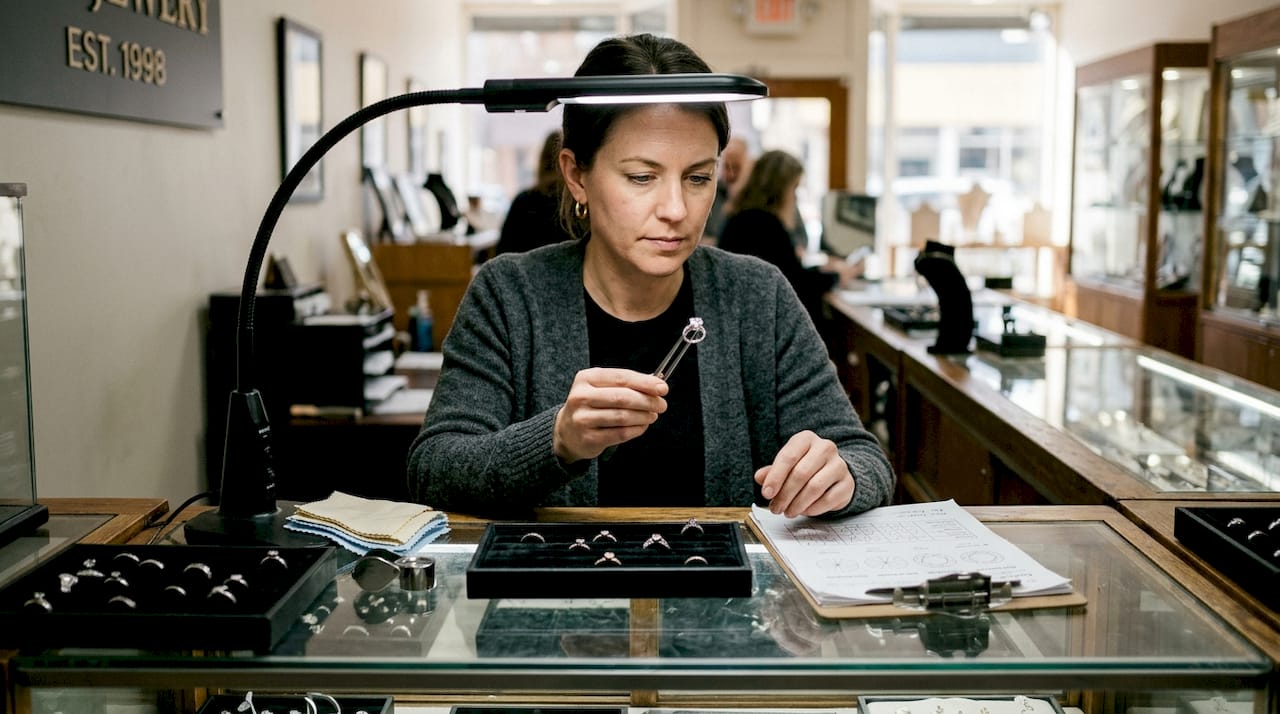
Here is the critical insight most salespeople skip: the majority of inclusions in VS2 and SI1 diamonds are completely invisible without magnification. VS2 and SI1 diamonds are often eye-clean, making them ideal for engagement rings under 2 carats. Paying a premium for VVS1 or Flawless clarity in a 1-carat stone is, in most cases, spending money on something no one will ever see.
That said, clarity does matter more in certain situations:
- Larger stones (over 2 carats): Inclusions become easier to spot as the stone gets bigger, so VS1 or higher is worth considering.
- Step-cut shapes: Emerald and Asscher cuts have large, open facets that act like windows into the stone, making inclusions more visible than in brilliant cuts.
- Colorless or near-colorless diamonds: Higher color grades can make inclusions slightly more apparent under certain lighting.
- Sentimental heirlooms: If the ring will be passed down, a cleaner stone may hold its perceived value better over generations.
Pro Tip: Ask your jeweler to show you the stone under normal lighting, not just under a bright loupe or microscope. If you cannot see the inclusions with your naked eye in everyday light, the clarity grade is doing its job.
For a deeper look at how lab diamond quality factors compare across grades, our guide breaks down exactly what to look for without the jargon.
Diamond cut versus clarity: Which should you prioritize?
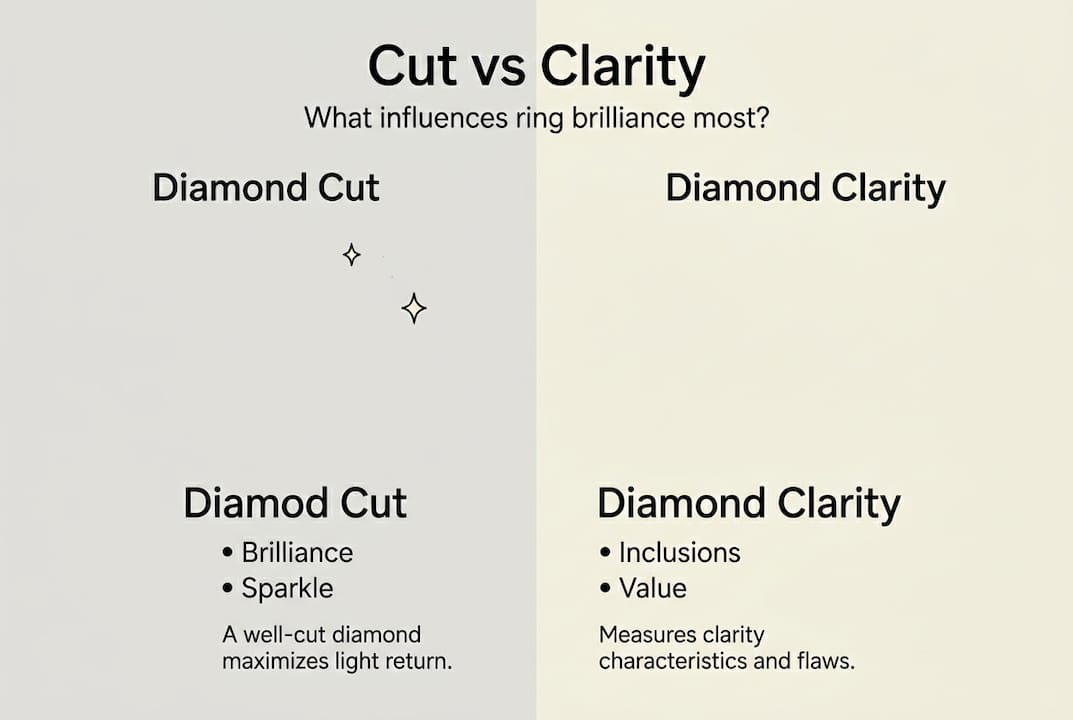
Let’s put both qualities side by side so you can see exactly what you are weighing.
| Factor | Diamond cut | Diamond clarity |
|---|---|---|
| Impact on sparkle | Very high | Low to moderate |
| Visible to naked eye | Always | Often not (VS2/SI1) |
| Price sensitivity | High | High |
| Affects shape options | Yes | No |
| GIA graded for all shapes | Round brilliants only | All shapes |
Excellent cut round brilliants achieve maximum light return and beauty, which is why most experienced buyers and gemologists recommend prioritizing cut above all other factors. A VS2 stone with an Excellent cut will almost always look more stunning than a VVS1 stone with a Good cut. The numbers on the certificate matter less than what your eyes tell you.
From a budget perspective, here is how to think about it:
- Prioritize cut first: Never drop below Very Good, and aim for Excellent if your budget allows.
- Accept VS2 or SI1 clarity: For stones under 2 carats, this range is eye-clean and frees up budget for cut or carat weight.
- Color before clarity: If you have to choose between bumping up color or clarity, color is usually more visible to the naked eye.
- Lab-grown advantage: Lab-grown diamonds typically offer higher cut and clarity grades at significantly lower price points than mined stones, giving you more flexibility across all four Cs.
If you want to see this in practice, take a look at this cushion diamond example that balances cut quality and clarity in a way that maximizes visual impact without overspending on invisible characteristics.
Expert strategies for Denver engagement ring buyers
Denver buyers have a real advantage: the local market includes knowledgeable jewelers and access to both in-person and online resources that let you compare stones before committing. Here is how to use that advantage well.
- Lead with cut grade. When you start your search, filter by Excellent or Very Good cut before looking at anything else. This single step eliminates the majority of underperforming stones.
- Set your clarity floor at SI1. For most round brilliants under 2 carats, SI1 is the lowest you should go. Sacrificing clarity to VS2 or SI1 if eye-clean lets you redirect budget toward cut or carat weight where it actually shows.
- Insist on GIA or IGI certification. Uncertified stones or stones graded by lesser-known labs can be inconsistently graded, meaning you may pay VS1 prices for an SI2 stone.
- View stones in multiple lighting conditions. Jewelry store lighting is designed to make every diamond look its best. Ask to see the stone near a window or under standard office lighting to get a realistic sense of its everyday appearance.
- Compare lab-grown and natural side by side. Lab-grown diamonds are chemically and optically identical to mined stones. At Eternal Carat, clients regularly discover that a lab-grown stone with a higher cut grade outperforms a natural stone at twice the price.
Pro Tip: When comparing two stones with similar carat weights and prices, always choose the one with the better cut grade, even if it means accepting a slightly lower clarity grade. The cut is what you will see every single day.
For more tailored guidance, our Denver lab diamond tips resource covers common mistakes local buyers make and how to avoid them. And if you want to see a real-world example of cut and clarity working together beautifully, this G VS1 cushion diamond is a strong reference point for what a well-balanced stone looks like.
Find your perfect diamond with Eternal Carat
Now that you know what to look for, the next step is finding a stone that actually delivers on all of it. At Eternal Carat, we specialize in helping Denver-area shoppers source expertly cut, eye-clean diamonds that maximize brilliance without overpaying for invisible clarity grades.
Our curated selection of custom engagement rings includes lab-grown diamonds graded for exceptional cut quality, so you are never guessing about what you are getting. Whether you prefer to browse online or visit us by appointment at our Parker, Colorado location, our team walks you through every detail, from cut grade comparisons to setting styles. And if you are looking for something beyond the ring, our marquise diamond earrings are a beautiful example of the craftsmanship we bring to every piece. Reach out today and let us help you find the balance of cut and clarity that makes your ring truly unforgettable.
Frequently asked questions
Is diamond cut or clarity more important for sparkle?
Diamond cut has a far greater impact on sparkle and brilliance than clarity. As long as a diamond is eye-clean, cut grade determines brightness and fire more than any other factor.
What clarity grade should I look for in an engagement ring?
For most engagement rings under 2 carats, VS2 or SI1 is the sweet spot. VS2 and SI1 are often eye-clean and offer excellent value without paying for clarity you cannot see.
Why is GIA grading important when buying a diamond?
GIA grading is the global standard for accuracy and consistency, particularly for cut grades in round diamonds. GIA developed current cut grading standards through extensive research, so you know exactly what you are purchasing.
Does diamond cut affect price more than clarity?
Both factors influence price, but a higher cut grade often commands a meaningful premium because it directly enhances beauty. Excellent cut round brilliants deliver maximum light return, which buyers can see and feel the moment they put the ring on.


