

TL;DR:
- Authentic sustainable jewelry includes recognized third-party certifications and transparent sourcing practices.
- Lab-grown diamonds with renewable energy reduce environmental impact significantly compared to mined stones.
- Recycled metals and direct supplier relationships are key for ensuring true environmental and ethical responsibility.
Shopping for sustainable jewelry sounds simple until you realize how many brands use the word “sustainable” without any proof to back it up. In a market flooded with vague environmental claims and recycled buzzwords, eco-conscious buyers in Colorado deserve a real framework for spotting authentic pieces. Whether you are searching for a lab-grown diamond engagement ring or a bespoke pendant crafted from recycled gold, the traits that define true sustainability are specific, verifiable, and worth knowing before you spend a single dollar. This guide walks you through exactly what to look for.
Table of Contents
- Key certifications: Your first checkpoint
- ethical sourcing and fair labor practices
- Environmental impact: Lab-grown vs. mined diamonds
- Materials and custom design: Making sustainability personal
- What most people overlook about sustainable jewelry
- Ready to find your sustainable luxury piece?
- frequently asked questions
Key Takeaways
| Point | Details |
|---|---|
| Trusted certifications | Look for third-party verified marks such as RJC or Fairmined before buying. |
| Full supply chain ethics | Always check that your jewelry is conflict-free, fairly made, and traceable. |
| Lower carbon options | Lab-grown diamonds, especially with renewable energy, dramatically cut emissions. |
| Personalized eco luxury | Recycled metals and custom designs offer both sustainability and individual style. |
| Dig deeper than labels | Certifications are a start but seek full transparency and local craftsmanship for real assurance. |
Key certifications: Your first checkpoint
Certifications are the fastest way to filter out noise. When a jeweler backs their claims with recognized third-party credentials, you immediately have a foundation for trust. Without them, you are essentially taking a brand’s marketing copy at face value.
The most important certifications to know include:
- RJC Code of Practice (COP): The gold standard for mainstream jewelry brands, covering human rights, labor, environmental impact, and business ethics.
- RJC Chain of custody (COC): tracks materials from source to finished piece, ensuring nothing slips through unverified.
- Laboratory grown material standard (lgms): specifically designed for lab-grown gemstones, confirming traceability and responsible production.
- fairmined: certifies artisanal and small-scale mining operations that meet strict social and environmental standards.
- fairtrade gold: similar in spirit to fairmined, ensuring miners receive fair prices and work in safe conditions.
As key certifications for sustainable jewelry include RJC COP, COC, Laboratory grown material standard, fairmined, and fairtrade, understanding what each one actually verifies protects you from certification theater, where a brand displays a logo without meaningful ongoing accountability.
Worth knowing: RJC certification is widely recognized, but critics have noted that enforcement on sourcing specifics can be inconsistent. The strongest programs combine certification with third-party audits conducted by independent bodies, not just internal reviews.
Our Denver sustainable jewelry guide breaks down how Colorado shoppers can apply these certification standards when visiting local jewelers or shopping online. And if you want a broader foundation, the ethical jewelry guide explains how certifications fit into the bigger picture of responsible luxury.
One practical step: ask any jeweler for their current certification documentation, not just a badge on their website. Valid certifications are renewed on a cycle, and outdated ones offer no real protection.
ethical sourcing and fair labor practices
Certifications point you in the right direction, but the deeper layer of sustainable jewelry is what happens to the people involved in making it. A truly ethical piece requires more than a low carbon footprint.
Here is what responsible jewelers should demonstrate on the labor and sourcing side:
- conflict-free materials: Every metal and gemstone should be free from connections to armed conflict or human rights abuses.
- fair wages and benefits: Workers at every point in the supply chain, from miners to craftspeople, should earn living wages.
- safe working environments: No exposure to hazardous materials without proper protection, and no exploitation of vulnerable workers.
- zero child labor: This should be non-negotiable, with verifiable policies and audit trails.
- full supply chain transparency: The ability to trace a gemstone or metal from its origin to the finished piece you purchase.
As ethical labor standards confirm, true sustainability in jewelry means conflict-free sourcing, fair wages, safe conditions, full supply chain transparency, and no child labor. These are not aspirational ideals. They are baseline requirements.
Many Colorado jewelers differentiate themselves by maintaining direct relationships with their manufacturers or mining cooperatives. This shortens the supply chain and makes transparency far easier to verify. When a jeweler can tell you exactly which facility produced your ring setting and show you documentation of their labor practices, that is a strong indicator of genuine commitment.
Pro tip: Ask your jeweler to name their primary metal supplier and whether that supplier holds a fairtrade or fairmined certification. If they cannot answer quickly, dig further before purchasing. You can also review our ethical jewelry picks for curated examples of what genuine ethical sourcing looks like in practice.
Transparency is not just a feel-good feature. It is the architecture that holds every other sustainability claim together.
Environmental impact: Lab-grown vs. mined diamonds
Once you understand the human side of sustainability, the environmental picture comes next. And here, the numbers are striking.
Carbon footprint figures show that lab-grown diamonds have an 80 to 97% lower carbon footprint than mined diamonds. To make that concrete: mined diamonds average around 160kg of CO2 per carat. Lab-grown diamonds produced with renewable energy can drop that number to as low as 6kg CO2 per carat.
| Diamond type | Energy source | CO2 per carat (approximate) | Land disruption | Water use impact |
|---|---|---|---|---|
| mined diamond | fossil fuels | ~160 kg | high | high |
| lab-grown diamond | mixed grid | ~50 kg | minimal | low |
| lab-grown diamond | renewable energy | ~6 kg | minimal | low |
The difference is not marginal. It is transformational.
But here is what most buyers miss: not all lab-grown diamonds are equally green. The production process requires significant energy, and if that energy comes from coal-heavy grids, the environmental savings shrink considerably. This is why it matters to ask your jeweler about their diamond producer’s energy mix, not just whether the diamond is lab-grown.
Key questions to ask about environmental impact:
- What energy source powers the lab where my diamond was grown?
- Does the producer publish verified environmental impact data?
- Is the facility certified under any environmental management standard?
Understanding how lab-grown diamonds are made helps you evaluate these answers with confidence. For a broader view of the ecological benefits, explore lab-grown sustainability benefits and the practical case laid out in our lab-created diamond advantages resource.
The bottom line: lab-grown diamonds, when powered by renewable energy, represent the most environmentally responsible gemstone option available today.
Materials and custom design: Making sustainability personal
Gemstones get most of the attention, but the metal holding your stone matters just as much. Mining new gold generates significant waste, uses large volumes of water, and often leaves lasting ecological damage. Using recycled metals sidesteps nearly all of that.
Here is a quick comparison of material choices and their sustainability implications:
| Metal choice | source | environmental rating | traceability |
|---|---|---|---|
| newly mined gold | earth extraction | low | difficult |
| recycled gold | post-consumer or industrial | high | moderate to high |
| fairmined gold | certified small-scale mines | high | verified |
| recycled platinum | post-consumer sources | high | moderate |
Choosing recycled or fairmined metals for your setting is one of the highest-impact decisions you can make outside of the gemstone itself.
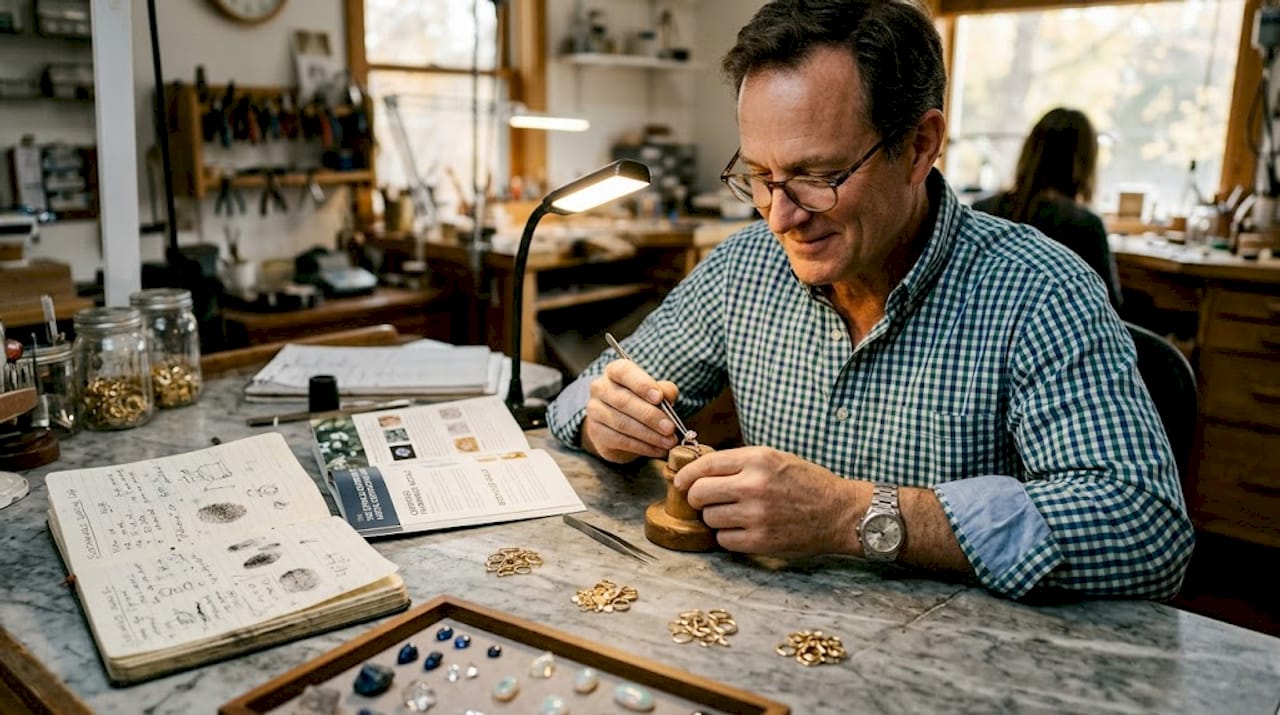
Customization takes this even further. A custom engagement ring process allows Colorado buyers to select both their lab-grown diamond and their recycled metal, giving them complete control over the sustainability of every component. You are not locked into whatever materials a mass-market retailer has in stock.
Here is how to approach custom design with sustainability in mind:
- Select your gemstone first. Choose a lab-grown diamond with verified renewable energy sourcing.
- Choose your metal. Request recycled gold, recycled platinum, or fairmined gold specifically.
- Review design sketches. Ask your jeweler whether any added elements (pavé stones, accent gems) also meet your sourcing standards.
- Request documentation. Before final payment, confirm that certifications and sourcing records for all materials are on file.
Pro tip: Custom pieces are often more affordable than you expect at this quality level, because you skip the retail markups built into mass-market designs. Our eco-friendly jewelry guide and eco-friendly Denver rings resource show exactly how local Colorado buyers are making this work in practice.
What most people overlook about sustainable jewelry
Here is the uncomfortable reality: a certification badge and a lab-grown label can both exist on a piece that is not as sustainable as it appears. We have seen this firsthand in the Colorado market, and it shapes how we guide every client.
RJC certification, as noted by critics of limited enforcement, does not guarantee deep scrutiny of every sourcing decision. It is a credible framework, but it needs to be combined with real transparency, not used as a substitute for it. Ask for specifics beyond the logo.
On the lab-grown side, a contrarian view worth considering is that lab-grown diamonds powered by fossil-heavy energy grids may not significantly outperform ethically mined diamonds in carbon terms. The label alone is not enough. Energy sourcing is the deciding variable.
What genuinely separates exceptional sustainable jewelry from the rest is informed customization. When you choose every element of a piece, knowing the origin of each material, you are not just buying jewelry. You are exercising real environmental agency. Colorado’s local designers, many of them working at boutique scale, are often miles ahead of international brands in this kind of authentic transparency. They can name their suppliers, share their energy data, and show you exactly what makes their process different. That is the standard to hold everyone to. Check our diamond sourcing comparison for a side-by-side look at what these choices actually mean.
Ready to find your sustainable luxury piece?
You now have a real framework for evaluating sustainable jewelry beyond surface-level claims. The next step is finding a jeweler who can meet that standard.

At lab-grown diamond jewelry, we offer certified lab-grown diamonds, recycled and fairmined metals, and fully bespoke design services from our appointment-only studio in Parker, Colorado. Every piece we craft starts with a conversation about what matters most to you, sustainability, style, and lasting value. If you want to understand the full process before you visit, our sustainable jewelry shopping workflow walks you through each decision point so you arrive prepared and confident.
frequently asked questions
What are the most important traits of sustainable jewelry?
The top traits are third-party sustainability certifications, ethical sourcing standards including fair wages and conflict-free materials, a transparent supply chain, and a verified low environmental footprint across every material used.
How does lab-grown diamond jewelry reduce environmental impact?
Lab-grown diamonds can carry up to 97% lower carbon footprint than mined diamonds, especially when the production facility runs on renewable energy rather than fossil fuel-based grids.
Are recycled metals really better for the environment?
Yes. Using recycled gold or platinum eliminates the need for new extraction, dramatically reducing land disruption, water use, and carbon emissions compared to newly mined metals.
How do I verify a jeweler’s sustainability claims?
Request current certification documents, ask for named suppliers, and inquire about the energy source behind any lab-grown stones. As key certifications confirm, RJC, Chain of custody, and fairtrade credentials all require documented accountability, so any credible jeweler should be able to share that paperwork on request.


