

TL;DR:
- Regular maintenance and inspections are essential to preserve the beauty and security of engagement rings.
- Use appropriate tools and gentle cleaning methods based on gemstone type and ring setting.
- Professional care and proper documentation help protect the ring’s value and prevent costly damage.
You reach for your ring one morning and notice the center stone looks cloudy, or worse, you feel a tiny wobble where the prong used to sit flush. That sinking feeling is something no engaged couple in Denver should ever experience. A custom engagement ring represents far more than money spent. It holds the story of a moment, a promise, and a partnership. The good news is that keeping it brilliant and secure is not complicated. This guide walks you through a proven jewelry care workflow, from the tools you need to the professional services that make all the difference, so your ring stays as stunning as the day it was designed.
Table of Contents
- Gather what you need: Tools, products, and materials
- Follow the standard jewelry care workflow
- Special steps for custom and intricate engagement rings
- Troubleshooting and mistakes to avoid
- Why a consistent jewelry care workflow is your real insurance policy
- Protect your sparkle with expert-crafted custom care
- Frequently asked questions
Key Takeaways
| Point | Details |
|---|---|
| Routine matters most | Daily, weekly, and annual care steps are key to maintaining ring beauty and value. |
| Custom rings need extra care | Intricate settings and rare stones require special attention and more frequent inspections. |
| Avoid cleaning mistakes | Steer clear of alcohol on prongs and ultrasonics on loose stones to prevent damage. |
| Pro help pays off | Regular professional inspections catch problems early and preserve your investment. |
Gather what you need: Tools, products, and materials
To start your jewelry care workflow confidently, gather these must-have tools before jumping into regular maintenance. Having the right supplies on hand is not just convenient. It actually prevents you from improvising with products that can damage your ring over time.
A standard jewelry care workflow for engagement rings involves daily inspections, weekly home cleaning, monthly deep checks, and professional servicing every 6 to 12 months. That rhythm only works if you have the right tools ready when you need them.
Essential tools for every engagement ring owner:
- Soft, lint-free microfiber cloth for daily wipe-downs
- Gentle, fragrance-free dish soap
- Soft-bristle toothbrush dedicated only to your ring
- A small bowl for soaking
- A jewelry pouch or fabric-lined box for storage
- A loupe or handheld magnifier for close inspections
- A nonabrasive cleanser formulated for fine jewelry
Not all gemstones tolerate the same cleaners. Diamond and lab-grown diamond settings are fairly forgiving, but emeralds, opals, and pearls require extra caution. Alcohol-based products, including hand sanitizer, can strip the oils that keep softer stones from drying and cracking. Always check which cleaners are safe for your specific stone before you reach for a bottle. You can find trusted diamond care supplies recommended for lab-grown stones specifically.
| Tool | Purpose | Caution |
|---|---|---|
| Microfiber cloth | Daily polishing | Avoid paper towels |
| Soft toothbrush | Cleaning under setting | Never use stiff bristles |
| Loupe magnifier | Checking prongs and stones | 10x magnification preferred |
| Jewelry dish soap | Weekly soak cleaning | Fragrance-free only |
| Nonabrasive cleanser | Monthly deep clean | Verify gem compatibility |
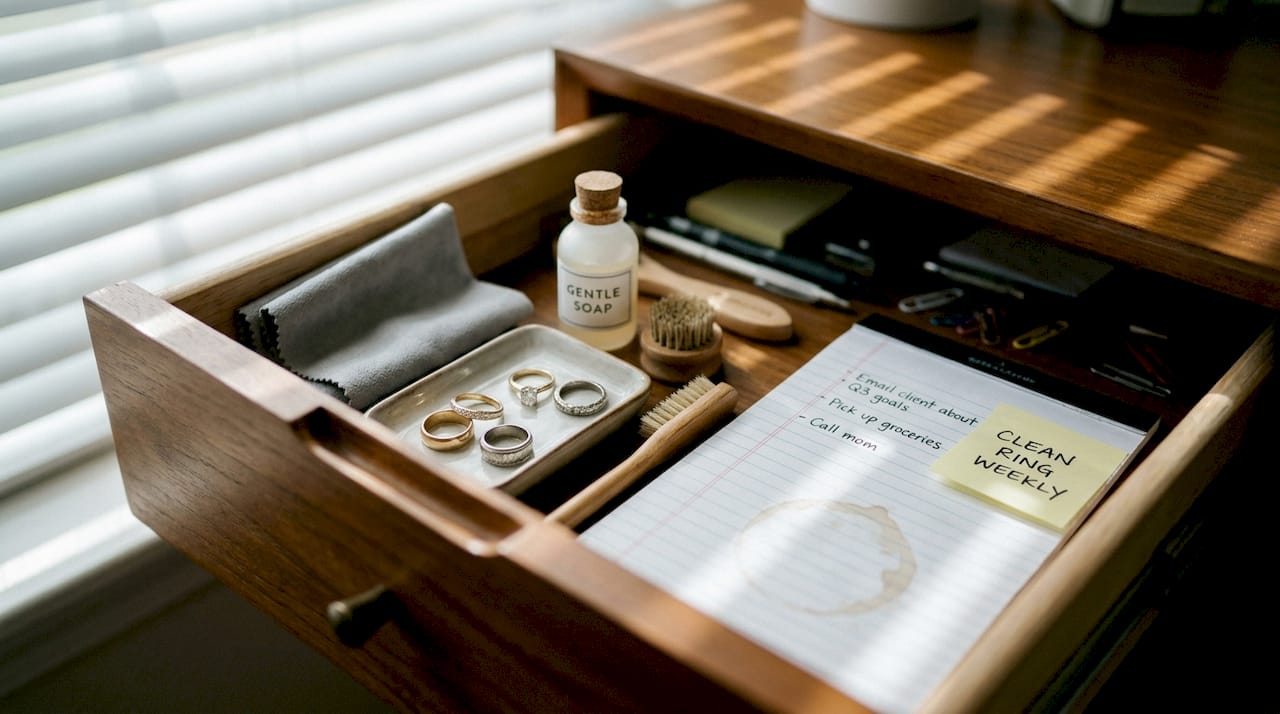
Pro Tip: Designate a small tray or drawer as your home care station. Keep all supplies in one spot, and you are far more likely to actually use them consistently. Convenience is the real secret to routine success.
For those with lab diamond cleaning needs, lab-grown stones respond just as well as natural diamonds to gentle soap-and-water methods, which makes the routine even simpler.
Follow the standard jewelry care workflow
Now that you’ve assembled your toolkit, here’s how to integrate proven workflows into your daily life for lasting brilliance. A great routine is not about spending hours on your ring. It is about small, consistent actions that compound over time.
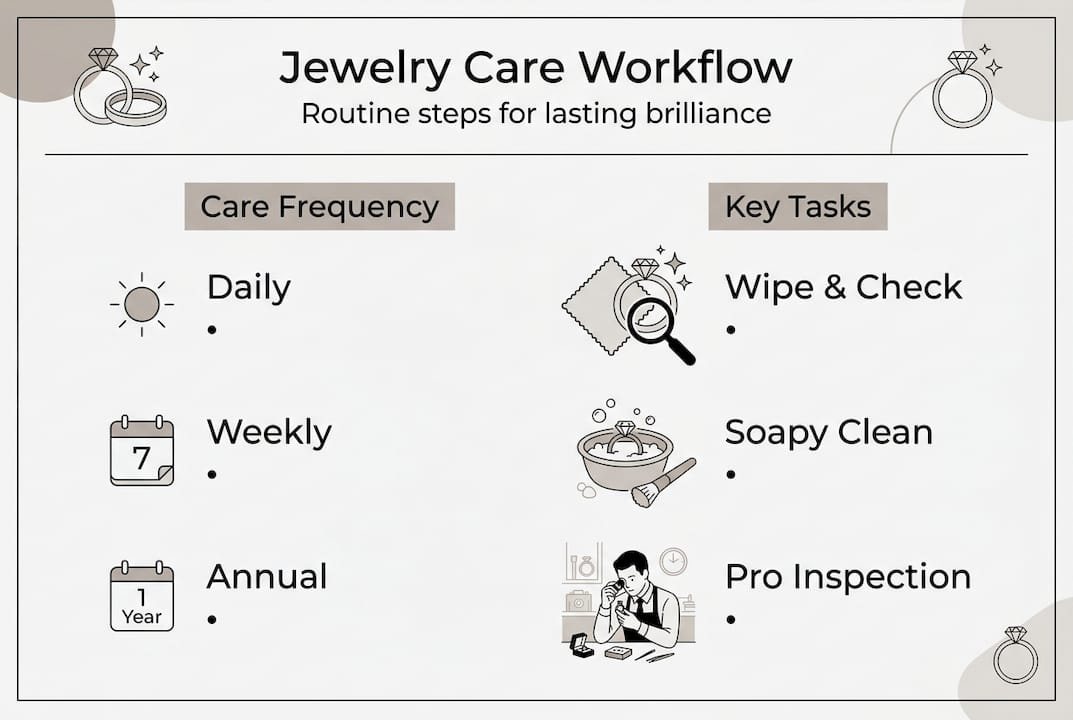
The standard maintenance cycle breaks down into daily, weekly, monthly, and yearly tasks that together maintain ring integrity and catch problems early.
Your step-by-step care schedule:
- Daily: Wipe the ring with a clean microfiber cloth each evening. Inspect visually for snags, residue, or anything that feels different.
- Weekly: Fill a small bowl with warm water and a drop of gentle dish soap. Soak the ring for 20 minutes, then brush lightly with your soft toothbrush. Rinse thoroughly and dry.
- Monthly: Use your loupe to examine every prong and the area beneath the stone. Look for buildup of lotion or hairspray that a weekly soak might have missed.
- Every 6 to 12 months: Schedule a professional cleaning and inspection with a trusted jeweler. This is non-negotiable for custom rings.
| Frequency | Task | Why it matters |
|---|---|---|
| Daily | Wipe and visual check | Catches snags and early residue |
| Weekly | Soapy soak and brush | Removes oils and debris |
| Monthly | Magnified inspection | Spots prong wear early |
| 6 to 12 months | Professional service | Validates structural integrity |
Pro Tip: Set four recurring calendar reminders right now, one for each care interval. Treat the six-month professional appointment the same way you treat a dental checkup. Skipping it seems fine until it suddenly is not.
Need a detailed breakdown of each step? The step-by-step jewelry care guide covers every nuance, including how to safely dry your ring without creating micro-scratches. You can also explore ethical jewelry maintenance practices that align with a sustainability-minded lifestyle.
Special steps for custom and intricate engagement rings
Not all rings are created equal. Custom and vintage pieces need tailored attention to preserve their artistry and value. A cathedral setting, a pavé band, or a bezel-set heirloom stone each carries structural quirks that affect how you clean and inspect it.
Delicate settings, especially those with multiple small accent stones or hand-engraved metalwork, can trap debris in ways that a standard solitaire never will. Gentle handling during cleaning is critical. Never force a brush into tight channels. Let the soak do the heavy lifting first.
“A missed prong inspection can mean a lost stone and heartbreak.” This is not an exaggeration. A prong that has worn down to half its original height may look fine to the naked eye but will fail under normal daily movement.
Prioritize professional inspection for custom rings to check intricate settings, and insure immediately after purchase. Most standard renters or homeowners insurance policies do not cover jewelry adequately, so a standalone jewelry rider is worth every penny.
Special care checklist for custom rings:
- Inspect under a loupe monthly, paying extra attention to prongs on accent stones
- Remove your ring before any activity involving chemicals, including cleaning products
- Store in a fabric-lined box, never loose in a drawer where it can scratch against other pieces
- Have vintage or heirloom-style metalwork assessed by a specialist, not just a general jeweler
- Document the ring with photos at each maintenance session to track any wear over time
If you want to understand complex settings like tension mounts or channel sets before you start cleaning, that context will help you identify exactly which areas need closer attention. Whether you are personalizing wedding rings or following a custom ring design guide, understanding your ring’s architecture makes maintenance far more intuitive.
Troubleshooting and mistakes to avoid
Even careful couples can run into unexpected issues, so here’s how to problem-solve and prevent accidents. The most common ring care mistakes are not acts of carelessness. They are gaps in knowledge, and knowing them in advance puts you miles ahead.
Common mistakes and how to fix them:
- Hand sanitizer: Alcohol weakens prongs over time and should never be used near emeralds, opals, or any porous stone. Remove your ring before applying sanitizer every single time.
- Ultrasonic cleaners: These machines work by sending vibrations through liquid. If your ring has a loose stone or a fragile vintage setting, those vibrations can worsen existing damage rather than fix it. Always check prongs before using one.
- Prong damage: If you notice a snag on fabric or feel a slight wobble in your stone, stop wearing the ring immediately. Take it to a jeweler within days, not weeks.
- Chemical exposure: Chlorine in pools and hot tubs is particularly destructive to gold alloys. Even a short swim can accelerate metal fatigue over time.
- Skipping insurance: Losing a one-of-a-kind custom ring and discovering it was not properly insured is a regret that money cannot undo.
Statistic callout: Repeated exposure to alcohol-based products can weaken engagement ring prongs and contribute directly to stone loss, a risk that grows with every unprotected application.
For those with lab-grown stones, the structural risks are the same as natural diamonds. Check the lab diamond safety tips to confirm which home methods are safe for your specific setting and metal type.
Pro Tip: Keep a small ring dish at your kitchen sink and by your bathroom vanity. Building the habit of removing your ring before washing hands or applying lotion takes just one week of intentional practice.
Why a consistent jewelry care workflow is your real insurance policy
Having covered the practicalities, let’s look beyond routine tasks to the deeper value a care workflow brings. Here is something the jewelry industry rarely says out loud: insurance will pay you back financially, but it cannot replace the original ring.
The specific cuts, the metal grain patterns, the exact finish a craftsperson achieved on your custom piece. Those details exist once. If a stone falls out because a prong was never checked, or if a band cracks because chlorine exposure was never taken seriously, the replacement piece will be similar but never identical. That gap, however small it looks on paper, tends to feel enormous when you are living with it.
We have seen clients designing a unique piece invest months in getting every detail right, then treat the maintenance phase as optional. That is backward thinking. The design phase is exciting. The care phase is what actually protects the outcome of all that effort.
Documenting each maintenance session with a quick photo builds a visual service history. It is also surprisingly emotional, watching your ring stay brilliant year after year because you chose to be intentional about its care. Small habits, repeated consistently, are the difference between an heirloom and a regret.
Protect your sparkle with expert-crafted custom care
Ready to ensure your ring lasts a lifetime? Here’s how to partner with pros who care as much as you do.
At Eternal Carat, we design custom engagement rings built to handle the demands of real daily life without sacrificing beauty or brilliance. Every piece we craft comes with expert guidance on how to maintain it properly for decades. Our appointment-only location in Parker, Colorado gives you private, one-on-one access to specialists who understand your specific ring inside and out. Whether you need a complete care strategy or want to review your current routine, our team is ready to help. Start with our detailed jewelry care guide and reach out to schedule a consultation.
Frequently asked questions
How often should I clean my custom engagement ring at home?
Clean your ring weekly with mild soap and water, and perform daily inspections for snags or residue to stay ahead of buildup and prong wear.
Is hand sanitizer safe for all gemstones in engagement rings?
No. Alcohol weakens prongs and is particularly harmful to porous stones like emeralds and opals, so remove your ring before applying it every time.
What is the benefit of regular professional ring inspections?
Professional inspection for custom rings catches loose stones and worn prongs before they become losses, saving you from costly repairs or irreplaceable heartbreak.
Can I use ultrasonic cleaners for all engagement rings?
No. Ultrasonics can worsen damage in rings with loose stones or fragile vintage settings, so always confirm your prongs are secure before using one.


