

TL;DR:
- Proper cleaning removes oils and grime that dull diamond brilliance and should be done every 1-2 weeks.
- Regular inspection of prongs every six months prevents stone loss caused by setting failure.
- Lab-grown and natural diamonds require identical care routines, including safe cleaning and maintenance.
Your diamond engagement ring catches the light perfectly on day one. Six months later, it looks dull, cloudy, and somehow smaller. Nothing physically changed, but a thin film of lotion, soap residue, and skin oils has quietly smothered its brilliance. Diamonds rate Mohs 10 for hardness, making them nearly impossible to scratch, yet they attract grease and grime with surprising efficiency. The real threat, though, is rarely the stone itself. It’s the metal setting holding it in place. This guide walks you through exactly what makes diamond jewelry vulnerable, how to clean it safely, and how to protect it for decades to come.
Table of Contents
- Understand your diamond and its vulnerabilities
- Gather your essential cleaning tools and supplies
- Step-by-step: Safely clean and care for your diamond jewelry
- Verify, insure, and protect your jewelry for the future
- The uncomfortable truth about diamond care most people miss
- Discover sustainable sparkle for a lifetime
- Frequently asked questions
Key Takeaways
| Point | Details |
|---|---|
| Diamonds need gentle care | Even hard gems attract dirt and can lose their sparkle without regular cleaning. |
| Settings are the weak spot | Metal prongs and clasps wear over time—check them often to prevent stone loss. |
| Professional checkups matter | Routine inspections by experts can save you from preventable and costly repairs. |
| Lab-grown and natural care is identical | Both require the same cleaning and protection steps for lasting brilliance. |
Understand your diamond and its vulnerabilities
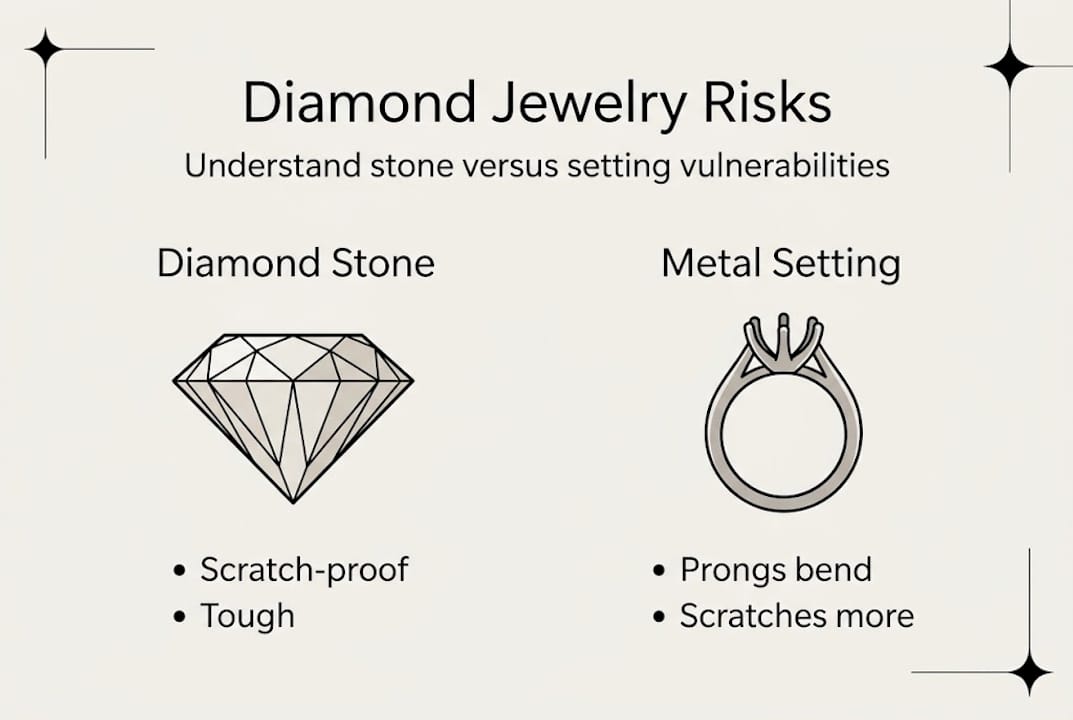
Diamonds are the hardest natural material on earth, but hardness only measures resistance to scratching. It says nothing about how a stone handles oils, lotions, perfume, or the invisible layer of skin residue that builds up every single day you wear your ring. That buildup is what kills sparkle. Light enters a diamond, bounces between its facets, and exits as brilliance. Cover those facets with a greasy film, and the light simply scatters. The result is a stone that looks dull, gray, and lifeless.
The bigger vulnerability, though, is your setting. Gold and platinum are dramatically softer than diamond. A prong holding your center stone in place can bend, wear thin, or crack from everyday contact with hard surfaces. Setting failure, not diamond damage, is the primary reason stones go missing. Most people never notice a slightly bent prong until the stone is already gone.
If you own a lab-grown diamond, this applies equally to you. Lab-grown and natural diamonds share the same chemical structure, carbon atom arrangement, and physical properties. Understanding how lab-grown diamonds are made makes it clear why their care requirements are identical. There is no shortcut or special treatment for one over the other.
| Risk factor | Diamond stone | Metal setting |
|---|---|---|
| Scratching | Extremely resistant | Moderate risk over time |
| Oil and dirt buildup | High attraction | Low attraction |
| Bending or deforming | None | Real risk with daily wear |
| Stone loss | Rare | Common cause of loss |
| Requires inspection | Rarely | Every 6 months |
The table above tells the real story. Your stone is tough. Your setting is not.
Pro Tip: Before you clean your ring, hold it up to a bright light and gently wiggle each prong with a fingernail. Any movement at all means it’s time to see a jeweler before you do anything else.
Gather your essential cleaning tools and supplies
Armed with insight into diamond vulnerabilities, the right preparation can extend your jewelry’s brilliance for generations. The good news is that effective at-home cleaning does not require expensive products. In fact, the simpler your approach, the safer it is for both your stone and your setting.
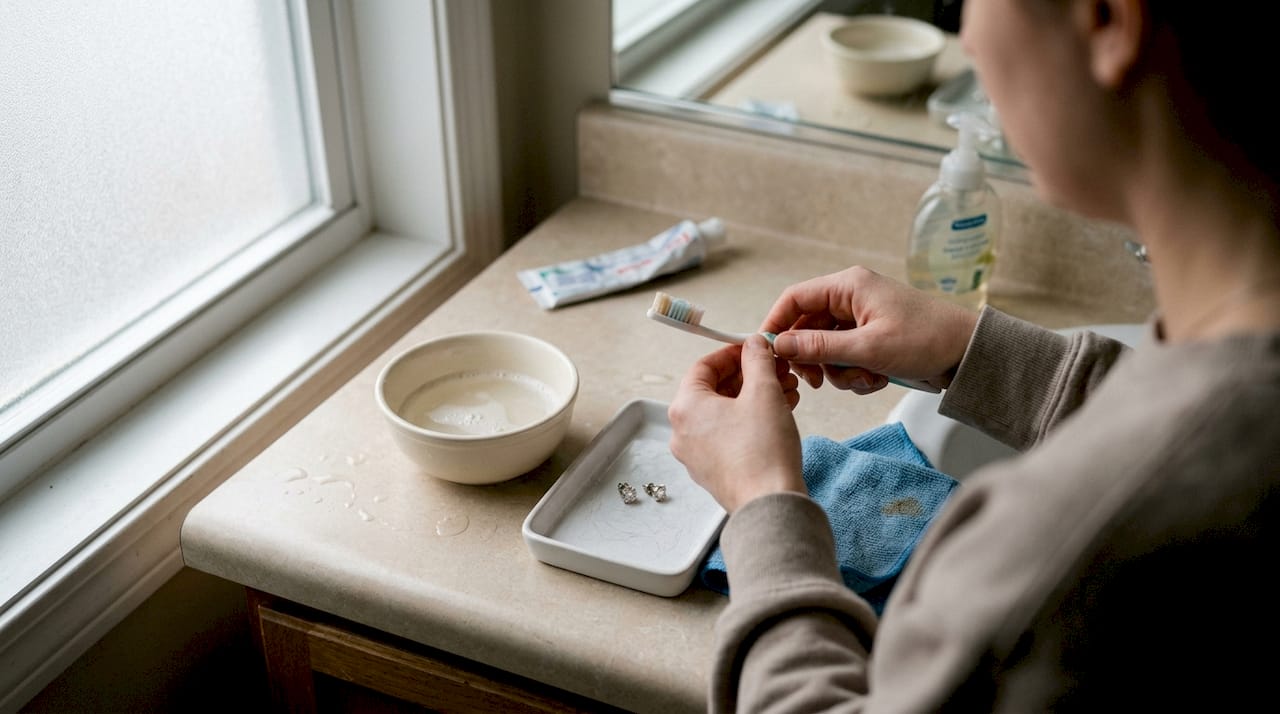
Your core kit should include a small bowl, warm (not hot) water, a drop of mild dish soap, a soft-bristled toothbrush (baby toothbrushes work perfectly), and a lint-free cloth. That’s genuinely all you need for routine maintenance. Regular care preserves sparkle for decades, and this simple kit is how professionals recommend you achieve it at home.
For more detailed guidance specific to your pieces, our lab diamond care tips resource covers material-specific advice worth bookmarking.
What to use:
- Mild dish soap (fragrance-free is best)
- Warm water in a small bowl
- Soft-bristled toothbrush
- Lint-free microfiber cloth
- A clean, flat surface to work on
What to avoid:
- Toothpaste (it’s abrasive and scratches metal)
- Bleach or chlorine-based cleaners (they degrade gold alloys)
- Acetone or nail polish remover
- Baking soda solutions
- Ultrasonic cleaners without professional guidance
- Steam cleaners at home unless you know your setting is secure
The ultrasonic cleaner deserves special attention. These machines use vibration to loosen dirt, and they work well in professional settings where a trained jeweler has already confirmed your prongs are tight. At home, the same vibrations can loosen a borderline prong and cause the very stone loss you were trying to prevent. Unless a jeweler has recently inspected your piece, skip the machine.
One more thing worth noting: avoid cleaning your jewelry over an open drain. It sounds obvious, but a slippery ring over a sink is one of the most common ways people lose stones or entire pieces. Use a bowl on a stable surface, always.
Step-by-step: Safely clean and care for your diamond jewelry
Now that your supplies are ready, here’s exactly how to keep your diamonds pristine, step by step. For engagement rings and pieces worn daily, aim to clean every one to two weeks. It takes less than ten minutes and makes a visible difference.
- Inspect first. Before any water touches your ring, check each prong under good lighting. Look for bends, gaps, or any prong that sits lower than the others.
- Soak the piece. Place your jewelry in a bowl of warm water with one drop of mild dish soap. Let it soak for 20 to 30 minutes. This loosens built-up oils and residue without any scrubbing force.
- Brush gently. Use your soft toothbrush to clean around the stone, under the setting, and along the band. Pay special attention to the underside of the stone where dirt collects most heavily.
- Rinse thoroughly. Transfer the piece to a second bowl of clean warm water, or hold it under a gentle stream. Make sure no soap residue remains, as it can leave its own dull film.
- Dry and polish. Pat the piece dry with your lint-free cloth, then gently buff the metal to restore its shine. Let it air-dry completely before storing or wearing.
Pro Tip: If you notice your stone looks cloudy after cleaning, the problem is likely soap residue. Rinse again with clean warm water and dry with a fresh cloth.
For professional care, the schedule matters. Engagement rings worn daily need inspection every six months, where a trained jeweler checks for loose prongs, worn settings, and any structural issues, then performs a deep clean using professional-grade tools. Other pieces worn less frequently can go yearly.
“The difference between a ring that lasts a lifetime and one that loses its stone is almost always a missed inspection, not a missed cleaning.” Our team at Eternal Carat has seen this story play out more times than we can count.
For a broader view of responsible ownership, our ethical diamond care guide connects maintenance with the values behind choosing sustainable jewelry in the first place.
Verify, insure, and protect your jewelry for the future
Beyond cleaning, your jewelry’s real security comes from smart verification and protection. A sparkling diamond in a failing setting is still at risk. This is where most owners fall short, not because they don’t care, but because these steps feel less urgent than a visible cleaning need.
Start with a physical check every few months. Run your fingertip across each prong. Tug gently on the stone (it should not move at all). Look at the clasp on bracelets and necklaces. These quick checks take under a minute and can catch problems before they become losses.
Appraisals matter more than most people realize. An appraisal documents your jewelry’s current replacement value, which is critical for insurance purposes. Values shift over time, especially for lab-grown diamonds, so insurance and appraisals for high-value pieces should be updated every two to three years. If you ever need to make a claim, an outdated appraisal could leave you significantly undercompensated.
For guidance on evaluating what you own, our resource on verifying diamond quality walks through grading reports and what to look for.
“Regular care preserves sparkle for decades or centuries.” This isn’t just about aesthetics. It’s about protecting something that carries real financial and emotional value.
Your annual jewelry protection checklist:
- Schedule a professional inspection every 6 months for daily-wear pieces
- Update your jewelry appraisal every 2 to 3 years
- Review your homeowner’s or renter’s insurance policy for jewelry coverage limits
- Photograph each piece from multiple angles and store images securely
- Store pieces individually in soft pouches to prevent metal-on-metal scratching
- Remove jewelry before swimming, gardening, or working with chemicals
These steps cost very little time but provide enormous peace of mind, especially for pieces that are irreplaceable in sentimental terms.
The uncomfortable truth about diamond care most people miss
Here’s what years of working with jewelry owners has taught us: the people who lose stones are almost never the ones who skipped a cleaning. They’re the ones who skipped an inspection.
There’s a real obsession in the jewelry care world with cleaning frequency, product selection, and technique. All of that matters, but it addresses the wrong risk. A perfectly clean diamond sitting in a worn prong is one bump away from disappearing. Setting failure drives stone loss, not surface grime. Grime costs you sparkle. A failed setting costs you the stone entirely.
We’d also push back on the idea that professional inspections are a luxury. They are the single most effective thing you can do for your jewelry’s longevity. A jeweler can spot a prong that’s worn to 60% of its original thickness. You cannot. That’s not a criticism; it’s just physics and training.
If you’re weighing different stone options and want to understand durability comparisons, our breakdown of lab diamonds vs. moissanite covers real-world wear differences worth knowing. The bottom line: clean regularly, but inspect religiously. One protects the look. The other protects the stone.
Discover sustainable sparkle for a lifetime
If this guide has you thinking about what your next piece of jewelry should look like, and how easy it should be to maintain, you’re in the right place. Lab-grown diamonds offer the same fire, brilliance, and hardness as mined stones, with a smaller environmental footprint and a care routine that’s no more complicated than what you’ve just read.

At Eternal Carat, we specialize in lab-grown diamond jewelry that’s built to last and designed to be loved for generations. Whether you’re shopping for an engagement ring, a gift, or simply upgrading a cherished piece, our team is ready to help you find something that shines as bright as the values behind it. Visit us online or book a private appointment at our Parker, Colorado location.
Frequently asked questions
How often should I clean my diamond jewelry at home?
Clean diamond jewelry every 1 to 2 weeks to prevent oil and dirt buildup. Because diamonds attract oils easily, regular cleaning is the simplest way to maintain their brilliance.
Do lab-grown diamonds require different care than natural ones?
No. Lab-grown diamonds are chemically and physically identical to natural diamonds, so they require exactly the same cleaning routine and professional inspection schedule.
Is it safe to use ultrasonic cleaners at home?
Ultrasonic cleaners are best left to professionals. At home, the vibrations can loosen borderline prongs, and professional cleaning is the safest approach for delicate or high-value settings.
Why is regular professional inspection important?
Because setting failure causes most stone loss, professional inspections every 6 months catch worn or bent prongs before they lead to losing your diamond entirely.
Should I insure my diamond jewelry?
Absolutely. Insurance and current appraisals are strongly recommended for any high-value piece, ensuring you’re fully covered if something is lost, stolen, or damaged.


