

TL;DR:
- Gold jewelry’s value depends on purity craftsmanship origin and ethical sourcing.
- Denver buyers increasingly prefer ethically sourced gold supported by documentation and certifications.
- Provenance and the jewelry’s story significantly impact its long-term worth beyond melt price.
Not all gold jewelry is created equal, and if you’re shopping or selling in the Denver metro area, that distinction matters more than you might expect. The karat stamp on a piece tells only part of the story. Where the gold came from, how it was crafted, and whether it carries a traceable, ethical origin all shape its real-world value. Whether you’re searching for a custom engagement ring that reflects your values, or you’re sitting on inherited jewelry and wondering what it’s worth, this guide cuts through the noise. We’ll cover what makes gold luxury jewelry genuinely valuable, how ethical sourcing works locally, and how to navigate appraisals and resale with confidence.
Table of Contents
- What makes gold luxury jewelry valuable?
- Sustainable and ethical gold sourcing in Denver
- Custom engagement rings: Crafting meaning with gold
- Appraising, trading, and selling gold in Denver
- What most buyers and sellers miss about gold in Denver
- Ready to experience luxury gold or trade with confidence?
- Frequently asked questions
Key Takeaways
| Point | Details |
|---|---|
| Gold value factors | Purity, sourcing, and craftsmanship are what truly drive gold jewelry’s value. |
| Ethical sourcing matters | Denver’s luxury buyers demand transparency and certified origin for peace of mind. |
| Customization adds meaning | Custom gold rings allow you to build a unique story and lasting value. |
| Trusted appraisal is key | Rely on professional appraisals in Denver to ensure you get a fair price when trading or selling gold. |
What makes gold luxury jewelry valuable?
Most people assume the higher the karat, the more valuable the piece. That logic makes sense on the surface, but it’s incomplete. Higher karat doesn’t always mean higher value in consumer luxury jewelry. A beautifully crafted 14k gold ring from a respected designer can command far more than a plain 24k band, because value in luxury jewelry is built from multiple layers.
The four primary drivers of gold jewelry value are purity, craftsmanship, origin, and ethical sourcing. Purity (karat) affects the metal’s composition, but craftsmanship determines how well the piece is made, how it wears over time, and whether it holds its design integrity. Origin and ethical sourcing are increasingly influencing buyer trust and resale potential, especially among Denver’s discerning clientele.
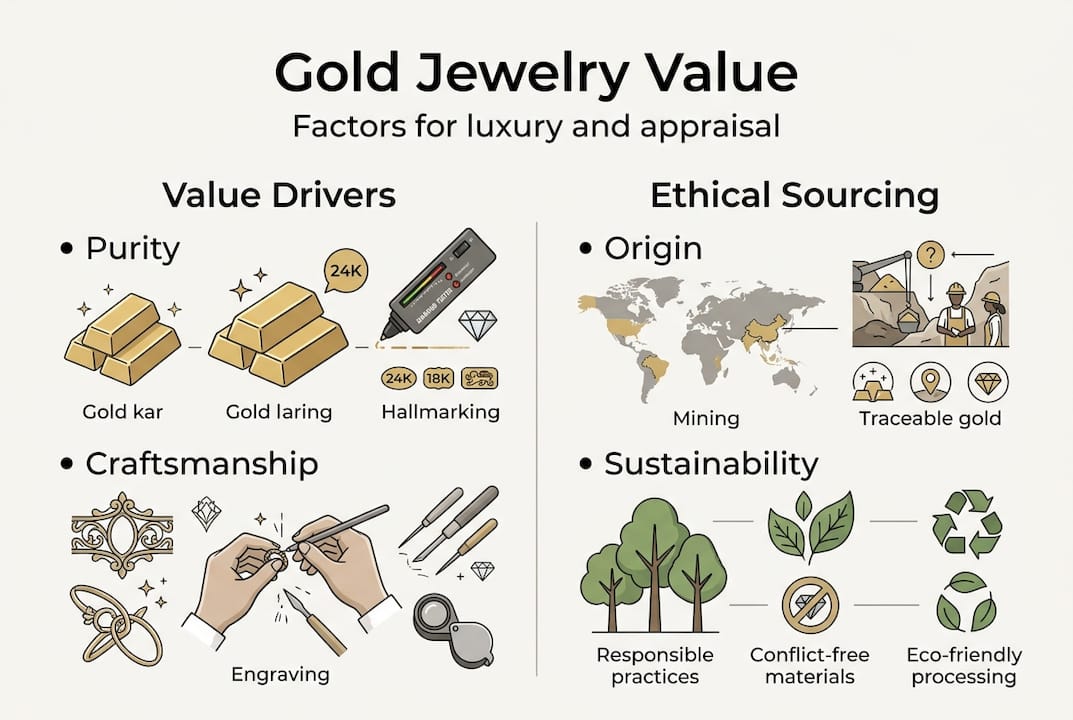
Here’s a quick breakdown of gold types you’ll encounter:
| Type | Gold content | Durability | Resale value |
|---|---|---|---|
| Solid gold | 41.7% to 99.9% (10k to 24k) | High | High |
| Gold-filled | 5% bonded layer | Moderate | Low to moderate |
| Gold-plated | Thin surface coat | Low | Minimal |
Solid gold is the only type worth serious consideration for investment or resale. Gold-filled and gold-plated pieces may look identical at first glance, but they won’t hold up to wear or appraisal scrutiny.
One area where buyers consistently get confused is melt price vs. market value. Melt price is what the raw gold content is worth if melted down. Market value for a finished piece, especially a designer or custom item, is almost always higher because it accounts for labor, design, and provenance. A signed estate piece from a recognized maker can sell for multiples of its melt price.
Pro Tip: Look for hallmarks stamped inside rings or on clasps. In the US, these include karat stamps (10k, 14k, 18k) and sometimes maker’s marks. If a piece lacks any hallmark, request an independent assay test before buying or selling.
Understanding sustainable jewelry value is becoming just as important as understanding karat, particularly as buyers increasingly factor environmental and social impact into their purchasing decisions. And if you’re exploring custom jewelry benefits, you’ll find that bespoke pieces often appreciate in ways mass-produced jewelry simply cannot.
Now that we’ve laid out why gold jewelry isn’t a one-size-fits-all commodity, let’s uncover how Denver’s ethical sourcing adds another layer of value.
Sustainable and ethical gold sourcing in Denver
Denver’s luxury jewelry market has shifted noticeably over the past several years. Buyers aren’t just asking about karat and cut anymore. They want to know where the gold came from and whether its journey caused harm. Ethically sourced gold is increasingly demanded by Denver luxury buyers, and that demand is reshaping how local jewelers operate.
There are three primary gold sourcing categories you’ll encounter:
- Conventionally mined gold: Extracted through large-scale or artisanal mining, often with limited environmental oversight and variable labor standards.
- Recycled gold: Recovered from existing jewelry, electronics, or industrial sources. No new mining required, and the environmental footprint is dramatically lower.
- Fair-trade gold: Mined under certified conditions that guarantee safe working environments, fair wages, and environmental responsibility.
Here’s how those sourcing types compare across key factors:
| Sourcing type | Environmental impact | Labor standards | Certification available |
|---|---|---|---|
| Conventional mining | High | Variable | Limited |
| Recycled gold | Very low | N/A | Yes (SCS, RJC) |
| Fair-trade gold | Low to moderate | Certified | Yes (Fairtrade, ARM) |
For Denver buyers, the practical takeaway is simple: ask your jeweler for sourcing documentation. Reputable retailers will provide it without hesitation. Certifications to look for include the Responsible Jewellery Council (RJC) standard, Fairtrade Gold certification, and the Alliance for Responsible Mining (ARM) label.
“The most meaningful piece of jewelry is one whose story you can trace from mine to finger. Provenance isn’t a luxury, it’s a baseline expectation.”
Ethical sourcing also has a direct effect on resale value. Pieces with documented, certified origins are easier to authenticate and often attract a broader pool of serious buyers. When you can hand a buyer a sourcing certificate alongside an appraisal, you’re not just selling gold, you’re selling trust.
Exploring ethical gold sourcing before you buy is one of the smartest moves you can make in today’s market. And if you want a deeper look at what sustainable gold explained actually looks like in practice, the standards are more accessible than most buyers realize.
Understanding where your gold comes from is key, but how does this translate into custom pieces that reflect your values and style?
Custom engagement rings: Crafting meaning with gold
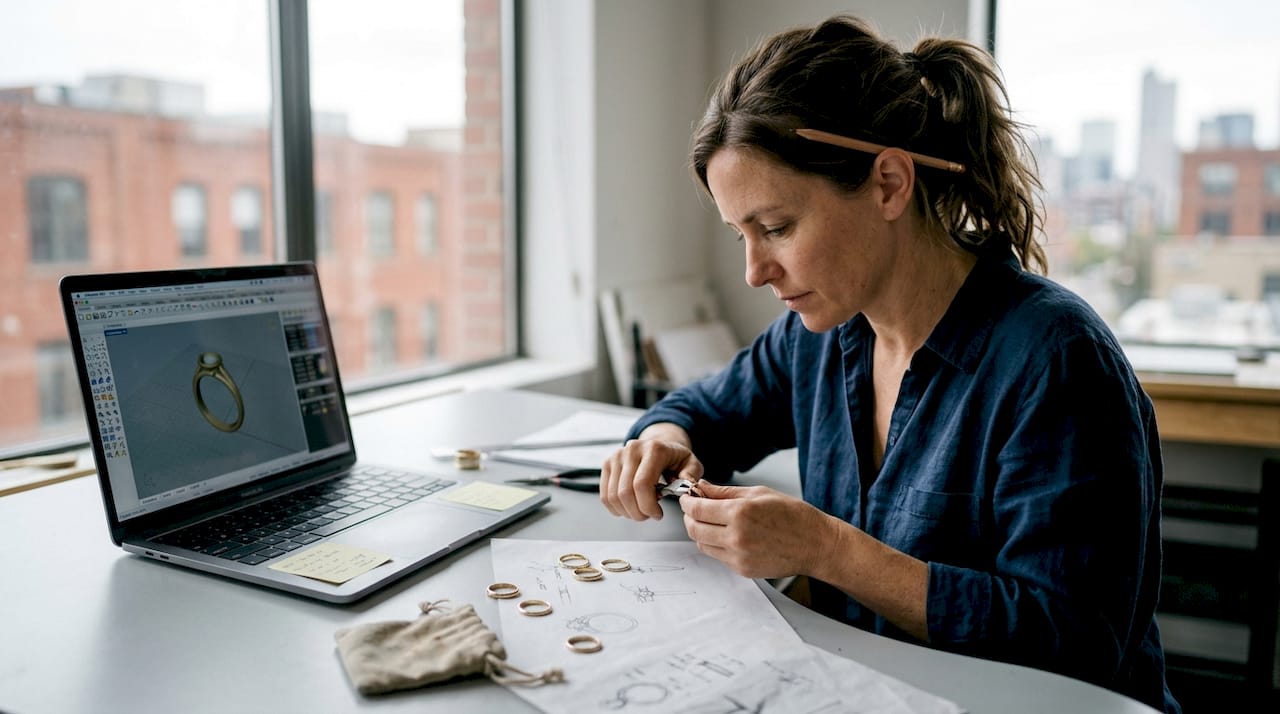
A custom engagement ring is one of the most personal purchases you’ll ever make. And when you’re working with gold, the choices you make at every stage shape not just how the ring looks, but what it represents. Customization lets buyers control materials, including ethically sourced gold, for rings that are genuinely one of a kind.
Here’s how the custom design process typically works with a Denver jeweler:
- Initial consultation: Share your vision, budget, and any inspiration pieces. This is where you discuss gold type (yellow, white, or rose gold), karat preference, and ethical sourcing requirements.
- Design development: The jeweler creates sketches or 3D renderings based on your input. You review, revise, and approve.
- Material selection: Choose your gold source, setting style, and gemstone. Recycled or fair-trade gold is available at most reputable Denver studios.
- Fabrication: Skilled craftspeople build the ring to your approved design, often by hand.
- Final review and delivery: You inspect the finished piece before it leaves the studio.
The gold type you choose matters beyond aesthetics. Yellow gold is the most traditional and holds its color without rhodium plating. White gold requires periodic re-plating to maintain its bright finish. Rose gold has a warm, romantic tone and is increasingly popular for modern custom designs.
“When clients bring in a sketch on a napkin and leave with a ring that makes them cry, that’s when we know the process worked exactly as it should.”
Pro Tip: Before your first consultation, gather at least three reference images and write down two or three words that describe the feeling you want the ring to evoke. Designers work much more effectively with emotional direction than with technical specs alone.
If you’re ready to start, reviewing the full custom jewelry design process will help you walk into that first meeting prepared. And if you’re still in the research phase, a guide to shopping for ethical rings in Denver can help you identify the right studio before you commit.
After designing your piece or deciding what type of gold jewelry you want, it’s crucial to know how to assess, appraise, and, if desired, sell gold confidently.
Appraising, trading, and selling gold in Denver
Gold appraisal is not a single, standardized process. Different appraisers use different methods, and the purpose of the appraisal changes what they measure. A replacement value appraisal for insurance purposes will produce a higher number than a fair market value appraisal used for resale. Knowing which one you need before you walk in saves time and confusion.
Professional, trusted appraisals ensure you get fair market value, especially in Denver’s dynamic market where gold prices and buyer demand shift regularly.
Here’s what certified appraisers evaluate:
- Purity: Verified through acid testing or X-ray fluorescence (XRF) analysis
- Weight: Measured in troy ounces or grams
- Craftsmanship: Quality of construction, condition, and finishing
- Brand or maker: Signed pieces from recognized designers carry a premium
- Current spot price: The live market price of gold per troy ounce
When preparing to sell or trade gold in Denver, follow these steps:
- Gather any existing documentation: original receipts, prior appraisals, or certificates of authenticity.
- Clean the piece gently with a soft cloth. Avoid harsh chemicals that could damage finishes.
- Get at least two independent appraisals before accepting any offer.
- Compare offers as a percentage of spot price. Reputable buyers typically offer 70 to 85 percent of melt value for scrap gold, and more for designer or collectible pieces.
- Ask whether you can apply the trade-in value toward a new purchase, which often yields better overall value than a straight cash sale.
The margin between what dealers pay and what they sell for is real, but it’s not a reason to avoid selling. It’s a reason to shop your piece to multiple buyers. Understanding fine jewelry value before you negotiate puts you in a far stronger position at the table.
Now that you know how gold gets its value, is sourced, personalized, and sold in Denver, here’s a perspective on what many overlook when entering this market.
What most buyers and sellers miss about gold in Denver
Here’s something the commodity-focused conversation almost always skips: the most valuable thing about a piece of gold jewelry is rarely its melt price. It’s the story attached to it, and whether that story can be verified and passed on.
We see this constantly. A client brings in a piece worth $400 at melt, but it carries a maker’s mark, a sourcing certificate, and a clear provenance. Suddenly it’s worth $1,200 to the right buyer. Meanwhile, someone else brings in an unmarked gold chain with no documentation, and despite being heavier, it moves for less.
Denver’s bespoke market is maturing. Buyers here are increasingly sophisticated, and they’re starting to treat jewelry the way serious collectors treat art. Provenance, ethical origin, and the relationship with the maker all factor into long-term worth. Exploring deeper sourcing insights reveals just how much documentation can shift a piece’s perceived and actual value.
The aftercare relationship matters too. A jeweler who knows your piece, its history, and your preferences is a long-term asset, not just a transaction.
Ready to experience luxury gold or trade with confidence?
If this guide has clarified what gold jewelry is really worth and what to look for in Denver’s market, the next step is putting that knowledge to work with people who live and breathe this every day.
At Eternal Carat, we specialize in custom gold jewelry solutions built around your vision, your values, and your timeline. Whether you’re designing a custom engagement ring with ethically sourced gold, exploring our lab-grown diamond collections, or bringing in gold and silver pieces for a professional appraisal and competitive trade offer, our Parker, Colorado studio is ready for you. Book a private, appointment-only consultation and experience the difference that genuine expertise and full transparency make.
Frequently asked questions
How do I know if my gold jewelry is ethically sourced?
Ask your jeweler for origin certification and check for fair-trade or recycled sourcing documentation. Reputable Denver sellers provide sourcing details clearly without you having to push for them.
Are custom gold engagement rings more expensive than ready-made ones?
Custom rings can carry a higher upfront cost due to design labor and material choices, but customization increases value, not just price, by producing a piece that’s uniquely yours and harder to replicate.
How is the value of my gold appraised in Denver?
Certified appraisers evaluate purity, weight, craftsmanship, and current market spot prices. Professional appraisals require a full assessment of all these factors before any offer is made.
Can I trade or sell gold for immediate cash in Denver?
Yes. Reputable gold buyers and jewelers offer on-the-spot evaluations and same-day payment for qualifying pieces. Denver’s trusted buyers for gold also let you apply trade-in value toward a new purchase if that serves you better.
What is the difference between solid gold, gold-filled, and gold-plated jewelry?
Solid gold runs the same composition throughout the entire piece, gold-filled has a thick mechanically bonded layer, and gold-plated is a thin surface coat over base metal. Not all gold jewelry is equally durable or valuable at resale.


