

TL;DR:
- The most critical factor in diamond quality is the cut, not size or carat weight.
- Hallmark stamps reveal gold purity, such as 585 for 14K gold, aiding informed purchases.
- Understanding jewelry terminology protects buyers and enhances negotiation power.
Most people shopping for a luxury diamond ring fixate on size. It’s the instinct: bigger feels better, more impressive, more valuable. But this single misconception costs buyers thousands of dollars every year. The 4Cs grading system developed by the Gemological Institute of America (GIA) tells a different story, with Cut ranked as the most critical factor for brilliance, not Carat. Understanding the language of fine jewelry before you walk into any boutique or browse any collection gives you a real advantage. This guide breaks down the terminology you need, from diamond grading to gold hallmarks to colored gemstone vocabulary.
Table of Contents
- Understanding the 4Cs: The foundation of diamond quality
- Cut, Color, Clarity, Carat: What buyers really need to know
- Karat vs. Carat: Gold purity, gemstone size, and how to read hallmarks
- Beyond diamonds: Key terms for colored gemstones and fine jewelry
- Our perspective: What terminology truly empowers Denver luxury jewelry buyers
- Discover bespoke luxury jewelry with confidence
- Frequently asked questions
Key Takeaways
| Point | Details |
|---|---|
| Cut trumps carat | Diamond cut quality impacts appearance more than carat size or clarity. |
| Know your hallmarks | Reading hallmark stamps helps you verify gold purity and stone authenticity. |
| Luxury terms empower buyers | Mastering jewelry terminology gives you confidence and negotiating power at the counter. |
| Expert-backed choices matter | Use professional guides and certificates to ensure your investment holds long-term value. |
Understanding the 4Cs: The foundation of diamond quality
Every serious conversation about diamonds starts here. The 4Cs are the universal framework jewelers, gemologists, and grading labs use to evaluate and communicate diamond quality. Knowing what each C means, and how they interact, is the single most important thing you can do before spending five figures on a ring.
Here is what each term means:
- Cut: How well the diamond’s facets interact with light. This is the only C determined by human craftsmanship, not nature.
- Color: The absence of color in a white diamond, graded on a D (colorless) to Z (light yellow) scale.
- Clarity: The presence or absence of internal inclusions and surface blemishes, graded from Flawless to Included.
- Carat: The weight of the diamond. One carat equals 0.2 grams.
The GIA guide to the 4Cs is clear: Cut has the most impact on a diamond’s visual beauty. A poorly cut 2-carat stone can look dull and lifeless next to a well-cut 1-carat stone that throws light across the room. Size is visible. Brilliance is unforgettable.
Here is how the four factors compare at a glance:
| Factor | What it measures | Impact on appearance | Buyer priority |
|---|---|---|---|
| Cut | Craftsmanship and light return | Highest | First |
| Color | Absence of yellow tint | High | Second |
| Clarity | Internal and surface flaws | Moderate | Third |
| Carat | Weight | Low to moderate | Fourth |
One interaction buyers often miss: as carat weight increases, color and clarity flaws become easier to see with the naked eye. A VS2 clarity grade on a 0.8-carat stone may look perfectly clean, but the same grade on a 3-carat stone might show inclusions that are visible without magnification. Before your next purchase, review this diamond quality checklist to make sure you’re evaluating all four factors together, not in isolation. For a deeper breakdown, the diamond quality guide walks through each grade level with practical examples.
Cut, Color, Clarity, Carat: What buyers really need to know
Building on your foundation, let’s break down each C with practical advice and what truly matters when making a luxury purchase.
According to GIA, cut grades range from Excellent to Poor for round brilliant diamonds, with Excellent and Very Good grades maximizing light return and sparkle. If you are buying a round brilliant, there is almost no reason to go below Very Good. The visual difference between Excellent and Good is striking in person, even to an untrained eye.
For color, G-H grades hit the ideal balance between value and appearance, especially when set in white gold or platinum. D, E, and F are technically superior but the difference is nearly invisible once the stone is mounted. Spending the premium for D color in a yellow gold setting is money that does not show.
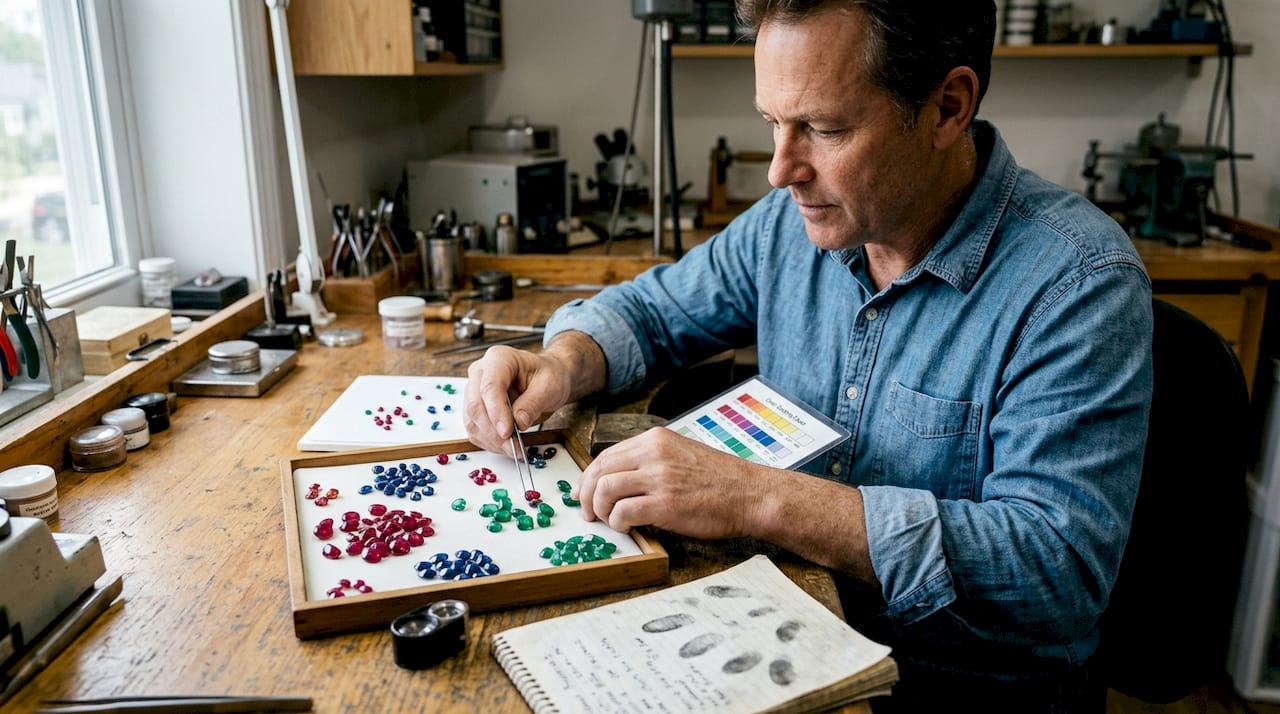
Clarity in the VS2 to SI1 range is typically eye-clean, meaning no inclusions are visible without magnification. This is where smart buyers find real value. Flawless and Internally Flawless grades are rare collector items, not necessarily better-looking rings.
On carat, a 0.9-carat stone often costs 15 to 20 percent less than a 1.0-carat stone of identical quality, with no visible size difference to anyone who is not measuring it. This is one of the most practical money-saving insights in luxury jewelry.
Pro Tip: Prioritize an Excellent or Very Good cut above everything else. Then optimize color and clarity within your budget. Chasing the highest carat weight while compromising cut is the most common and most expensive mistake buyers make.
Here is a quick reference for each C:
| C | Recommended grade | Notes |
|---|---|---|
| Cut | Excellent / Very Good | Never compromise here |
| Color | D-F (premium) / G-H (value) | G-H ideal for white metal settings |
| Clarity | VS1-VS2 / SI1 | Eye-clean at SI1 in most cases |
| Carat | 0.9 vs 1.0 strategy | Step down slightly for big savings |
Before meeting with any jeweler, ask these questions:
- What is the cut grade on this stone’s GIA certificate?
- Is this diamond eye-clean at the stated clarity grade?
- How does the color appear in different lighting conditions?
- What is the length-to-width ratio on fancy shapes?
- Can I compare this stone to one grade up and one grade down?
For a direct comparison of what matters most, the cut vs clarity guide is worth reading before your appointment. If you want a full breakdown of grading levels, clarity explained covers every grade with visual examples. And if you are considering lab-grown options, choosing lab-grown diamonds applies the same 4Cs framework to stones that offer exceptional quality at a fraction of the cost.
Karat vs. Carat: Gold purity, gemstone size, and how to read hallmarks
Diamond grading is not the only terminology that trips buyers up. Next, let’s demystify gold and hallmark lingo.
These two words sound nearly identical and confuse even experienced shoppers. Here is the clean distinction:
- Carat (gem weight): A unit of mass for gemstones. One carat equals 0.2 grams.
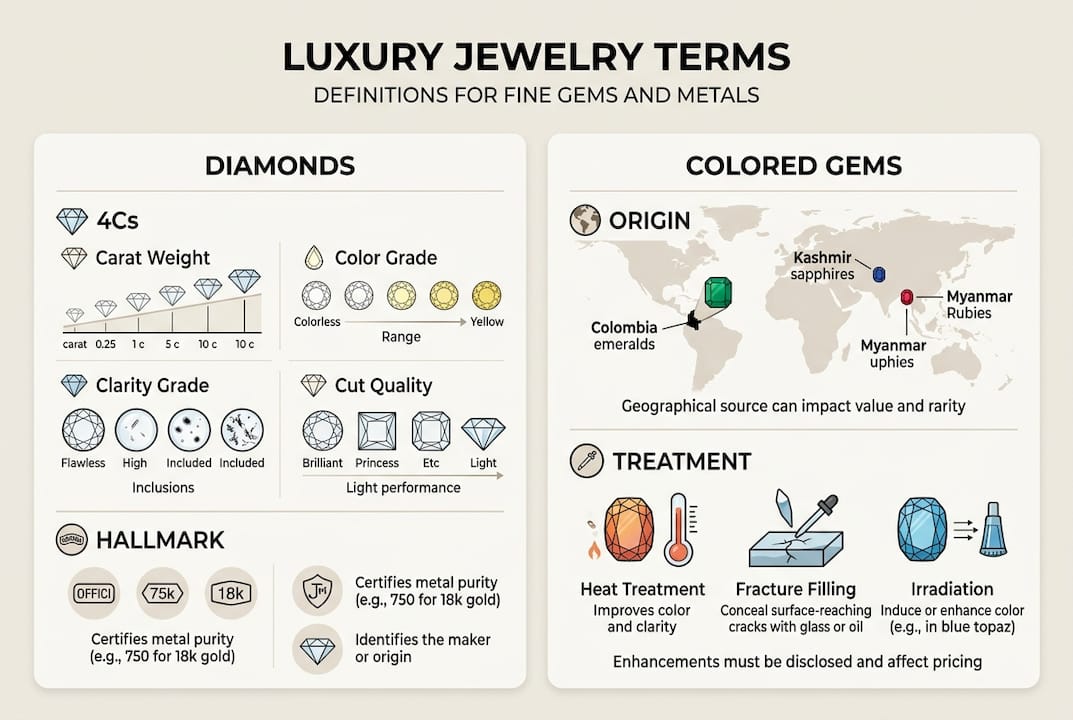
- Karat (gold purity): A measure of how much pure gold is in an alloy. 14K gold is 58.3% pure gold, mixed with metals like copper or silver for durability. 18K gold is 75% pure, giving it a richer color but making it slightly softer.
“14K gold strikes the ideal balance between durability and luxury for everyday fine jewelry. 18K is the choice when color richness and prestige matter most.”
Hallmarks are the small stamps on fine jewelry that tell you exactly what you are holding. Common hallmarks decoded include:
- 585 = 14K gold (58.5% pure)
- 750 = 18K gold (75% pure)
- 925 = Sterling silver (92.5% pure silver)
- 950 = Platinum (95% pure)
- PT or PLAT = Platinum, often followed by a purity number
Knowing how to read these stamps means you never have to take a seller’s word for what a piece is made of. You can verify it yourself in seconds.
Pro Tip: 14K gold is the most popular choice for engagement rings and everyday fine jewelry in the United States for good reason. It holds up to daily wear far better than 18K or 22K, and it costs less per gram while still carrying real intrinsic value. If you are buying a piece meant to be worn constantly, 14K is the smart call.
For a complete breakdown of how carat weight affects value in gemstones, the diamond carat guide explains the weight-to-price relationship in detail.
Beyond diamonds: Key terms for colored gemstones and fine jewelry
Once you recognize the markings on gold and diamonds, you will also want to be savvy about other luxury gems and settings.
Colored gemstone grading does not follow the same standardized system as diamonds. Instead, gemologists evaluate stones using four descriptors:
- Hue: The primary color of the stone (red, blue, green, etc.)
- Tone: How light or dark the color appears, from very light to very dark.
- Saturation: The intensity or vividness of the color. High saturation means a rich, vibrant stone.
- Origin: Where the stone was mined. Burmese rubies and Colombian emeralds command premiums based on origin alone.
Beyond gemstones, fine jewelry descriptions include a vocabulary of their own. Here are five terms every luxury buyer should recognize:
- Pavé: A setting style where tiny diamonds are set closely together across the surface, creating a continuous sparkle effect. The word comes from the French for “paved.”
- Solitaire: A ring featuring a single center stone with no side stones. The most classic engagement ring style.
- Eternity band: A ring with diamonds or gemstones set all the way around the band, symbolizing unending commitment.
- Platinum: A naturally white, dense precious metal that does not fade or tarnish. Heavier and more expensive than gold.
- Iridium: An element often alloyed with platinum (typically 5 to 10%) to increase hardness and durability.
Understanding these terms helps you separate genuine quality from marketing language. When a retailer describes a ring as “diamond accented” versus “full pavé,” those are very different products at very different price points. A luxury jewelry glossary can help you decode descriptions before you commit to a purchase.
Knowing the vocabulary also protects you. A salesperson who uses terms loosely or cannot explain them clearly is a signal worth noticing.
Our perspective: What terminology truly empowers Denver luxury jewelry buyers
Here is a candid take that most jewelry guides will not give you: learning this terminology is not about impressing anyone. It is about protecting yourself.
We have worked with buyers in the Denver metro area who spent thousands more than necessary because they chased a brand name or a round carat number without understanding what they were actually buying. A 1.0-carat stone with a Good cut and a premium price tag is a worse purchase than a 0.9-carat stone with an Excellent cut at a lower price. The terminology is the tool that reveals this.
The contrarian truth is that “expensive” and “best” are not the same thing in luxury jewelry. Branded packaging and marketing language can obscure mediocre quality if you do not know what to look for. Always request a GIA or AGS grading certificate. Always verify hallmarks. These are not optional steps for cautious buyers. They are standard practice for informed ones.
For buyers in Denver and the surrounding communities, this knowledge also gives you real negotiating power. When you walk into any boutique and ask specific questions about cut grade, eye-cleanliness, and hallmark verification, the conversation changes entirely. Our expert ring buying tips go deeper into how to use this knowledge during the actual buying process.
Discover bespoke luxury jewelry with confidence
You now have the vocabulary to ask the right questions and recognize the right answers. The next step is finding a jeweler who meets that standard.
At Eternal Carat, every piece in our collection is described with full transparency, from GIA-certified cut grades to verified hallmarks. Our luxury lab-grown diamond jewelry collection gives you access to exceptional quality at honest prices, with no marketing language designed to obscure what you are buying. If you want something truly one of a kind, our custom design consultations let you apply everything you have learned to a piece built specifically for you. Start by exploring something like our marquise diamond floral earrings to see what transparent luxury actually looks like.
Frequently asked questions
What are the 4Cs in luxury jewelry and which is most important?
The 4Cs are Cut, Color, Clarity, and Carat, the standard GIA grading system for diamonds. Cut has the greatest impact on a diamond’s brilliance and overall appearance.
How do I read hallmark stamps like 585 or 925 on my jewelry?
585 means 14K gold, 750 indicates 18K gold, and 925 confirms sterling silver. These numbers reflect the percentage of the primary metal in the alloy.
Why does cut matter more than carat when buying a diamond?
An Excellent cut maximizes light return and sparkle, making the stone visually stunning regardless of size. Carat only measures weight, not how the diamond actually looks.
What is the difference between karat and carat?
Karat measures gold purity (14K = 58.3% gold), while carat measures a gemstone’s weight (1 carat = 0.2 grams). They sound the same but refer to entirely different things.


