

Navigating conversations about custom jewelry can feel overwhelming when every designer uses words that sound similar but mean something very different. The right terminology helps Denver couples make informed choices about sustainable, bespoke engagement rings. By mastering the distinctions between custom, handmade, and art jewelry, you protect your investment and ensure your piece reflects your values. This guide untangles jewelry language so you can confidently communicate your vision and create a design that is truly yours.
Table of Contents
- Defining Custom Jewelry Terms And Misconceptions
- Types Of Settings, Stones, And Metals Explained
- Design Elements And Personalization Options
- Commonly Misunderstood Terms And Their Impact
- Choosing The Right Language For Your Vision
Key Takeaways
| Point | Details |
|---|---|
| Understanding Custom Jewelry | True custom jewelry is uniquely designed based on personal vision, while semi-custom pieces offer preset options. |
| Terminology Matters | Familiarity with jewelry terms and components minimizes miscommunication and enhances collaboration with designers. |
| Material Choices Impact Quality | The selected metals and stones significantly affect durability, care, and overall aesthetic of the jewelry piece. |
| Effective Communication is Key | Clearly expressing preferences using specific language and visual references aids designers in delivering your ideal piece. |
Defining Custom Jewelry Terms and Misconceptions
When you walk into conversations about custom jewelry, you’ll hear terms thrown around that can feel confusing or contradictory. The language separates true custom pieces from mass-produced items, so understanding it matters when making significant investments.
Custom jewelry isn’t one-size-fits-all. The term means different things depending on the designer’s approach, the level of personalization, and the craftsmanship involved. Many people assume any personalized piece qualifies as custom, but there are meaningful distinctions.
What “Custom” Actually Means
True custom jewelry starts with your vision and a designer who builds it specifically for you. This differs completely from “semi-custom” pieces where you choose from preset design options. The difference affects price, timeline, and how personal the result feels.
When you work with a jeweler on custom design, you’re collaborating on something that reflects your specific taste and values. For Denver couples interested in lab-grown diamonds and ethical luxury, this distinction carries extra weight since sustainability choices become woven into the entire creative process.
Common Terminology You’ll Encounter
Jewelry experts use specific language for components and techniques. Knowing these prevents miscommunication during your design process.
Key terms to know:
- Bezel setting: The stone sits inside a metal frame that wraps partway around it, protecting the edges
- Prong setting: Metal arms hold the stone in place, allowing maximum light to enter from the sides
- Pavé: Tiny diamonds or gemstones cover the metal surface in a decorative pattern
- Findings: The structural metal parts (bands, connectors, clasps) that aren’t the focal stone
- Hallmark: An official stamp indicating metal purity and origin
Understanding the nomenclature of jewelry components helps you communicate exactly what you want to your designer.
Misconceptions That Trip People Up
One big misconception: assuming “handmade” automatically means custom. A jeweler can hand-craft pieces using existing designs with no personalization involved. True custom means designing specifically for you.
Another false belief: that custom pieces take months to complete. While timelines vary, Eternal Carat’s appointment-only approach ensures efficient design collaboration that respects your schedule without sacrificing quality.
People also confuse art jewelry with custom jewelry. Art jewelry prioritizes artistic expression over commercial appeal, while custom jewelry prioritizes your personal vision and wearability. They overlap sometimes, but serve different purposes.
Custom doesn’t mean expensive, unusual, or impractical—it means designed specifically for you based on your preferences and values.
Pro tip: When discussing your design with a jeweler, ask specifically whether they’re showing you preset options or creating something entirely original for you—this clarifies the level of customization from the start.
Types of Settings, Stones, and Metals Explained
Settings, stones, and metals form the foundation of any custom jewelry piece. Understanding these components helps you make informed choices that balance durability, aesthetics, and personal values.
Each element serves a specific purpose. The metal provides structure, the setting secures your stone, and the stone itself delivers brilliance and color. Together, they determine how your piece looks, lasts, and feels.
Metal Choices Matter More Than You Think
Precious metals aren’t just about appearance—they affect durability, cost, and how your jewelry ages over time. The three primary options each bring different strengths to your design.
Common jewelry metals:
- Gold: Warm tone, highly workable, available in yellow, white, and rose; hypoallergenic options exist
- Platinum: Extremely durable, naturally white, denser than gold, holds stones securely in place
- Silver: Affordable, brilliant white color, requires maintenance to prevent tarnishing
- Palladium: Lightweight alternative to platinum with similar durability and appearance
Precious metal properties directly impact how your custom piece performs over decades. Platinum might be pricier upfront, but its density means it rarely needs resizing or repairs.
For Denver couples prioritizing sustainability, lab-grown diamonds pair beautifully with recycled precious metals—a combination that honors both beauty and environmental responsibility.
Here’s how common jewelry metals compare on key attributes:
| Metal Type | Durability | Maintenance Needs | Hypoallergenic |
|---|---|---|---|
| Gold | Medium | Periodic polishing | Available options |
| Platinum | Very high | Minimal | Yes |
| Silver | Low to medium | Frequent cleaning | Usually not |
| Palladium | High | Low maintenance | Yes |
Setting Styles and Their Functions
The setting determines how securely your stone sits and how light enters it. Different settings protect stones differently while creating distinct visual effects.
Setting types explained:
- Solitaire: Single stone set prominently, maximum light exposure, timeless appeal
- Halo: Center stone surrounded by accent stones, enhanced sparkle and perceived size
- Three-stone: Past, present, future symbolism; balanced visual weight
- Tension: Stone appears suspended between metal bands, modern and dramatic
- Vintage/Antique: Ornate designs with intricate details, nostalgic character
Metalworking techniques in jewelry design ensure each setting is precisely engineered to hold your stone safely while achieving the exact look you want.
Stone Options Beyond Traditional Diamonds
Lab-grown diamonds offer identical optical properties to mined diamonds at better value. Beyond diamonds, other stones bring color, meaning, and personality to custom pieces.
Popular choices:
- Lab-grown diamonds: Chemically identical to mined diamonds, conflict-free, lower price point
- Sapphires: Blue, pink, yellow, or colorless; exceptionally durable
- Emeralds: Vibrant green, softer than diamonds, require careful handling
- Moissanite: Brilliant sparkle, excellent durability, slight rainbow fire
Your metal and stone selection work together—some combinations enhance durability while others maximize light and color brilliance.
Pro tip: When consulting with your jeweler, ask how your chosen metal and setting will protect your specific stone over a lifetime of wear—this conversation prevents costly damage down the road.
Design Elements and Personalization Options
Personalization transforms a beautiful piece into something that tells your story. Beyond choosing metals and stones, you shape every detail to reflect your values, experiences, and vision.
The language of design elements helps you communicate exactly what you want. When you understand these terms, collaboration with your jeweler becomes clearer and more rewarding.
Engraving and Inscriptions
Engraving adds intimate meaning to jewelry. These personalized messages live inside the band where only you and your partner see them.
Engraving options include:
- Interior band engravings: Initials, dates, coordinates, or short phrases inside the ring
- Scripture or meaningful quotes: Passages that hold spiritual or personal significance
- Custom monograms: Interlocking initials with decorative flourishes
- Fingerprints or handwriting: Digital scans turned into unique metal patterns
Engraving is permanent, so take time planning your message. Many couples choose their wedding date, a location coordinate, or words that capture what their relationship means.
Stone Arrangement and Accent Details
How stones sit within your setting creates visual rhythm and balance. Accent stones frame the center stone while reflecting light in specific patterns.
Common accent configurations:
- Side stones: Matching gems flanking the center stone for visual balance
- Graduated sizing: Stones decrease in size moving away from center, creating elegant flow
- Asymmetrical placement: Intentional off-center arrangements for modern, artistic feeling
- Diamond paving: Tiny diamonds covering the band for maximum sparkle throughout
Personalization in jewelry design empowers you to decide exactly where light should dance and how your eye should travel across the piece.
Color and Finish Choices
Beyond the stone itself, metal color and surface finish dramatically affect how your piece looks and feels in different lighting.
Finish options to consider:
- Polished: High shine, reflective, shows fingerprints more easily
- Brushed or matte: Subtle texture, hides wear better, contemporary look
- Hammered: Organic dimpled texture, catches light unpredictably
- Mixed finishes: Combining polished and brushed for visual interest
Metals also come in different tones. Yellow gold glows warm, white gold appears cool and neutral, and rose gold brings romantic warmth. Your skin tone, personal style, and other jewelry you wear influence this choice.
Mixing Tradition with Your Vision
Contemporary design philosophy shows how custom jewelry balances timeless aesthetic with personal expression. You can honor family heritage while creating something entirely your own.
Many couples inherit designs from family members, then modify them to feel modern. This might mean resetting a family diamond in a contemporary setting or adding your own meaningful elements.
Your custom piece should feel like it was always meant to be yours—a perfect blend of who you are and what matters most.
Pro tip: Start by creating a mood board of designs that speak to you, then discuss with your jeweler which elements resonate most—this clarifies your vision before detailed design work begins.
Commonly Misunderstood Terms and Their Impact
Jewelry terminology carries weight. A single misunderstood term can lead to costly mistakes, wrong design choices, or disappointment when your finished piece arrives.
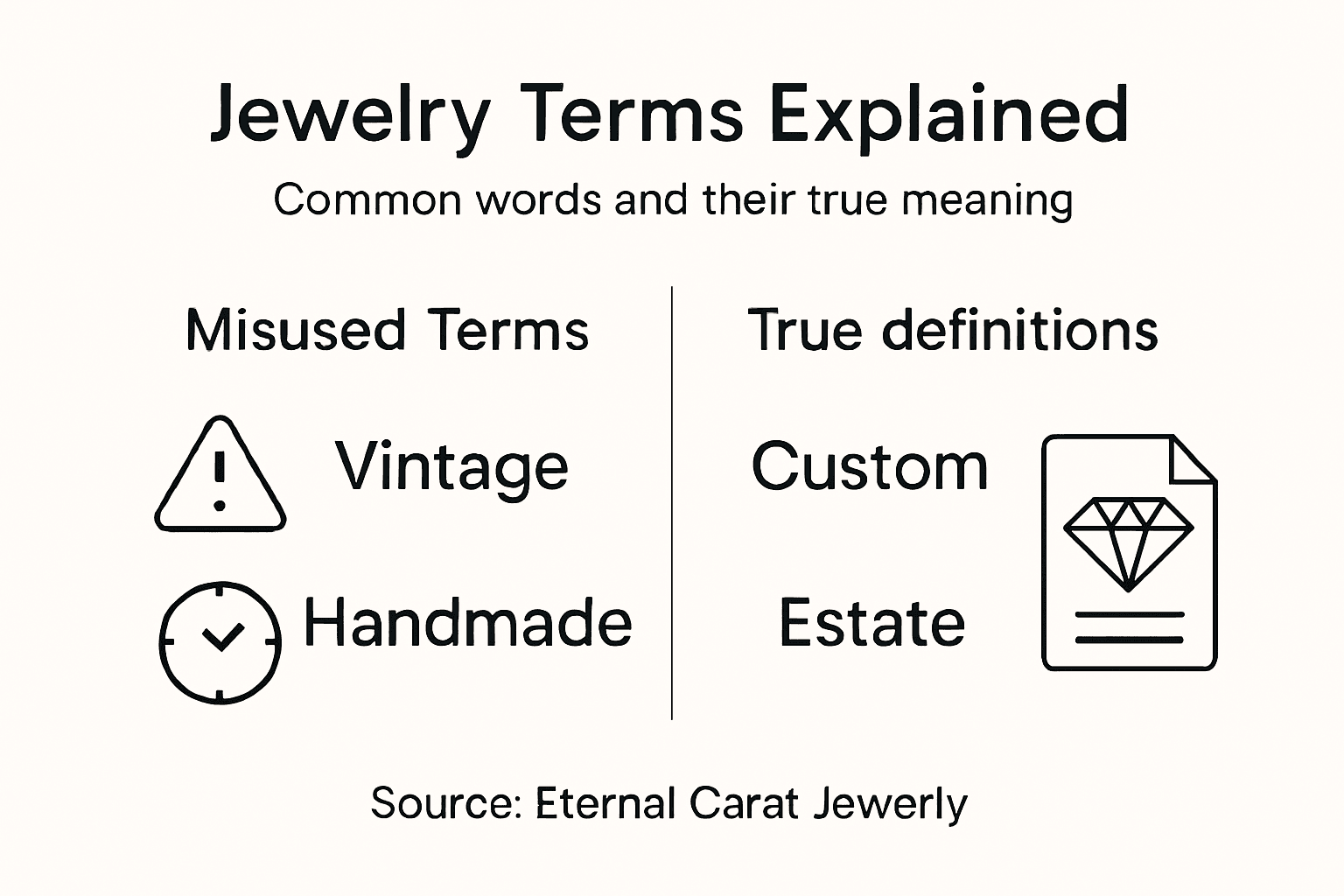
Many people use jewelry terms interchangeably without realizing they mean completely different things. This confusion affects pricing, durability, and whether your piece actually matches your vision.
“Vintage” vs. “Antique” vs. “Estate”
These terms describe jewelry age and origin, and they’re not synonymous. The distinctions matter for value, authenticity, and what you’re actually purchasing.
Clear definitions:
- Antique: Jewelry at least 100 years old, often with historical significance and original craftsmanship
- Vintage: Generally 20 to 99 years old, reflecting specific era styles and techniques
- Estate: Any pre-owned jewelry regardless of age, often from family collections or inheritances
- Retro or reproduction: Modern pieces mimicking older styles without actual age
Denver couples shopping for sustainable options often explore estate jewelry as an ethical alternative to new mining. Understanding these terms helps you identify genuine pieces versus reproductions marketed as vintage.
“Gold-Filled” vs. “Gold-Plated” vs. “Solid Gold”
These terms describe how much actual gold is in your piece. The difference dramatically affects durability and long-term value.
What each means:
- Solid gold: Jewelry made from pure gold mixed with alloy throughout (14K, 18K stamped inside)
- Gold-filled: Thick gold bonded to a base metal core, lasts years with proper care
- Gold-plated: Thin gold coating over base metal, wears away with regular wear
Solid gold costs more but lasts generations. For engagement rings you’ll wear daily, solid gold is the smart investment. Understanding jewelry metal terminology prevents costly confusion during design and purchase.
Compare these jewelry terms to avoid common misunderstandings:
| Term Category | True Meaning | Common Mistake |
|---|---|---|
| Custom Jewelry | Designed uniquely for you | Confused with personalized |
| Vintage Jewelry | 20-99 years old | Used for any old style |
| Gold-Filled | Thick gold over base metal | Thought to be solid gold |
| Lab-Grown Diamond | Chemically a real diamond | Believed to be a simulant |
“Lab-Grown” vs. “Synthetic” vs. “Simulant”
These three terms describe stones that aren’t mined, but they’re completely different products with different properties.
The critical differences:
- Lab-grown diamonds: Chemically identical to mined diamonds, same hardness and sparkle, ethical choice
- Synthetic: Man-made stones with different chemical composition than natural versions
- Simulants: Stones that look similar but have different optical properties (like cubic zirconia)
Lab-grown diamonds represent the future for sustainable luxury. They perform identically to mined diamonds under magnification, yet cost less and carry no mining concerns.
“Art Jewelry” vs. “Fine Jewelry” vs. “Fashion Jewelry”
These categories describe the piece’s intent, craftsmanship level, and materials used. Art jewelry prioritizes individual expression over commercial appeal, making it fundamentally different from fine or fashion categories.
Category breakdown:
- Fine jewelry: Premium materials, designed for longevity, investment-grade pieces
- Fashion jewelry: Trendy pieces with affordable pricing, shorter lifespan expected
- Art jewelry: Focuses on artistic vision and creativity over wearability or trend
Custom engagement rings from Eternal Carat fall into fine jewelry territory—crafted with investment-grade materials meant to last your lifetime.
Misunderstanding terminology costs money and creates frustration—clarity upfront prevents both.
Pro tip: Always ask your jeweler to explain terms in writing before design begins—confirm exactly what “gold-filled” or “lab-grown” means for your specific piece in your specific contract.
Choosing the Right Language for Your Vision
Language shapes reality in jewelry design. The words you use to describe your vision directly influence what your jeweler creates and how closely it matches your expectations.
Many couples struggle because they lack the vocabulary to articulate their ideas. Learning to speak the designer’s language closes that gap and transforms the entire collaboration.
Building Your Design Vocabulary
Before meeting with your jeweler, familiarize yourself with core design terms. This preparation makes your consultation dramatically more productive and efficient.
Essential terms to master:
- Proportion: The relationship between stone size and band width
- Negative space: Empty metal areas that balance solid sections
- Symmetry: Mirror-image balance versus intentional asymmetry
- Visual weight: How prominent a design element appears despite actual size
- Flow: How the eye travels across the finished piece
When you understand these concepts, you can describe what you want without guessing. Instead of saying “I like this one,” you might say “I prefer more negative space” or “the proportions feel balanced to me.”
Using Mood Boards and Reference Images Effectively
Visual references communicate what words sometimes cannot. Gather images that resonate with your aesthetic, then discuss them strategically with your designer.
Don’t just say “I love this ring.” Instead, identify what specifically appeals to you. Is it the setting style? The metal color? The stone placement? Articulating design intent clearly helps your jeweler understand your preferences beyond surface-level aesthetics.
Distinguishing Between “Like” and “Want”
You might love a design you see but not actually want it for yourself. This distinction matters enormously for custom jewelry.
Liking something means appreciating it aesthetically. Wanting something means you’ll wear it happily for decades. These aren’t always the same thing. A piece might look stunning on someone else but feel wrong for your lifestyle or personal style.
During design consultations, articulate this difference. Say “I appreciate the artistry here, but it doesn’t feel like me” versus “I love this and see myself wearing it constantly.”
Translating Emotional Responses into Technical Language
Your emotional reactions matter, but jewelers work with technical specifications. Learn to bridge these two worlds.
Emotional descriptor → Technical translation:
- “It feels romantic” → Curved lines, softer proportions, rose gold tone
- “It looks bold” → Larger center stone, minimal negative space, high-contrast metals
- “It feels timeless” → Simple settings, symmetrical design, classic proportions
- “It looks modern” → Geometric lines, mixed metals, unconventional placement
Professional jewelry design language enables designers to translate your feelings into precise technical drawings and specifications.
Asking Clarifying Questions During Consultation
Don’t assume your jeweler understands your vision. Ask them to articulate what they heard and show you their interpretation before committing to design work.
Good questions include:
- “How would you describe what I just shared?”
- “What does that term mean in practical terms for my piece?”
- “Can you show me how this affects the finished result?”
- “What would change if we adjusted this element?”
Clear communication at the beginning prevents expensive misunderstandings later.
Pro tip: Bring a trusted friend to your design consultation who can listen objectively—they often catch unclear statements or unspoken assumptions you might miss in the moment.
Unlock the True Meaning Behind Custom Jewelry with Expert Guidance
Navigating the specialized terms like “bezel setting” and “lab-grown diamonds” can feel overwhelming when designing your perfect piece. Understanding the difference between “custom” and “semi-custom” or distinguishing “gold-filled” from “solid gold” is essential to avoid costly mistakes and ensure your jewelry truly reflects your unique vision.
At Eternal Carat, we specialize in translating this expert language into a seamless and personalized experience. Our bespoke design services combine craftsmanship with sustainability, featuring high-quality lab-grown diamonds and ethically sourced metals. Whether you want to explore intricate setting styles or ensure your custom piece fits your lifestyle, our private consultations in Parker, Colorado provide the clarity and confidence you need.
Take the next step to turn your jewelry dreams into reality. Visit Eternal Carat to explore our Custom Design & Fine Jewelry offerings and schedule your expert consultation. There is no better time than now to create a meaningful, timeless piece that speaks your language and lasts a lifetime.
Frequently Asked Questions
What is the difference between custom jewelry and semi-custom jewelry?
Custom jewelry is designed uniquely for you based on your vision, while semi-custom jewelry allows you to select from preset designs with some level of personalization.
How do I choose the right metal for my custom jewelry?
Consider factors like durability, maintenance needs, color, and hypoallergenic properties. Common choices include gold, platinum, silver, and palladium, each offering different strengths and aesthetics.
What are the most popular stone options for custom jewelry besides diamonds?
In addition to lab-grown diamonds, popular options include sapphires, emeralds, and moissanite. Each stone offers unique colors, durability, and meanings that can add personal significance to your piece.
What should I know about engraving options for custom jewelry?
Engraving can add a personal touch to your jewelry, with options such as initials, dates, or meaningful quotes. Ensure you plan your message carefully, as engraving is permanent.


