

TL;DR:
- Jewelry in 2026 is increasingly viewed as a store of value and investment asset.
- Trends favor bold, sculptural designs, mixed metals, and sustainable, lab-grown materials.
- Denver buyers prioritize bespoke, ethically sourced jewelry that reflects personal meaning and innovation.
Gold has crossed $5,019 per ounce, and for the first time in modern memory, your jeweler and your financial advisor might be having the same conversation. Jewelry in 2026 is no longer just adornment. It is being worn, traded, and commissioned as a genuine store of value. For Denver’s discerning buyers, this shift opens an exciting new chapter where bold design, ethical sourcing, and bespoke craftsmanship converge. This article walks you through the forces driving the luxury jewelry boom, the trends defining the season, how technology is reshaping custom design, and why sustainable options are becoming the standard for the most forward-thinking collectors.
Table of Contents
- Why jewelry is now seen as an investment
- 2026’s top luxury jewelry design trends
- How personalization and technology define high-end jewelry
- Sustainable luxury: Ethical materials, lab-grown diamonds, and what’s next
- Why Denver’s luxury jewelry future is bespoke, ethical, and innovative
- Explore bespoke, ethical luxury with Eternal Carat
- Frequently asked questions
Key Takeaways
| Point | Details |
|---|---|
| Jewelry as investment | Rising metal prices and economic shifts mean luxury jewelry is increasingly seen as an asset, not just an accessory. |
| Trend-forward design | Bold, sculptural pieces, modular elements, and mixed metals set the tone for 2026’s standout looks. |
| Personalization & tech | Advanced customization using AI, CAD, and 3D printing make unique, bespoke jewelry more accessible. |
| Ethical and sustainable luxury | Eco-friendly practices, lab-grown diamonds, and recycled metals are top priorities for luxury buyers in Denver. |
| Local expertise matters | Denver’s luxury shoppers can benefit from jewelers who combine innovation with ethical sourcing and bespoke service. |
Why jewelry is now seen as an investment
The numbers are hard to ignore. With gold at $5,019/oz and silver at $83/oz, precious metals are no longer just raw materials. They are portfolio line items. Jewelry that was once purchased purely for sentiment is now being evaluated for its material worth, its rarity, and its resale potential.
“Jewelry is increasingly positioned as an investment asset, with rising gold and silver prices favoring high jewelry for ultra-high-net-worth individuals.” — Vogue, Age of Asset: The State of Jewelry in 2026
This shift is partly driven by what economists call the K-shaped recovery. At the top of that K, ultra-high-net-worth individuals (UHNWIs) are spending more on high jewelry, meaning pieces valued at $100,000 and above, than ever before. Private sales, invitation-only events, and bespoke commissions are flourishing. At the same time, entry-level luxury is expanding, with more buyers in the $5,000 to $25,000 range treating fine jewelry as a smarter alternative to volatile equities.
Understanding what separates a fine piece from a luxury one matters here. If you want a clear breakdown of luxury jewelry definitions, it helps to know exactly what you are buying before you invest.
Several forces are transforming jewelry from a personal accessory into a portfolio asset:
- Precious metal price surges making gold and platinum pieces inherently more valuable over time
- Limited production runs from top ateliers creating scarcity and collector demand
- Provenance and certification adding traceable, documented value to individual pieces
- Lab-grown diamond adoption making high-quality stones accessible without sacrificing brilliance
- Bespoke commissions producing one-of-a-kind pieces that cannot be replicated or mass-produced
For Denver buyers, this convergence of financial savvy and personal taste is a natural fit. The city’s affluent community has long favored purposeful spending, and jewelry that holds or grows in value while telling a personal story checks every box.
2026’s top luxury jewelry design trends
So what is actually trending on the wrists, necks, and fingers of luxury buyers right now? The spring 2026 collections tell a clear story: bold, sculptural, and intentional.
Here is what is leading the conversation:
- Sculptural statement pieces with architectural shapes and unexpected negative space
- Stacking and layering across rings, bracelets, and necklaces for a curated, collected look
- Modular jewelry designed to be worn multiple ways or reconfigured over time
- Statement gemstones with emeralds and deep greens dominating runway and retail
- Bezel settings replacing traditional prong styles for a sleeker, more modern profile
- Mixed metals combining yellow gold, white gold, and oxidized silver in a single piece
Gold’s price surge has also accelerated interest in alternative metals. Silver, titanium, and brass are no longer considered budget substitutes. Designers are leaning into their distinct textures and tones as intentional aesthetic choices. A titanium cuff or a brushed brass pendant reads as deliberate and modern, not economical.
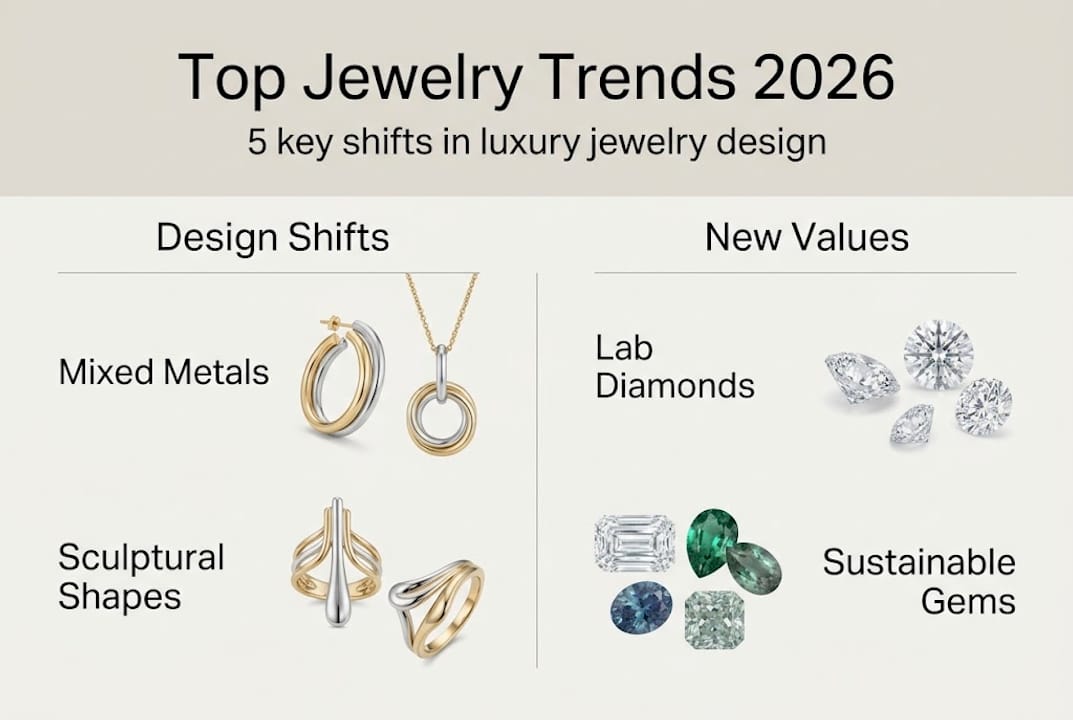
| Feature | Traditional approach | 2026 trend-driven approach |
|---|---|---|
| Primary metal | Yellow gold | Mixed metals, titanium, brass |
| Stone setting | Prong set | Bezel or tension set |
| Design language | Symmetrical, classic | Sculptural, asymmetric |
| Gem choice | Diamond solitaire | Emerald, green tourmaline |
| Wearability | Single occasion | Modular, everyday luxury |
For a deeper look at how these shifts connect to broader modern jewelry design trends, the evolution from classic to contemporary is worth exploring in full.
Pro Tip: When layering necklaces, mix chain weights intentionally. Pair a fine 1mm chain with a chunkier 4mm link at varying lengths. The contrast creates visual depth without looking cluttered, and it gives each piece room to be appreciated on its own terms.
How personalization and technology define high-end jewelry
If 2026 has a defining luxury principle, it is this: the most valuable piece you can own is one that could not exist without you. Hyper-personalization has become the new benchmark for high-end jewelry, and technology is the engine making it possible.
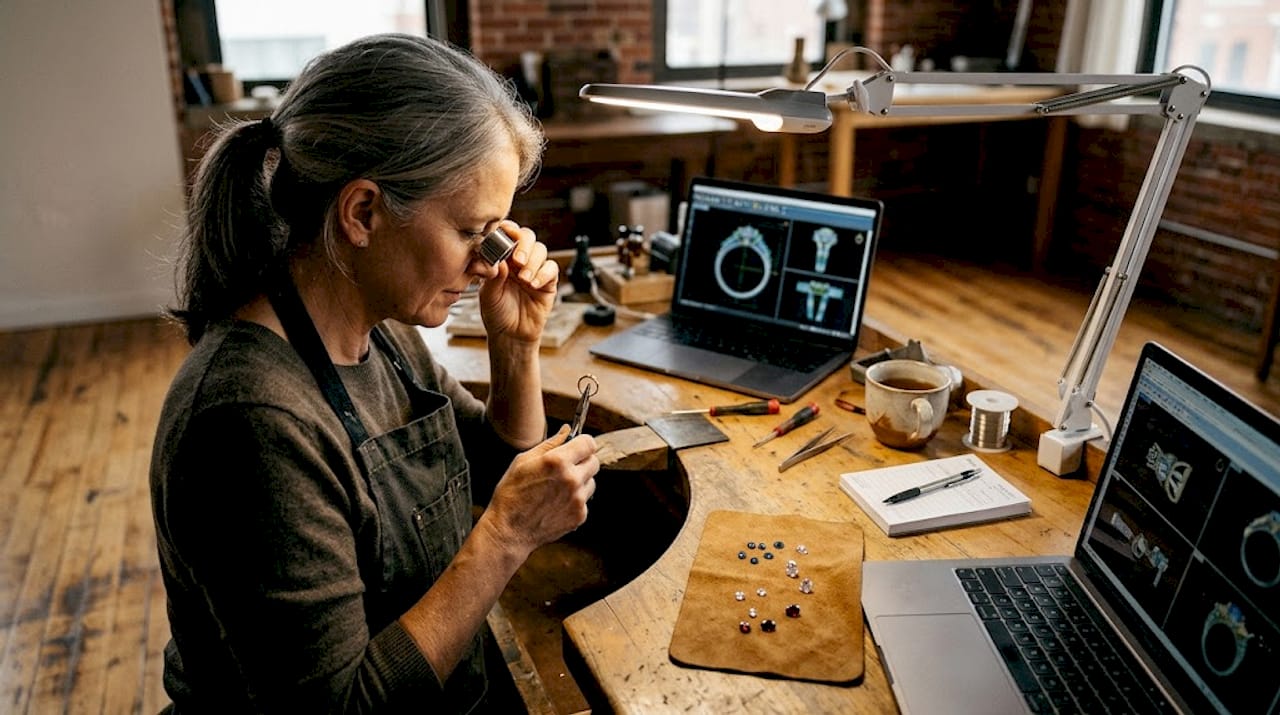
AI-assisted design tools, CAD modeling, and 3D printing have dramatically lowered the barrier to creating truly unique pieces. What once required months of back-and-forth with a master goldsmith can now begin with a digital render in days. The bespoke and custom process is faster, more precise, and more accessible than it has ever been, without sacrificing the artisan quality that makes a piece worth keeping.
Modular jewelry systems are one of the most exciting developments. These are pieces engineered with interchangeable components, allowing a single ring to become three different looks, or a pendant to detach and function as a brooch. For buyers who want versatility without compromise, modular design delivers.
Heirloom resets are surging as well. Rather than letting grandmother’s diamond sit in a drawer, clients are bringing existing stones into entirely new settings that reflect their current aesthetic. It is a powerful combination of emotional continuity and fresh expression. The custom jewelry benefits extend well beyond aesthetics, touching on value retention and personal legacy.
Here is how the main customization methods compare:
| Method | Typical cost range | Turnaround time | Exclusivity level |
|---|---|---|---|
| Semi-custom (preset + stone swap) | $3,000 to $10,000 | 2 to 4 weeks | Moderate |
| Full CAD custom design | $8,000 to $40,000 | 6 to 12 weeks | High |
| High jewelry commission ($100k+) | $100,000 and above | 3 to 12 months | Exceptional |
| Heirloom reset | $1,500 to $15,000 | 4 to 8 weeks | Personal and unique |
If you want to start your own custom piece, the process generally follows these steps:
- Initial consultation to define your vision, budget, and timeline
- Concept sketching or mood board review with your designer
- CAD rendering for a precise 3D preview before any metal is touched
- Material selection including metal type, stone sourcing, and finish
- Fabrication and quality review with milestone check-ins
- Final delivery with certification and care documentation
Pro Tip: Ask your jeweler to show you the CAD render alongside a physical wax or resin prototype before approving fabrication. Seeing the piece at actual scale prevents surprises and ensures the proportions feel right on your hand or neckline.
Sustainable luxury: Ethical materials, lab-grown diamonds, and what’s next
The luxury buyer of 2026 wants to feel good about what they wear, not just how it looks. Ethical sourcing has moved from a niche preference to a mainstream expectation, and the market is responding. Recycled gold and lab-grown diamonds are reshaping the industry, creating a clear bifurcation between buyers who prize natural rarity and those who prioritize ethics and value.
Lab-grown diamonds are chemically, physically, and optically identical to mined stones. The difference is origin. A lab-grown stone carries no mining footprint, no conflict risk, and typically costs 50 to 70 percent less than a comparable natural diamond. For Denver buyers who have spent years making values-aligned choices in food, real estate, and finance, sustainable jewelry is the natural next step.
“Sustainable luxury is not a compromise. It is a more considered form of excellence, one that asks where beauty comes from and holds the answer to a higher standard.”
Natural diamonds still hold their place in the market. Rarity, provenance, and tradition carry real weight for collectors and those commissioning generational heirlooms. But the conversation has matured. Buyers are no longer choosing between beauty and ethics. They are finding both. Understanding the full picture of lab-grown vs. natural diamonds helps you make that choice with confidence.
Here are the sustainable materials gaining the most traction right now:
- Recycled gold with full chain-of-custody documentation
- Lab-grown diamonds and sapphires offering certified brilliance without environmental cost
- Fairmined certified gold sourced from responsible artisan mining operations
- Reclaimed gemstones from vintage or estate pieces given new settings
- Platinum alternatives like palladium, which has a lower mining impact
Denver’s culture of outdoor stewardship and conscious consumption makes this city a natural home for why sustainable jewelry matters. The mountains are not just a backdrop here. They are a value system.
Why Denver’s luxury jewelry future is bespoke, ethical, and innovative
Here is an opinion that might push back against what you read in trend reports: chasing jewelry trends is a losing strategy for serious buyers. Trends are designed for the mass market. They are photographed, published, and then replaced within 18 months. A piece built around a trend will look dated before you have finished paying for it.
What endures is meaning. A piece commissioned around a specific stone you sourced, a design that references something personal, or a setting that reflects your actual aesthetic rather than this season’s runway will outlast every trend cycle. That is what bespoke custom design actually delivers: something that cannot go out of style because it was never trying to follow one.
Denver is uniquely positioned to lead this shift. The city’s buyers are educated, values-driven, and skeptical of pretense. They want to know where their gold comes from and who designed their ring. They want technology and ethical luxury working together, not in opposition. That combination of innovation, integrity, and personal expression is exactly where the most exciting jewelry is being made right now.
Pro Tip: Before commissioning any piece, ask your jeweler for full sourcing transparency. A confident, detail-oriented answer tells you everything about the quality of the relationship you are entering.
Explore bespoke, ethical luxury with Eternal Carat
If the trends and insights in this article resonate with how you think about jewelry, you are exactly the kind of client we designed Eternal Carat for. We work with Denver-area buyers who want more than a transaction. They want a piece that reflects who they are, where their values sit, and what they want to pass on.
From lab-grown diamond engagement rings to full custom commissions using recycled gold, Eternal Carat brings together ethical sourcing, advanced design technology, and one-on-one consultation at our appointment-only Parker location. Whether you are starting from a sketch or a family heirloom, we will help you build something worth keeping. Start your custom piece and see what bespoke luxury looks like when it is built around you.
Frequently asked questions
What are the most popular luxury jewelry trends in 2026?
Bold sculptural designs, mixed metals, lab-grown diamonds, and sustainability-forward materials are the defining forces in luxury jewelry this year. Bezel settings and modular pieces are also gaining significant ground with style-conscious buyers.
Is gold still the main choice for luxury jewelry?
Gold remains the prestige standard, but silver, titanium, and brass are being embraced as intentional design choices by top designers responding to gold’s record-high pricing.
How do lab-grown diamonds compare to natural diamonds?
Lab-grown diamonds are physically identical to mined stones and offer ethical sourcing at a lower price point, while natural vs. lab-grown bifurcation continues as natural stones retain their appeal for rarity and tradition.
Where can I find custom, ethical luxury jewelry in Denver?
Eternal Carat offers bespoke, sustainable fine jewelry through an appointment-only experience in Parker, Colorado, serving discerning Denver-area clients who want personalized, values-aligned pieces.
What makes bespoke jewelry a smart investment?
Bespoke pieces combine exclusivity, high-value investment materials, and personal meaning, creating items that hold emotional and financial significance far beyond mass-produced alternatives.


