

TL;DR:
- Genuine luxury jewelry in 2026 emphasizes transparency, ethical sourcing, and craftsmanship over mere price tags.
- Certification and documentation verify a stone’s origin, quality, and ethical background, ensuring informed buying decisions.
- Modern luxury values sustainability, ethical provenance, and bespoke craftsmanship, redefining traditional exclusivity.
Most people shopping for luxury jewelry assume the price tag tells the whole story. It doesn’t. A ring can cost five figures and still come with an unverified stone, a vague sourcing history, and zero documentation of quality. Real luxury in 2026 looks different: it means knowing exactly where your gem came from, how it was graded, and who crafted it with their hands. This guide breaks down the terms, materials, and standards that separate genuinely fine jewelry from expensive jewelry, so you can shop with the clarity and confidence you deserve.
Table of Contents
- Understanding luxury jewelry: Key terms defined
- Material matters: Gems, metals, and certifications explained
- Crafting bespoke jewelry: The process and what to expect
- Evaluating value: How luxury and ethics intersect in today’s market
- Why ethical definitions are reshaping luxury jewelry for the better
- Discover bespoke, ethical luxury with Eternal Carat
- Frequently asked questions
Key Takeaways
| Point | Details |
|---|---|
| Clear luxury definitions | Understanding core terms helps you judge quality and ethics when buying fine jewelry. |
| Material choices matter | Selecting the right gems and metals impacts both your jewelry’s value and its ethical footprint. |
| Certification is essential | Always request grading and sourcing certificates to verify your jewelry’s authenticity and responsible origins. |
| Bespoke is personal and ethical | Custom design ensures your piece reflects your values as well as your taste. |
| Ethics shape market value | Today’s luxury jewelry derives lasting worth from responsible choices, not just rarity. |
Understanding luxury jewelry: Key terms defined
Walking into a jewelry consultation without knowing the vocabulary is like signing a contract you haven’t read. These are the terms that matter most when you’re investing in a piece built to last a lifetime.
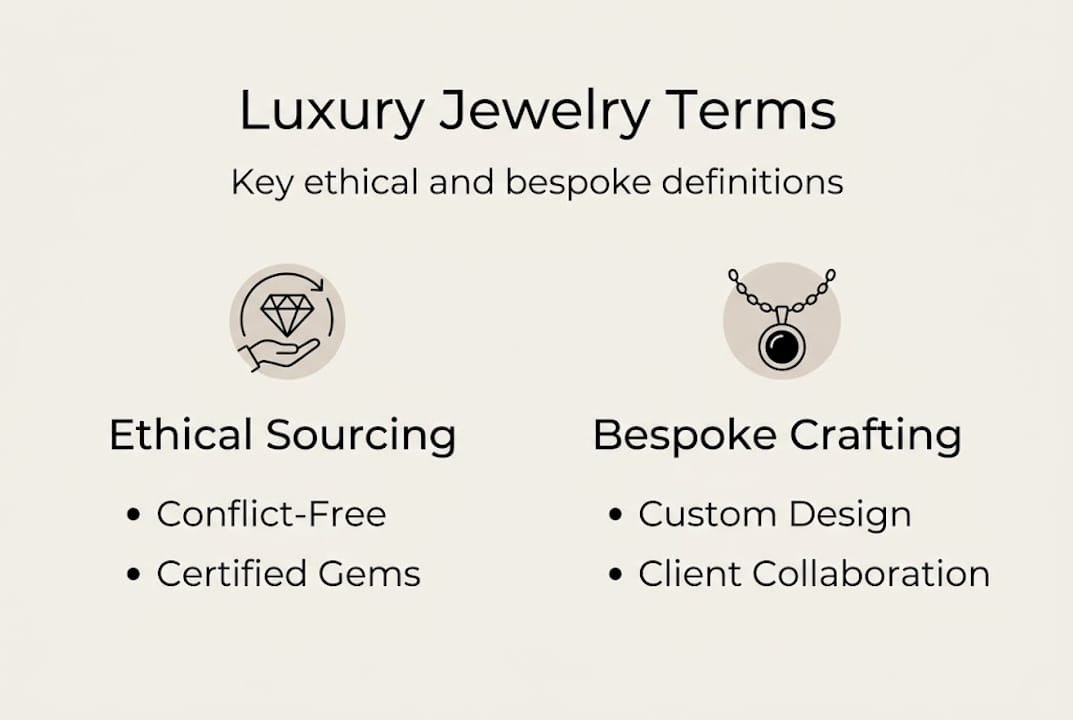
Bespoke refers to jewelry designed and crafted specifically for one client. Nothing is pulled from a display case. Every dimension, metal choice, and stone is selected with your preferences in mind. It’s the opposite of off-the-shelf.
Ethically sourced means the gemstones and metals used in a piece were obtained without contributing to human rights abuses, environmental destruction, or conflict financing. This isn’t just a marketing phrase. It requires documentation.
Conflict-free is a more specific term, most often tied to diamonds. A conflict-free diamond has not been used to finance armed conflict against a government. The Kimberley Process is the international certification scheme designed to verify this, though many buyers now look beyond it to broader ethical standards.
GIA and IGI certification refers to grading reports issued by the Gemological Institute of America or the International Gemological Institute. These documents assess a diamond’s cut, color, clarity, and carat weight. A certified stone isn’t just described accurately; it’s verified independently.
Lab-grown diamonds are chemically and physically identical to mined diamonds. They’re created in controlled environments using either High Pressure High Temperature (HPHT) or Chemical Vapor Deposition (CVD) methods. Learning the full range of lab-grown gemstone terms helps you evaluate these stones with the same rigor you’d apply to anything mined.
Recycled and fair-trade metals describe gold, platinum, or silver that was either reclaimed from existing jewelry and industrial sources or sourced through supply chains that guarantee fair wages and safe working conditions.
Certification isn’t just a paper trail. It’s the bridge between a seller’s claim and a buyer’s confidence. Without it, “ethical” is just a word on a website.
Knowing these definitions doesn’t make you a gemologist. It makes you an informed buyer, which is exactly what you need to be when the stakes are this high.
Material matters: Gems, metals, and certifications explained
With those definitions in hand, let’s get specific. The materials inside your jewelry determine its quality, its ethics, and ultimately its meaning.
Gemstone types fall into three broad categories relevant to luxury buyers:
- Natural diamonds are mined from the earth, formed over billions of years. They carry rarity value but also come with environmental and ethical complexity.
- Lab-grown diamonds are created above ground in weeks. Graded by GIA as either premium (D/VVS+ quality) or standard, they offer a lower environmental footprint without sacrificing brilliance or hardness.
- Moissanite is a silicon carbide stone, naturally occurring but almost always lab-created for jewelry. It’s visually similar to a diamond but chemically distinct, and typically much more affordable.
| Feature | Natural diamond | Lab-grown diamond | Moissanite |
|---|---|---|---|
| Source | Earth-mined | Lab-created | Lab-created |
| Environmental impact | High | Low | Very low |
| Grading | GIA/IGI | GIA/IGI | GIA/IGI (limited) |
| Relative cost | Highest | Moderate | Lowest |
Metal choices carry their own ethical weight. Platinum is naturally rare and durable, making it a premium choice for settings. Gold comes in 10K, 14K, and 18K variants, each with different purity levels and price points. Recycled gold and platinum are increasingly available and carry the same physical properties as newly mined metal, with a fraction of the environmental cost. Our lab-grown vs natural diamonds guide covers how metal and stone choices interact in a full ethical assessment.
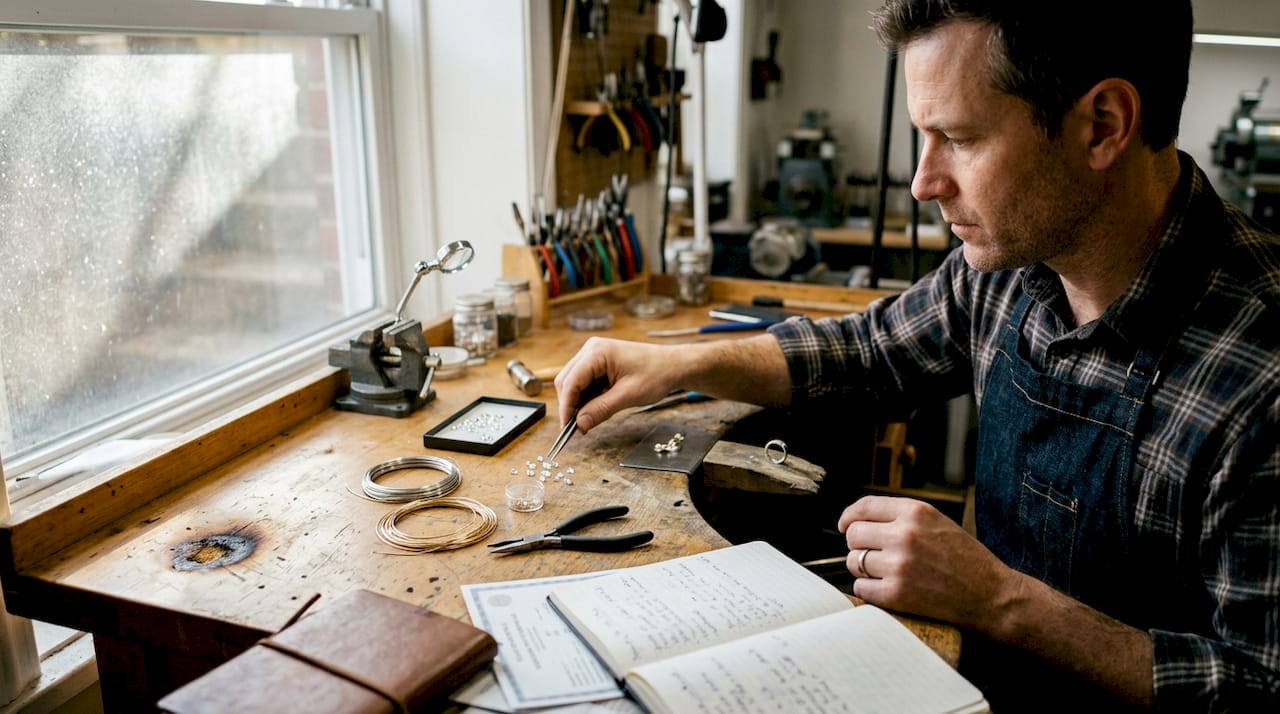
Certifications work differently for different materials. The Kimberley Process covers conflict-free diamond sourcing. GIA and IGI reports cover individual stone quality. Fair-trade and recycled metal certifications come from separate bodies entirely. Understanding lab-created diamond benefits helps you see how these certifications stack up in real purchasing decisions.
Pro Tip: Before finalizing any luxury purchase, ask your jeweler for the full certification package: a GIA or IGI grading report for the stone, documentation of the metal’s sourcing, and any Kimberley Process paperwork for mined diamonds. If they can’t produce it, keep looking.
Crafting bespoke jewelry: The process and what to expect
Understanding materials is one thing. Watching them come together into a piece made specifically for you is something else entirely. Here’s how the bespoke process works from start to finish.
- Design consultation. You meet with a jeweler to discuss your vision, lifestyle, and preferences. This isn’t a sales pitch. It’s a conversation about what the piece needs to mean and how it needs to function.
- CAD modeling. Computer-aided design software translates your vision into a precise 3D model. You review it, request adjustments, and approve it before a single gram of metal is poured. GIA reports are often referenced at this stage to confirm the stone specifications match the design intent.
- Gem selection. Stones are sourced to match the approved design. For ethically-minded buyers, this is where conflict-free certification, lab-grown options, and recycled metal sourcing are confirmed in writing.
- Ethical sourcing verification. A reputable jeweler documents the origin of every material. This step is non-negotiable in true bespoke work. VS2 clarity or higher is generally recommended for larger lab-grown stones to ensure visual quality at scale.
- Hand-setting. A skilled craftsperson sets each stone by hand. This is where the precision of CAD meets the artistry of traditional jewelry making. No machine can replicate the judgment a master setter brings to a complex design.
- Quality assurance. The finished piece is inspected against the original design specs, the grading reports, and your personal brief before delivery.
Denver-area buyers benefit from working with jewelers who understand both the local aesthetic and the global supply chain. The Front Range has a growing community of clients who want their jewelry to reflect their values, not just their budget.
Pro Tip: During your design consultation, ask for a written breakdown of every material’s sourcing and the corresponding certificates. Any jeweler serious about ethical luxury will have this ready without hesitation.
Evaluating value: How luxury and ethics intersect in today’s market
The old definition of luxury leaned heavily on scarcity. Rare stones, exclusive brands, and high price points were the whole story. That definition is changing fast.
The jewelry market is growing at 5.3 to 5.6% annually through 2028, making it the fastest-growing category in fashion. That growth isn’t being driven by traditional luxury alone. It’s being shaped by buyers who want quality, transparency, and sustainability alongside beauty.
| Value driver | Traditional luxury | Ethical luxury |
|---|---|---|
| Rarity | Central | Secondary |
| Certification | Optional | Required |
| Sourcing transparency | Rare | Standard |
| Environmental impact | Ignored | Measured |
| Long-term value | Price-based | Quality and ethics-based |
What actually drives value in today’s market goes well beyond the stone’s carat weight. Consider these factors:
- Grading documentation: A certified stone holds its value and its story across generations.
- Ethical provenance: Knowing a piece caused no harm adds meaning that price alone can’t buy.
- Craftsmanship quality: Hand-set, bespoke pieces age better and carry more personal significance than mass-produced alternatives.
- Sustainability practices: Recycled metals and lab-grown stones reduce the environmental cost of ownership.
- Market positioning: Ethical luxury investments are increasingly recognized as holding long-term worth as consumer values shift.
The shift toward sustainable buying isn’t a trend. It’s a structural change in what discerning buyers consider worth paying for. A piece with a clean sourcing record, independent grading, and a documented creation process is more valuable, not less, than one that simply costs more.
Why ethical definitions are reshaping luxury jewelry for the better
For most of jewelry’s history, luxury meant exclusivity. The rarer the stone, the higher the price, the more prestigious the piece. That framework made sense in a world where buyers had limited access to information and fewer choices.
That world is gone. Today’s buyers in the Denver metro and beyond are asking questions that would have seemed unusual a decade ago: Where was this mined? Who cut it? What happened to the land afterward? These aren’t niche concerns. They’re becoming the baseline expectation for anyone spending real money on fine jewelry.
What we’ve seen firsthand is that clients who understand luxury and ethics together end up more satisfied with their purchases, not just ethically, but emotionally. A ring that comes with a story of transparent sourcing and skilled craftsmanship carries more weight than one that simply costs more.
Traditional luxury said: “This is rare, therefore it’s valuable.” Ethical luxury says: “This was made with care, verified by experts, and caused no harm. That’s what makes it worth having.”
The buyers who understand this distinction aren’t compromising on luxury. They’re redefining it on their own terms, and getting more meaningful jewelry in the process.
Discover bespoke, ethical luxury with Eternal Carat
Everything covered in this guide, from certified gemstones to ethical metal sourcing and custom design, is exactly how we work at Eternal Carat. We specialize in bespoke ethical jewelry built around your values and your vision, with full documentation at every step.
Our appointment-only studio in Parker, Colorado offers a private, pressure-free environment to explore lab-grown diamonds, custom design options, and ethical sourcing firsthand. Whether you’re starting with a concept or a specific stone in mind, our team brings the expertise and transparency that luxury buyers in the Denver metro deserve. Reach out to schedule your consultation and experience the difference that genuine ethical craftsmanship makes.
Frequently asked questions
What qualifies as ethically-sourced luxury jewelry?
Ethically-sourced luxury jewelry uses conflict-free certified gems verified through the Kimberley Process, independently graded stones from GIA or IGI, and metals sourced through fair-trade or recycled supply chains.
Are lab-grown diamonds considered luxury?
Yes. Lab-grown diamonds graded by GIA at premium levels (D/VVS+ quality) meet every standard of luxury jewelry while offering a lower environmental footprint than mined alternatives.
Why is certification important in luxury jewelry?
Certification from GIA or IGI independently verifies a stone’s quality, origin, and grading, giving buyers documented proof that their investment meets standards beyond a seller’s word alone.
How is value determined in luxury jewelry?
Modern luxury value is shaped by ethical sourcing, independent certification, craftsmanship quality, and broader market growth trends toward sustainability, not price or rarity alone.


