

Many people assume modern jewelry design is simply about following trends or choosing sleek aesthetics. The truth is far more compelling: modern jewelry represents a convergence of mid-century art movements, ethical sourcing innovations, and revolutionary materials science. In 2026, understanding modern jewelry design means grasping how minimalist principles, lab-grown diamonds, and personalized craftsmanship are reshaping luxury. This guide walks you through the defining characteristics, market dynamics, and practical considerations for making informed, ethical jewelry choices that reflect both style and values.
Table of Contents
- Understanding Modern Jewelry Design: Aesthetics And Influences
- Lab-Grown Diamonds And Material Innovation In Modern Jewelry
- Natural Vs Lab-Grown Diamonds: Contrasting Philosophies And Market Trends
- Custom Craftsmanship And Personal Expression In Modern Jewelry
- Explore Modern And Ethical Jewelry Options At Eternal Carat
- Frequently Asked Questions
Key takeaways
| Point | Details |
|---|---|
| Modern design philosophy | Combines minimalist aesthetics with innovative materials and artistic expression rooted in Bauhaus principles. |
| Lab-grown market dominance | Lab-grown diamonds now capture nearly half of U.S. engagement ring purchases due to affordability and ethics. |
| Budget advantages | Choosing lab-grown diamonds allows buyers to double carat size while maintaining superior ethical traceability. |
| Market segmentation | The industry divides between traditional natural diamond prestige and modern ethical luxury preferences. |
| Custom personalization | Bespoke modern designs offer unique artistic expression aligned with individual values and style. |
Understanding modern jewelry design: aesthetics and influences
Modern jewelry design emerged from mid-20th century artistic movements, particularly Bauhaus architectural principles that prioritized function and form. Contemporary jewellery emphasizes clean lines, geometric forms, minimalism, material innovation, and wearable art influenced by these modernist foundations. This aesthetic philosophy treats jewelry as sculptural art rather than mere decoration.
The visual language of modern jewelry centers on simplicity and intentionality. Geometric shapes like circles, triangles, and asymmetric forms replace ornate Victorian flourishes. Negative space becomes a design element itself, creating visual breathing room that draws attention to essential forms. This restraint requires exceptional craftsmanship because every line and angle must justify its presence.
Material innovation distinguishes modern design from traditional approaches. Contemporary jewelers incorporate wood, leather, ceramics, and industrial metals alongside precious materials. These unexpected combinations challenge conventional luxury definitions while expanding creative possibilities. A platinum ring might feature a walnut inlay, or diamond studs could rest in brushed titanium settings.
The philosophy extends beyond aesthetics to embrace jewelry as wearable art. Modern pieces often reference abstract expressionism, minimalist sculpture, or architectural concepts. A cuff bracelet might echo Frank Lloyd Wright’s cantilever designs, while earrings could interpret Mondrian’s grid compositions. This artistic grounding elevates jewelry from accessory to cultural statement.
Key characteristics of modern jewelry design include:
- Emphasis on geometric precision and mathematical proportions
- Integration of unconventional materials with precious metals and stones
- Asymmetric compositions that challenge traditional symmetry expectations
- Focus on texture contrasts between polished, matte, and hammered finishes
- Minimal ornamentation allowing material quality to dominate
Explore current modern jewelry design trends to see how these principles manifest in 2026 collections. The shift from ornate traditional designs to functional elegance reflects broader cultural movements toward authenticity and intentional consumption.
“Modern jewelry design represents the intersection of artistic vision and material honesty, where every element serves both aesthetic and conceptual purpose.”
Lab-grown diamonds and material innovation in modern jewelry
Lab-grown diamonds have revolutionized modern jewelry by making ethical luxury accessible. Lab-grown diamonds hold 45-50% of the U.S. engagement ring market in 2025, with prices averaging $1,000 per carat compared to $4,200 for natural diamonds. This dramatic cost difference enables buyers to prioritize size, quality, or custom design features previously beyond reach.

The pricing advantage translates directly to enhanced purchasing power. A $5,000 budget buys approximately a 1.2-carat natural diamond or a 2.5-carat lab-grown diamond of equivalent quality. This doubling of carat size allows modern designs to feature more dramatic center stones or incorporate multiple accent diamonds without compromising ethical standards. The financial flexibility supports more ambitious custom projects.
Millennials and Gen Z drive this market transformation, prioritizing transparency and sustainability over traditional prestige markers. These demographics research supply chains, demand certifications, and reject marketing narratives unsupported by verifiable data. Lab-grown diamonds satisfy these requirements through complete traceability from creation to setting.
Material innovation extends beyond diamonds to encompass the entire modern jewelry ecosystem. Recycled precious metals, ethically sourced gemstones, and bio-based materials complement lab-grown diamonds in contemporary designs. Some jewelers incorporate reclaimed wood, ocean plastic, or meteorite fragments to create pieces with environmental narratives. These materials align with modern design’s emphasis on authenticity and purpose.
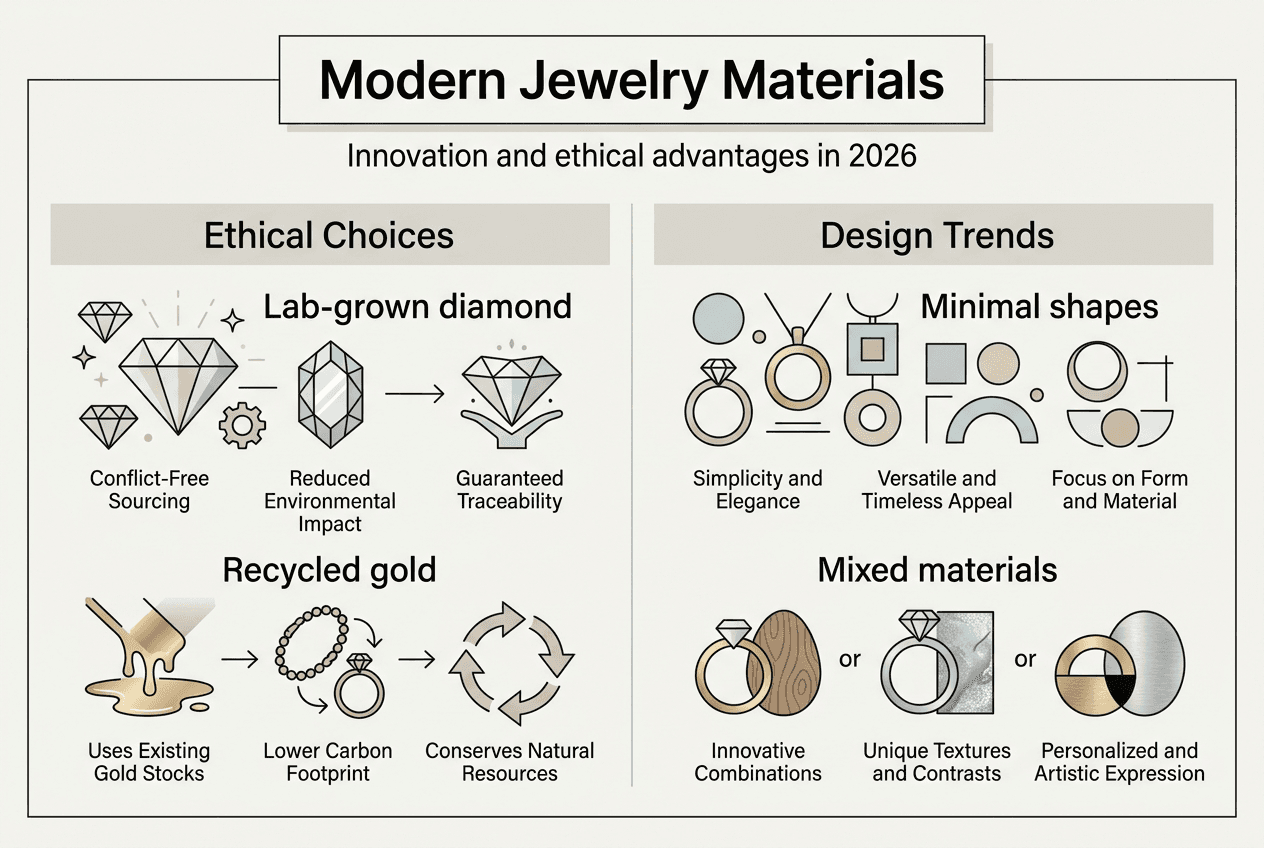
| Material Type | Cost Advantage | Ethical Benefit | Design Flexibility | | — | — | — | | Lab-grown diamonds | 75-80% less expensive | Complete traceability | Larger stones, more accent gems | | Recycled gold | 10-15% savings | Reduces mining impact | Identical to mined gold | | Alternative gems | 40-60% less expensive | Transparent sourcing | Unique color palettes | | Sustainable materials | Variable pricing | Minimal environmental footprint | Distinctive textures |
The ethical advantages of lab-grown diamonds include elimination of mining-related environmental degradation, guaranteed conflict-free status, and reduced carbon emissions. Traditional diamond mining displaces ecosystems, consumes massive water resources, and sometimes funds regional conflicts. Lab-grown production avoids these harms while producing chemically identical stones.
Pro Tip: When comparing lab-grown options, request third-party certifications from IGI or GIA to verify quality grades match natural diamond standards, ensuring your modern piece maintains long-term value and beauty.
Consider the comprehensive ethical luxury guide for lab-grown diamonds to understand certification processes and quality benchmarks. Understanding lab-grown diamonds’ sustainability role helps contextualize their environmental advantages within broader jewelry industry reforms.
Natural vs lab-grown diamonds: contrasting philosophies and market trends
The diamond market has bifurcated into distinct philosophical camps. The market divides between pro-lab experts valuing affordability and ethics, and pro-natural jewelers emphasizing rarity, prestige, and resale value. This segmentation reflects fundamentally different luxury definitions rather than objective superiority of either option.
Natural diamond advocates emphasize geological rarity and cultural legacy. Natural stones formed over billions of years carry romantic narratives about earth’s history and human discovery. The limited supply supports resale value, with high-quality natural diamonds often appreciating over decades. Traditional luxury consumers view natural diamonds as heirlooms connecting generations through shared symbols of commitment and achievement.
Lab-grown proponents counter that modern luxury should prioritize ethics, transparency, and personal meaning over scarcity-driven pricing. They argue that identical chemical composition makes lab-grown diamonds equally “real” while superior traceability ensures peace of mind. The cost savings enable larger stones, better cuts, or investment in custom artistry that personalizes pieces beyond generic retail offerings.
Market data reveals growing acceptance of both approaches rather than winner-take-all competition. The luxury lab-grown diamond segment projects 5.45% compound annual growth through 2032, indicating sustained demand beyond initial novelty. Simultaneously, natural diamond sales remain strong in ultra-luxury tiers where rarity commands premium pricing regardless of ethical considerations.
Key factors influencing diamond choice include:
- Budget constraints and desired carat size for visual impact
- Personal values regarding environmental sustainability and labor practices
- Resale expectations and heirloom legacy intentions
- Cultural traditions and family expectations around engagement symbols
- Design priorities favoring custom artistry over brand prestige
Pro Tip: Define your personal luxury criteria before shopping by ranking factors like size, ethics, resale value, and tradition, then choose the diamond type aligning with your top three priorities rather than trying to optimize all dimensions simultaneously.
The philosophical divide extends to how consumers define authenticity. Traditional buyers equate authenticity with natural geological processes and established luxury conventions. Modern buyers define authenticity through transparent supply chains and alignment between purchase decisions and stated values. Neither perspective is objectively correct; both reflect valid luxury philosophies.
| Consideration | Lab-Grown Advantage | Natural Advantage |
|---|---|---|
| Price per carat | 75-80% lower cost | Stable resale value |
| Ethical traceability | Complete supply chain visibility | Established certification systems |
| Carat size options | Larger stones at same budget | Rarity increases with size |
| Cultural prestige | Growing acceptance | Traditional luxury status |
| Environmental impact | Minimal ecological footprint | Supports mining communities |
Review the detailed lab-grown vs natural diamonds comparison to evaluate trade-offs specific to your situation. The choice ultimately reflects personal values and lifestyle priorities rather than universal quality hierarchies.
Custom craftsmanship and personal expression in modern jewelry
Modern jewelry design democratizes bespoke craftsmanship through lab-grown diamonds and innovative materials. Custom pieces that once required prohibitive budgets now become accessible when lab-grown stones eliminate the largest cost barrier. This accessibility enables personal artistic expression through jewelry rather than settling for mass-produced designs.
Commissioning a custom modern jewelry piece involves several key steps:
- Research jewelers specializing in modern aesthetics and ethical materials, reviewing portfolios for design sensibility alignment.
- Define your design vision through inspiration images, preferred materials, and symbolic elements reflecting personal meaning.
- Collaborate with designers to translate concepts into technical specifications, selecting stone qualities and metal types.
- Review 3D renderings or wax models to refine proportions and details before final production begins.
- Verify ethical certifications for all materials, ensuring traceability claims match third-party documentation.
- Approve final piece after quality inspection, confirming craftsmanship meets agreed specifications.
Authentic ethical branding requires substantive verification beyond marketing claims. Ethical brands emphasize traceability and Fairmined standards over greenwashing, empowering consumers seeking authentic ethical luxury. Request specific certifications like Responsible Jewelry Council membership, Fairmined gold documentation, or IGI lab-grown diamond reports rather than accepting vague sustainability statements.
Custom modern pieces reflect personal style through deliberate design choices. An engagement ring might incorporate asymmetric settings echoing architectural interests, or a pendant could reference abstract art movements meaningful to the wearer. These personalized elements transform jewelry from generic luxury goods into intimate artistic statements.
Pro Tip: Document your custom design process with sketches, material samples, and inspiration references to create a personal archive explaining your piece’s meaning, enhancing emotional value and future storytelling opportunities.
Evaluating jewelers for craftsmanship quality involves examining previous work, understanding production methods, and assessing communication transparency. Request to see completed custom projects similar in complexity to your vision. Ask about specific techniques like hand engraving, stone setting methods, or finishing processes. Jewelers confident in their craft welcome detailed questions and provide substantive technical answers.
Learn why choosing lab-grown jewelry supports both ethical values and design flexibility. The combination of modern aesthetics, ethical materials, and custom craftsmanship creates jewelry that authentically represents individual identity rather than conforming to conventional luxury templates.
Explore modern and ethical jewelry options at Eternal Carat
Eternal Carat leads the modern jewelry movement by specializing in lab-grown diamonds and bespoke designs that honor both aesthetics and ethics. Our collections reflect the minimalist principles and material innovations discussed throughout this guide, offering pieces that align with contemporary luxury values.
We curate lab-grown diamond jewelry and custom rings featuring complete traceability and expert craftsmanship. Every piece balances artistic vision with ethical integrity, whether you select from existing collections or collaborate on fully custom designs. Our Parker, Colorado location provides private consultations where you can explore materials, review design options, and develop personalized pieces reflecting your unique style. Discover how modern design principles translate into wearable art through our 14k yellow gold lab-grown diamond earrings and similar innovative pieces.
Frequently asked questions
What are the defining features of modern jewelry design?
Modern jewelry design emphasizes geometric precision, minimalist aesthetics, and innovative material combinations rooted in Bauhaus principles. Clean lines, asymmetric compositions, and restrained ornamentation allow material quality and artistic concepts to dominate. The approach treats jewelry as wearable sculpture rather than decorative accessories.
Are lab-grown diamonds considered real diamonds?
Lab-grown diamonds possess identical chemical, physical, and optical properties to natural diamonds, making them scientifically indistinguishable. They form through controlled processes replicating natural geological conditions, producing genuine diamonds rather than simulants. Learn more about how lab-grown diamonds are made through advanced technology.
What ethical benefits do lab-grown diamonds offer?
Lab-grown diamonds reduce carbon emissions by up to 85% compared to mining operations while providing complete supply chain traceability. Enhanced transparency through Fairmined certifications prevents greenwashing and ensures authentic ethical standards. Explore lab-grown diamonds’ sustainability role in transforming jewelry industry practices.
How can I customize modern jewelry pieces?
Work with jewelers offering bespoke design services and lab-grown diamond options to create personalized pieces. Choose specific design elements, materials, and ethical certifications matching your vision and values through collaborative consultation processes. Review current modern jewelry design trends for inspiration before beginning your custom project.
Recommended
- Modern Jewelry Design Trends: Ethical Luxury Impact – Eternal Carat
- Modern engagement rings: Ethical luxury examples in 2026 – Eternal Carat
- Custom Jewelry Design Process: Creating Ethical Luxury – Eternal Carat
- Ethical sourcing in jewelry: 2026 guide for buyers – Eternal Carat
- Custom jewelry ideas for ethical engagement rings 2026 – Bel Viaggio Designs, LLC


