

Finding truly ethical luxury jewelry can feel overwhelming when marketing claims rarely match reality. Many consumers discover that sustainability certifications mean little without transparent sourcing, and traditional jewelers often obscure their supply chains. Designing your own ethical jewelry pieces gives you complete control over materials, production methods, and environmental impact. This guide walks you through creating sustainable luxury jewelry that reflects your values, from selecting lab-grown gemstones to verifying ethical credentials throughout the design process.
Table of Contents
- Understanding Ethical Standards And Sourcing For Jewelry Design
- Preparing Your Ethical Jewelry Design: Tools, Materials, And Concept
- Designing And Creating Your Ethical Jewelry Piece: Step-By-Step Process
- Verifying And Maintaining Ethical Integrity In Your Jewelry Acquisition
- Explore Ethical Lab-Grown Diamond Jewelry And Custom Engagement Rings
- Frequently Asked Questions
Key takeaways
| Point | Details |
|---|---|
| Ethical sourcing control | Designing your own jewelry lets you verify every material and production step meets sustainability standards. |
| Lab-grown advantages | Lab-grown gemstones eliminate mining impacts while delivering identical quality at lower environmental cost. |
| Verification matters | Request certifications and transparent documentation to confirm ethical claims throughout the design process. |
| Custom design flexibility | Working with ethical jewelers allows personalization while maintaining strict sustainability requirements. |
| Cost efficiency | Ethical materials like lab-grown diamonds typically cost 30-40% less than mined alternatives without quality compromise. |
Understanding ethical standards and sourcing for jewelry design
Ethical jewelry encompasses more than conflict-free diamonds. It requires transparent sourcing of all materials, fair labor practices throughout production, and minimal environmental impact from extraction to finished piece. In 2026, ethical sourcing remains critical for jewelry buyers concerned with sustainability and human rights. The jewelry industry has evolved beyond basic conflict-free certifications to comprehensive sustainability frameworks.
Key criteria for ethical sourcing include verified conflict-free materials, documented fair labor conditions, recyclable or responsibly mined metals, and transparent supply chain tracking. Lab-grown gemstones naturally align with these principles by eliminating mining-related environmental destruction and human rights violations. These stones match natural diamonds in every measurable quality while requiring significantly less energy and producing zero habitat disruption.
Several certification bodies now validate ethical claims in 2026. The Responsible Jewellery Council certifies ethical business practices across the supply chain. Fairmined certification guarantees metals come from operations meeting strict environmental and social standards. SCS-007 certification verifies sustainability claims for gemstones and metals. These standards provide concrete benchmarks rather than vague marketing promises.
Before designing your piece, establish your ethical priorities:
- Verify the jeweler provides complete sourcing documentation
- Confirm all gemstones are lab-grown or certified conflict-free
- Check that metals are recycled or responsibly sourced
- Request proof of fair labor practices in manufacturing
- Ask about environmental impact reduction measures
Understanding these foundations helps you make informed decisions throughout the design process. You’ll recognize genuine ethical practices versus superficial claims, ensuring your finished piece truly reflects sustainable luxury values.
Preparing your ethical jewelry design: tools, materials, and concept
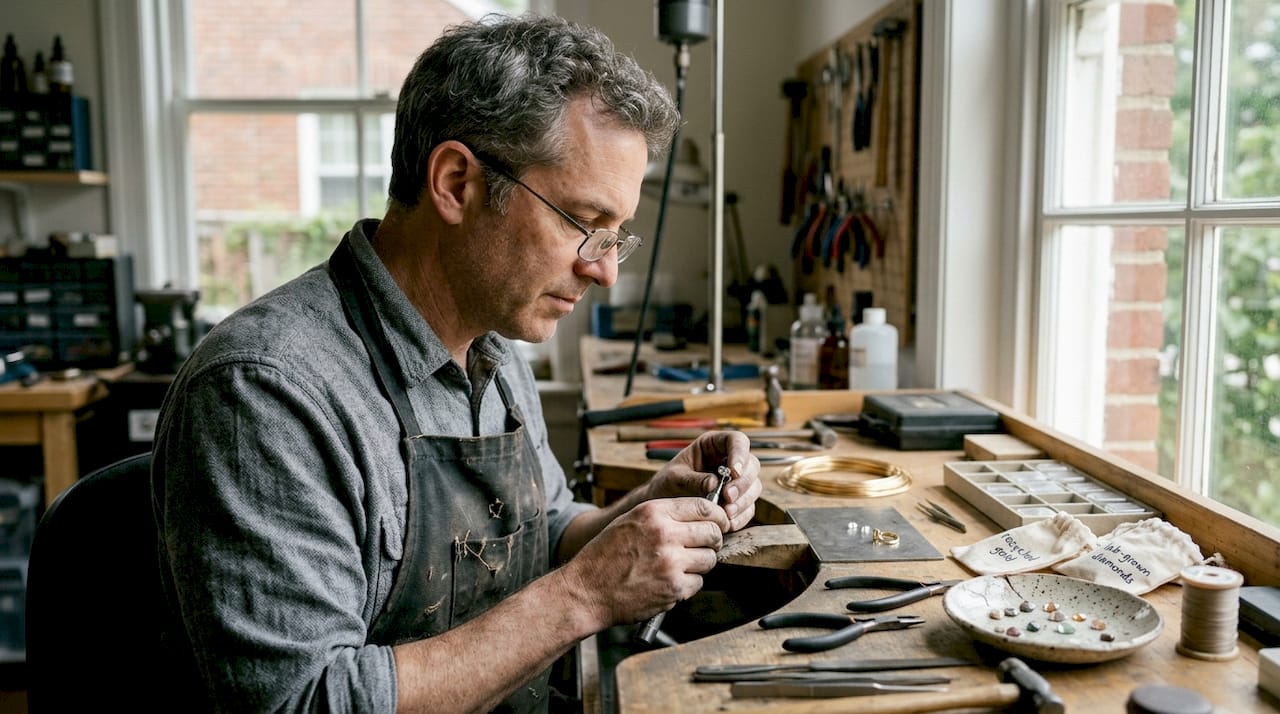
Successful ethical jewelry design starts with selecting materials that meet both aesthetic and sustainability requirements. Recycled precious metals form the foundation of most ethical pieces, offering identical quality to newly mined materials while eliminating extraction impacts. Recycled gold, platinum, and silver maintain full value and beauty while dramatically reducing environmental footprint. Sustainable materials and lab-grown diamonds are increasingly favored in ethical luxury jewelry design.
Lab-grown diamonds and gemstones provide the centerpiece for ethical designs. These stones offer chemical and optical properties identical to natural gems, created in controlled laboratory environments using advanced technology. Production requires significantly less energy than mining operations and produces zero habitat destruction or water contamination.
| Feature | Lab-Grown Diamonds | Natural Diamonds |
|---|---|---|
| Environmental impact | Minimal energy use, zero mining damage | Massive land disruption, water pollution |
| Ethical concerns | Transparent production, fair labor | Potential conflict sourcing, labor issues |
| Cost | 30-40% less expensive | Premium pricing |
| Quality | Identical physical properties | Identical physical properties |
| Certification | Clear origin documentation | Variable sourcing transparency |
Collaborating with ethically responsible jewelers ensures your design vision becomes reality without compromising sustainability. Look for jewelers who provide complete material sourcing documentation, maintain transparent supply chains, and hold relevant certifications. Ask detailed questions about their production processes, labor practices, and environmental policies. Genuine ethical jewelers welcome these inquiries and provide comprehensive answers.
Align your design choices with environmental and social values by prioritizing timeless styles over trendy designs. Classic pieces remain wearable for decades, maximizing the value of materials and reducing consumption. Consider modular designs that allow future modifications without complete reconstruction. Choose settings that protect gemstones from damage, extending the piece’s lifespan.
Pro Tip: Request material samples before finalizing your design. Seeing recycled metals and lab-grown gemstones in person helps you appreciate their quality and confirms they meet your aesthetic standards.
Working with professionals requires clear communication about your ethical requirements. Provide written specifications listing acceptable materials, required certifications, and sustainability expectations. Establish timelines that allow thorough verification of sourcing claims rather than rushing production. Budget appropriately for quality ethical materials, though lab-grown options often reduce overall costs compared to traditional luxury jewelry.
Designing and creating your ethical jewelry piece: step-by-step process
Following a structured design process helps maintain ethical integrity throughout production. This systematic approach ensures no shortcuts compromise your sustainability standards.
Step 1: Define your ethical priorities and budget. List non-negotiable requirements like lab-grown gemstones only, recycled metals exclusively, or specific certifications. Establish a realistic budget that accounts for quality ethical materials while recognizing potential savings from lab-grown options. Document these priorities in writing to guide all subsequent decisions.
Step 2: Choose materials aligned with sustainability standards. Select recycled precious metals certified by recognized bodies. Choose lab-grown diamonds or gemstones with complete origin documentation. Verify all materials come with certificates proving ethical sourcing. Avoid materials with questionable origins or incomplete documentation, regardless of cost savings.
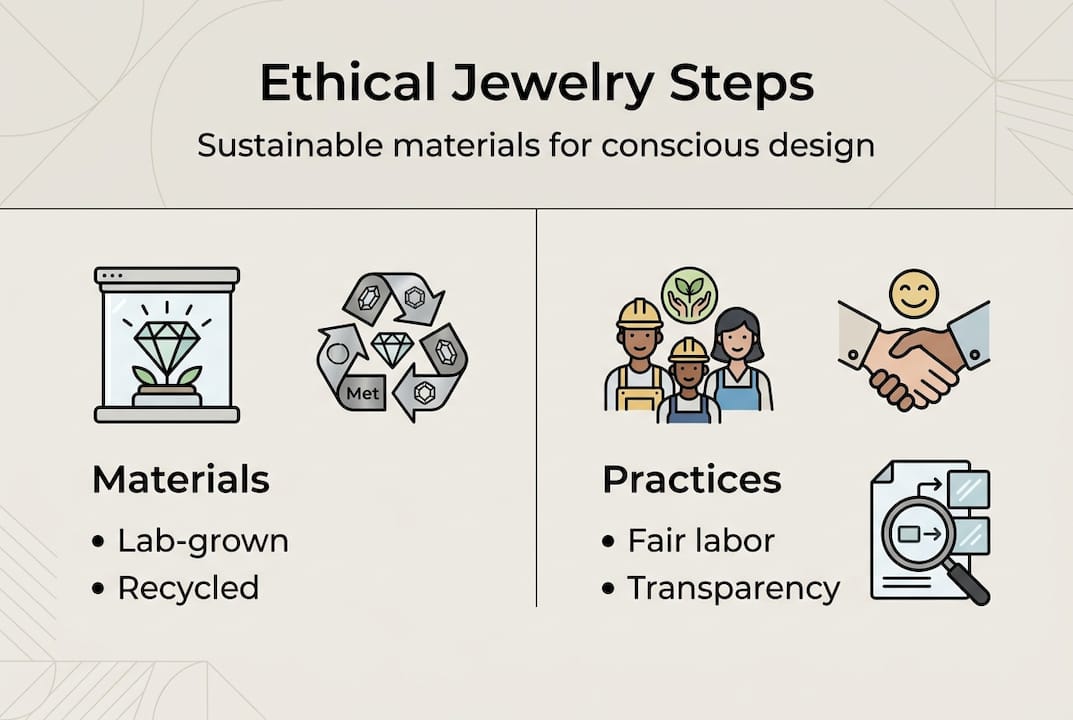
Step 3: Sketch and finalize design with ethical considerations. Create designs that minimize material waste during production. Choose settings that protect gemstones from damage and extend longevity. Consider how the piece will age and whether it allows future repairs or modifications. Timeless aesthetics ensure decades of wear, maximizing sustainability impact.
Step 4: Select an ethical jeweler or manufacturer. Research jewelers specializing in sustainable luxury and custom ethical designs. Verify their certifications and review customer testimonials about ethical practices. Visit their facilities if possible to observe production methods firsthand. Confirm they provide complete documentation for all materials used.
Step 5: Review and verify ethical sourcing and production practices. Request certificates for all materials before production begins. Ask for progress updates with photos documenting each production stage. Verify final certifications match initial documentation. Inspect the finished piece thoroughly and confirm all ethical requirements were met.
Pro Tip: Negotiate transparent communication terms in your contract. Specify that you receive copies of all material certificates, production photos at key stages, and written confirmation of ethical compliance before final payment. This documentation proves your piece’s ethical credentials and provides peace of mind.
Maintain detailed records throughout the process. Save all certificates, correspondence, and documentation in a dedicated file. This creates a complete provenance record for your piece, valuable for insurance purposes and future verification needs. Thorough documentation also helps if you need to address concerns or make warranty claims.
Verifying and maintaining ethical integrity in your jewelry acquisition
Verification separates genuine ethical sourcing from marketing claims. Request specific documentation rather than accepting general assurances. Material certificates should list exact origins, production methods, and chain of custody. Gemstone reports from independent laboratories confirm lab-grown status and quality grades. Metal certifications verify recycled content or responsible mining sources.
| Certification | What It Guarantees | Verification Method |
|---|---|---|
| Responsible Jewellery Council | Ethical business practices across supply chain | Check member directory and certification number |
| Fairmined | Responsibly mined metals with fair labor | Verify certificate matches material batch |
| SCS-007 | Sustainability standards for gems and metals | Confirm certification through SCS Global Services |
| IGI/GIA Lab-Grown Reports | Verified lab-grown origin and quality | Match report number to gemstone laser inscription |
Interpret certifications carefully by checking issuing organizations’ credibility and certification scope. Some certificates verify only one aspect of ethical sourcing while appearing comprehensive. Cross-reference certification numbers with issuing bodies’ databases to confirm authenticity. Beware of proprietary certification systems created by individual companies without independent oversight.
Maintaining sustainability over your jewelry’s lifecycle extends its ethical impact:
- Clean pieces using eco-friendly methods and non-toxic solutions
- Store jewelry properly to prevent damage requiring repairs or replacement
- Have pieces professionally inspected annually to catch issues early
- Choose repair services using ethical practices and materials
- Consider upgrading gemstones rather than replacing entire pieces
Common red flags indicate questionable ethical claims. Jewelers who refuse to provide material certificates likely lack proper documentation. Vague sourcing descriptions like “responsibly sourced” without specific certifications mean little. Prices significantly below market rates for ethical materials suggest corners were cut. Rush production timelines often prevent thorough verification of sourcing claims.
Consumers frequently make verification mistakes that undermine ethical purchases. Accepting verbal assurances without written documentation leaves no recourse if claims prove false. Failing to verify certification authenticity allows fraudulent certificates to pass undetected. Skipping independent appraisals means you can’t confirm material quality matches what you paid for. Not maintaining documentation makes future verification impossible.
If ethical concerns arise after purchase, take immediate action. Contact the jeweler with specific concerns and request additional documentation. Seek independent verification from certified gemologists or appraisers. Review your purchase contract for ethical guarantees and remedies. Consider dispute resolution through consumer protection agencies if the jeweler refuses to address legitimate concerns. Document all communications and keep detailed records of your efforts to resolve issues.
Explore ethical lab-grown diamond jewelry and custom engagement rings
Eternal Carat specializes in ethically sourced lab-grown diamond jewelry that combines sustainability with luxury craftsmanship. Our custom engagement rings are designed with your values in mind, featuring conflict-free lab-grown diamonds and recycled precious metals. Each piece comes with complete certification documentation, ensuring transparency from design through delivery. We offer both classic and contemporary styles, all meeting strict ethical standards without compromising on beauty or quality.
Our Parker, Colorado location provides private consultations where you can explore ethical jewelry options and discuss custom designs. Browse our collection of 14K yellow gold lab-grown diamond earrings and other sustainable luxury pieces. Every item reflects our commitment to ethical sourcing and environmental responsibility, giving you confidence that your jewelry purchase supports positive change.
Frequently asked questions
What are lab-grown gemstones and why are they considered ethical?
Lab-grown gemstones are real diamonds and gems created in controlled laboratory environments using advanced technology that replicates natural formation processes. They possess identical chemical, physical, and optical properties to mined stones. These gems are considered ethical because they eliminate mining-related environmental destruction, habitat loss, and potential human rights violations. Production requires significantly less energy than mining operations and creates zero water pollution or land disruption. Lab-grown diamonds offer transparent supply chains with complete documentation, unlike many mined stones with uncertain origins.
How can I verify that my jewelry is truly ethically sourced?
Request comprehensive documentation including material certificates, gemstone laboratory reports, and supply chain records from your jeweler. Verify certifications through issuing organizations’ databases by checking certificate numbers and validity. Look for credentials from recognized bodies like the Responsible Jewellery Council, Fairmined, or SCS-007 sustainability certification. Insist on seeing certificates before production begins, not after completion. Ethical sourcing verification requires checking transparency about manufacturing practices and confirming fair labor conditions throughout production. Independent appraisals can confirm material quality matches documentation.
What design styles work best for ethical luxury engagement rings?
Timeless, classic designs work exceptionally well for ethical engagement rings because they remain stylish for decades, maximizing sustainability impact. Solitaire settings, three-stone designs, and pavé bands emphasize the beauty of lab-grown center stones while using minimal metal. Simple, elegant styles also reduce material waste during production. Custom designs allow complete personalization while maintaining strict ethical sourcing standards for all components. Consider designs that protect the center stone from damage, extending the ring’s lifespan and reducing the need for repairs or replacements.
Are lab-grown diamonds more affordable than natural diamonds?
Lab-grown diamonds typically cost 30-40% less than natural diamonds with identical quality grades, cut, color, and clarity. This price difference reflects lower production costs and transparent supply chains rather than inferior quality. The stones are chemically and optically identical to mined diamonds, offering the same brilliance and durability. Cost efficiency makes ethical luxury more accessible without compromising on beauty or sustainability standards. You can often afford a larger or higher-quality lab-grown diamond compared to a natural stone at the same price point, maximizing both value and ethical impact.
Recommended
- Custom Jewelry Design Process: Creating Ethical Luxury – Eternal Carat
- Sustainable jewelry explained: ethical luxury guide 2026 – Eternal Carat
- Design custom pendants with ethical luxury in Denver – Eternal Carat
- Modern Jewelry Design Trends: Ethical Luxury Impact – Eternal Carat
- Custom jewelry ideas for ethical engagement rings 2026 – Bel Viaggio Designs, LLC


