

TL;DR:
- The cut is the most critical factor influencing a diamond’s brilliance and visual impact.
- Lab-grown diamonds are graded using the same standards as mined diamonds, ensuring consistent quality measures.
- Buyers should prioritize eye-clean clarity and request videos to assess real-world appearance beyond grades.
Choosing a diamond for an engagement ring or milestone piece is one of the most financially and emotionally significant purchases you will make. The pressure to get it right is real, and the variables feel endless. Yet the most confident buyers in Denver and beyond do not rely on gut instinct alone. They follow a structured diamond quality checklist, the same professional standard used by gemologists worldwide, to evaluate every stone before committing. This article walks you through each item on that checklist, from the foundational 4Cs to the overlooked details that separate a truly exceptional lab-grown diamond from one that merely looks good on paper.
Table of Contents
- Understand the 4Cs: The foundation of diamond quality
- Cut: The brilliance factor you cannot ignore
- Clarity, color, and carat: Balancing beauty and value
- Certification and the overlooked details: The expert’s double-check
- What most diamond guides miss: Eye-clean quality and real-world visuals matter most
- Expert-selected lab-grown diamonds and bespoke service
- Frequently asked questions
Key Takeaways
| Point | Details |
|---|---|
| The 4Cs are essential | Professional grading by cut, color, clarity, and carat ensures you choose wisely. |
| Cut quality matters most | A diamond’s brilliance and beauty depend primarily on its cut grade. |
| Balance value with appearance | VS1/VS2 clarity and G-H color offer noticeable savings without sacrificing looks. |
| Certification is non-negotiable | Always buy diamonds with third-party lab certification for the highest assurance. |
| Visual inspection is key | Never buy unseen; images and videos reveal what certification might miss. |
Understand the 4Cs: The foundation of diamond quality
Every serious diamond purchase starts with the same four criteria. Cut, Color, Clarity, and Carat form the standard diamond quality checklist developed by the Gemological Institute of America, better known as GIA. These four grades give buyers and sellers a shared, objective language for describing a stone’s quality, regardless of where it was grown or mined.
Here is what each C actually measures:
- Cut: How well the diamond’s facets interact with light. This is the only C that reflects human craftsmanship rather than natural or chemical properties.
- Color: How colorless the diamond appears on a scale from D (completely colorless) to Z (visibly yellow or brown). Less color generally means higher value.
- Clarity: The presence or absence of internal flaws (inclusions) and surface blemishes, graded from Flawless (FL) to Included (I3).
- Carat: The weight of the diamond. One carat equals 0.2 grams. Larger stones are rarer and command exponentially higher prices.
The critical point for lab-grown diamond buyers is that all four grades apply equally to lab-created stones. When you learn how to buy lab-grown diamonds, you will find that reputable grading labs use identical standards for both origins. A lab-grown diamond with an Excellent cut and VS1 clarity is graded by the same criteria as a mined stone with those same grades.
Understanding the lab-grown vs natural diamonds distinction matters here: the grades are equivalent, but lab-grown stones typically offer significantly more value per carat at the same quality level.
Pro Tip: If you can only prioritize one C, make it cut. A lower-color or slightly included diamond with an Excellent cut will outshine a colorless, flawless stone with a Poor cut every single time.
Cut: The brilliance factor you cannot ignore
Now that you understand all the categories, let’s break down why experts single out cut as the game-changer for sparkle. Cut is the most important C, and for round brilliant diamonds, GIA grades cut using seven distinct factors: brightness, fire, scintillation, weight ratio, durability, polish, and symmetry. Each factor contributes to how the stone performs in real light conditions.
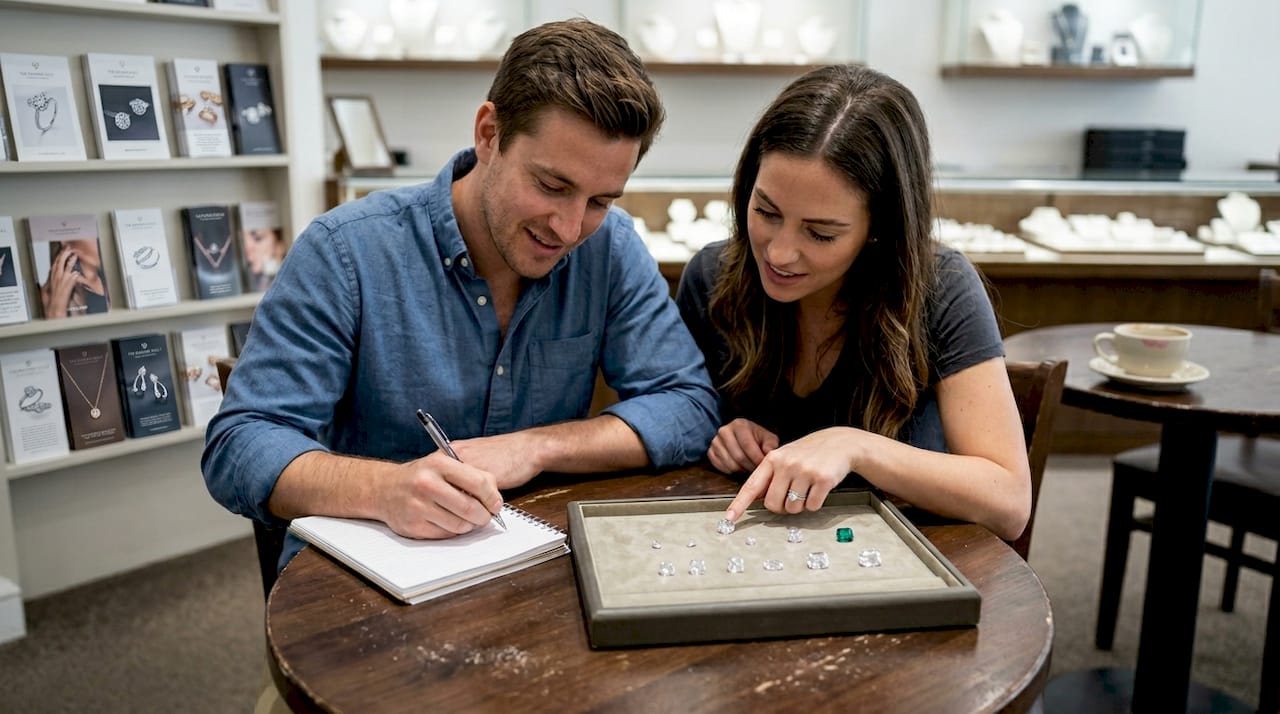
The grading scale for round brilliants runs from Excellent down to Very Good, Good, Fair, and Poor. The difference between Excellent and Very Good is not always visible in a photograph, but it is unmistakable in person under natural and indoor lighting.
| Cut grade | Light performance | Recommended? |
|---|---|---|
| Excellent | Maximum brilliance and fire | Yes, always |
| Very Good | Strong performance, minor trade-off | Yes, with video review |
| Good | Noticeable reduction in sparkle | Only for budget priority |
| Fair | Dull appearance | Not recommended |
| Poor | Significant light leakage | Avoid |
“A well-cut diamond will appear larger and more brilliant than a poorly cut stone of greater carat weight. Cut is where craftsmanship meets chemistry.”
For fancy shapes like ovals, cushions, and pears, GIA does not issue a formal cut grade, which makes visual review even more critical. This is where video matters enormously. A stone can have perfect polish and symmetry grades but still show a dark “bow-tie” shadow across the center if the proportions are off.
Review diamond buying tips for couples to understand how cut interacts with ring setting styles, because some settings can actually mask or enhance a stone’s light performance.
Pro Tip: Always request a 360-degree video of any diamond before purchasing, especially online. Grades tell you what the stone is. Video tells you how it actually performs.
Clarity, color, and carat: Balancing beauty and value
While a diamond’s cut sets its sparkle, true value comes from balancing clarity, color, and carat for your lifestyle and preferences. These three grades interact in ways that can dramatically shift both appearance and price, so understanding the tradeoffs is essential.
Clarity: The FL to I3 clarity scale is evaluated at 10x magnification. VS1 diamonds are eye-clean approximately 95% of the time, while VS2 stones are eye-clean roughly 85% of the time. For most buyers, VS1 or VS2 represents the sweet spot: no visible flaws to the naked eye, at a price well below Internally Flawless or VVS grades.
“Eye-clean is the real standard. A diamond graded SI1 that is visibly clean to the naked eye delivers more value than a VVS2 you cannot distinguish without a loupe.”
Color: The D-to-Z scale groups into practical buying tiers:
- D, E, F (Colorless): The most prestigious and expensive. Best for platinum or white gold settings where color is most visible.
- G, H, I, J (Near colorless): Excellent value. In yellow gold settings, G or H color is virtually indistinguishable from D.
- K and below: Visible warmth. Some buyers prefer this for vintage or rose gold settings.
Carat: Price does not increase linearly with carat weight. It jumps sharply at popular thresholds like 1.0, 1.5, and 2.0 carats. A 0.95-carat stone is visually identical to a 1.0-carat stone but can cost 15 to 20 percent less. That savings can be redirected toward a better cut or a more refined setting.
The lab-created diamond advantages are especially clear here: you can often achieve a higher carat weight at VS1 clarity and G color for the same budget that would buy a smaller, lower-quality mined stone.
| Grade combination | Appearance | Budget impact |
|---|---|---|
| VS1, G, 1.0ct | Excellent, eye-clean | Moderate to high |
| VS2, H, 0.95ct | Near identical, eye-clean | Noticeably lower |
| SI1, I, 1.0ct | Usually eye-clean, verify first | Budget-friendly |
| VVS1, D, 1.0ct | Flawless appearance | Premium price |
Certification and the overlooked details: The expert’s double-check
Don’t let your confidence stop at the main grades. Experts never overlook the final checklist items that separate a truly investment-grade stone from one that just looks good in a report.
GIA and IGI certification uses an anonymous, multi-grader process where each stone is evaluated by multiple independent gemologists without knowledge of previous assessments. This consensus approach is the gold standard for grading accuracy, and it is what gives a certificate its real-world credibility for resale and insurance purposes.
Beyond the 4Cs, here is what to independently verify on every diamond:
- Fluorescence: About 35% of diamonds exhibit fluorescence under UV light. None or Faint ratings are ideal. Strong blue fluorescence can make some stones appear milky in sunlight.
- Graining: Internal graining is a growth pattern that can affect clarity appearance even in higher-graded stones. It is often underreported.
- Girdle thickness: A very thin girdle increases the risk of chipping at the stone’s edge, especially in prong settings. Look for Thin to Slightly Thick on the certificate.
- Inclusion type and position: Two diamonds can share the same clarity grade but have very different risks. A crystal inclusion near the center table is more visible than a feather near the girdle.
- Step-cut considerations: Emerald and Asscher cuts require higher clarity grades because their large, open facets make inclusions far more visible than in brilliant cuts.
Pro Tip: Download the actual grading report PDF from GIA or IGI directly using the certificate number. Never rely solely on a retailer’s summary of the grades.
When comparing lab-grown vs natural diamonds, both receive the same rigorous certification process, which means your lab-grown stone carries the same documented legitimacy as any mined diamond.
What most diamond guides miss: Eye-clean quality and real-world visuals matter most
Here is our honest perspective after working with hundreds of clients across the Denver metro area: grades are necessary, but they are never sufficient on their own. The most satisfied buyers we work with treat the certificate as a starting point, not a finish line.
A diamond graded VS2 and H color sounds ideal on paper. But without a high-quality video showing light performance, you cannot know whether that specific stone is eye-clean, whether the cut is truly optimized, or whether the stone has a lifeless quality that numbers simply cannot capture. Digital shopping has made this more accessible than ever, but only if you insist on viewable evidence.
Our recommendation: use the gemstone comparison guide to understand how different shapes and grades interact visually, then always request video before committing. The grade tells you what you are buying. The video tells you whether you will love it.
Expert-selected lab-grown diamonds and bespoke service
If you are ready to apply this checklist with real stones and expert support, Eternal Carat makes that process straightforward and personal. Our curated inventory of certified lab-grown diamonds is selected specifically for clients in the Denver metro area who expect both quality and transparency.
Every stone in our collection comes with GIA or IGI certification, and our specialists review each diamond for eye-clean quality, cut performance, and the overlooked details covered in this guide. Whether you are designing a custom engagement ring or selecting a statement piece, explore our custom lab-grown diamond jewelry or browse pieces like our marquise diamond floral earrings to see certified brilliance in action. Schedule an appointment at our Parker, Colorado location for a private, one-on-one consultation.
Frequently asked questions
What is the most important factor when choosing a diamond?
Cut is the most important C because it directly controls how much light the diamond reflects, which determines its visible brilliance and beauty. A well-cut stone will outperform a higher-graded but poorly cut diamond in every real-world lighting condition.
Are lab-grown diamonds graded the same as natural diamonds?
Yes. Labs like GIA and IGI apply identical 4Cs grading standards to both lab-grown and natural diamonds, using the same anonymous, multi-grader process for both stone types.
What is considered ‘eye-clean’ in diamond clarity?
A diamond is eye-clean when no inclusions are visible to the unaided eye at normal viewing distance. VS1 and VS2 clarity grades meet this standard the vast majority of the time, making them the most practical choice for most buyers.
Should I worry about fluorescence in lab-grown diamonds?
Most specialists recommend selecting diamonds with no or faint fluorescence ratings. About 35% of diamonds show some level of fluorescence, and strong fluorescence can occasionally create a milky or hazy appearance under sunlight.
Do I need a certification for my diamond?
Absolutely. GIA or IGI certification confirms the grading accuracy and authenticity of your stone, and it is essential for insurance, resale, and your own peace of mind when making a significant purchase.


