

Designer jewelry is often misunderstood as mere status symbols reserved for the ultra-wealthy. In reality, modern designer pieces uniquely blend personal meaning, ethical sourcing, and artistry. Lab-grown diamonds produce roughly 99.9% less carbon emissions than mined diamonds, making them significantly more sustainable and ethical. You’ll learn how to identify, evaluate, and select ethical designer pieces that reflect your values and style preferences.
Table of Contents
- What Is Designer Jewelry? Defining The Craft And Value
- Ethical And Sustainable Materials In Designer Jewelry
- Customization And Personalization In Designer Jewelry
- 2026 Trends In Designer Engagement Rings
- Common Misconceptions About Designer Jewelry
- Personalized Service And Consultation In Designer Jewelry
- Bringing It All Together: Choosing Your Ethical Designer Jewelry
- Explore Ethical Designer Jewelry At Eternal Carat
- Frequently Asked Questions
Key Takeaways
| Point | Details |
|---|---|
| Designer jewelry combines craftsmanship, ethics, and personalization | Artisanal skill meets sustainable materials and client collaboration for unique pieces |
| Lab-grown diamonds reduce emissions by 99.9% and cost 40-60% less | Ethical luxury without compromising brilliance or quality |
| Customization creates timeless heirlooms through collaborative design | Multi-step process ensures pieces reflect personal stories and values |
| 2026 trends feature bold, vintage-inspired, and ethical engagement rings | Chunky bands, colored gemstones, and lab-grown diamonds lead current styles |
| Common misconceptions about designer jewelry cost and quality persist | Education empowers informed purchasing of ethical luxury pieces |
What is Designer Jewelry? Defining the Craft and Value
Designer jewelry represents a three-dimensional framework where Craftsmanship, Ethics, and Personalization converge to create exceptional pieces. Unlike mass-produced traditional jewelry, these pieces emphasize bespoke collaboration where you shape meaningful designs alongside skilled artisans.
The craft involves meticulous attention to detail and artistic skill. Each piece tells a personal story through deliberate material choices, design elements, and finishing techniques. You’re not simply purchasing an accessory; you’re commissioning a wearable narrative.
Ethical sourcing differentiates designer jewelry from conventional options. Modern creators prioritize lab-grown diamonds explained and recycled metals, ensuring transparency throughout the supply chain. This commitment addresses both environmental impact and labor fairness.
Key characteristics of designer jewelry include:
- Artisanal craftsmanship ensuring structural integrity and lasting beauty
- Client-driven design processes creating one-of-a-kind pieces
- Ethical material sourcing with full traceability
- Investment in quality that maintains value over generations
- Personal meaning embedded in every design decision
Pro Tip: Request detailed documentation about material origins and certification when evaluating designer pieces. Transparency signals authentic ethical commitment.
The personalization aspect transforms jewelry into potential heirlooms. When you collaborate on design choices, the emotional connection deepens beyond aesthetic appeal. These pieces carry stories, memories, and values that resonate across time.
Ethical and Sustainable Materials in Designer Jewelry
The materials in your jewelry carry environmental and social weight. Lab-grown diamonds emit roughly 4.8g CO2 per carat compared to 57,000g for mined diamonds, demonstrating a 99.9% reduction in carbon emissions. This dramatic difference makes ethical luxury advantages of lab diamonds increasingly compelling for conscious buyers.

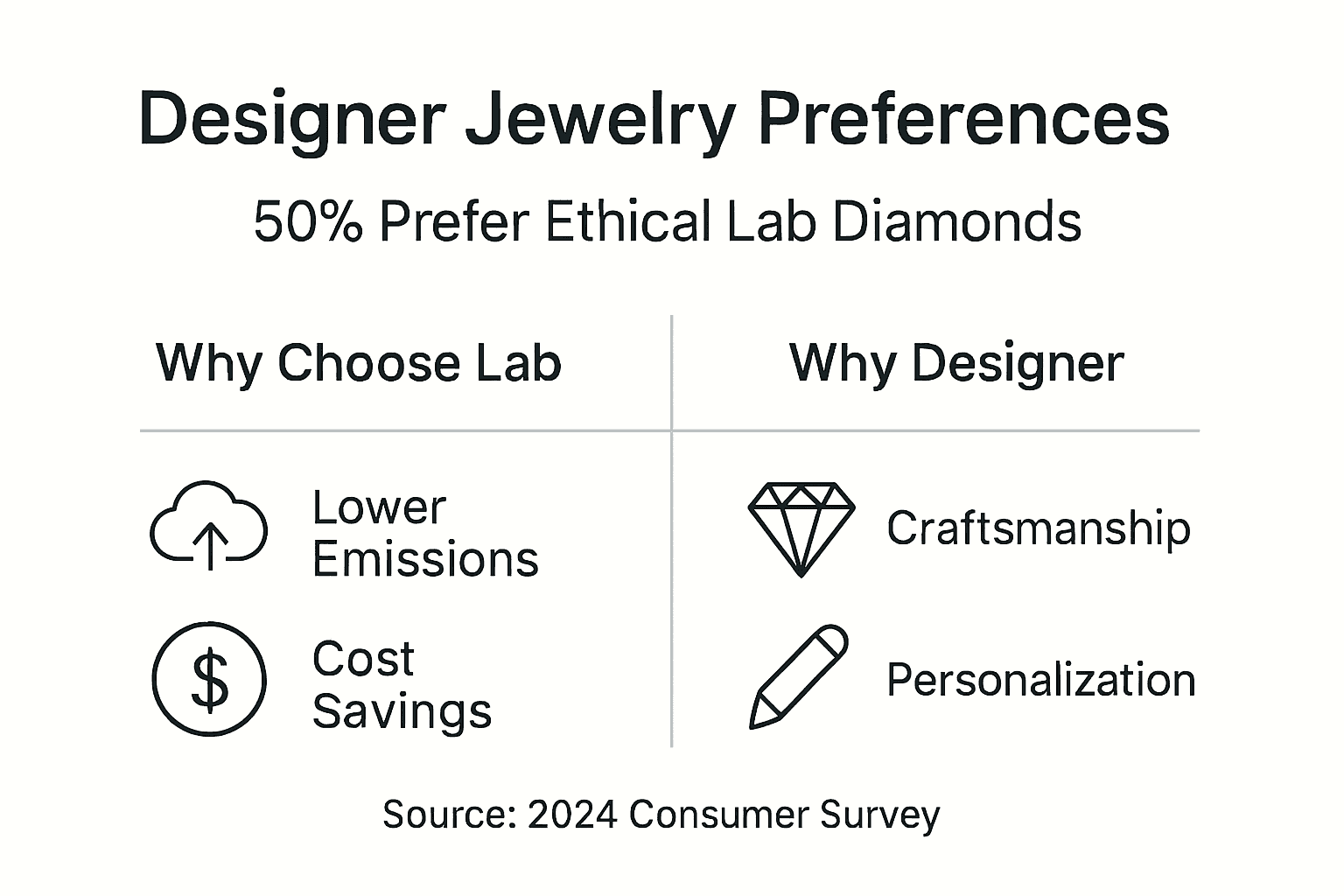
Consumer preferences are shifting rapidly. About 50% of millennial and Gen Z couples now prefer lab-grown diamond engagement rings due to affordability, ethical sourcing, and customization options. This represents a fundamental change in luxury purchasing priorities.
| Material Type | Environmental Impact | Cost Comparison | Ethical Advantage |
|---|---|---|---|
| Lab-Grown Diamonds | 99.9% lower emissions | 40-60% cost savings | Zero mining impact |
| Fairmined Gold | Reduced extraction harm | Premium pricing | Fair labor certified |
| Recycled Metals | Minimal new resource use | Competitive pricing | Circular economy |
| Traceable Gemstones | Verified supply chain | Variable | Labor transparency |
Ethical designer jewelry brands often use Fairmined gold, recycled metals, and fully traceable gemstones to ensure fair labor, reduced environmental impact, and supply chain transparency. These practices address the hidden costs of traditional jewelry production.
The environmental benefits of lab-created diamonds extend beyond carbon emissions:
- Elimination of habitat destruction from open-pit mining
- No toxic chemical runoff into water systems
- Reduced energy consumption in production facilities
- Zero human rights violations in extraction processes
- Complete traceability from creation to finished piece
Traceability ensures accountability throughout the supply chain. When you know exactly where materials originate and how they’re processed, you make informed decisions aligned with your values. Transparency isn’t optional in ethical luxury; it’s foundational.
Pro Tip: Ask jewelers for specific certifications like Fairmined or SCS-007 for lab-grown diamonds. Generic sustainability claims without third-party verification lack credibility.
Customization and Personalization in Designer Jewelry
The bespoke design journey transforms abstract ideas into tangible heirlooms through systematic collaboration. Designer jewelry clients highly value expert consultations that ensure transparency, personalized guidance, and a private, pressure-free environment for creating meaningful pieces.
The custom jewelry design process typically follows these stages:
- Initial consultation where you share personal stories, style preferences, and budget parameters
- Concept sketching translating your vision into preliminary designs
- CAD modeling creating precise 3D renderings for your review and refinement
- Material selection including gemstone grading and metal options
- Crafting phase where skilled artisans bring the design to life
- Final review and adjustments ensuring complete satisfaction
- Care guidance for maintaining your piece over time
Personal narratives drive meaningful design decisions. Maybe you want to incorporate birthstones representing family members, or design elements echoing a meaningful location. These details transform jewelry from generic accessories into deeply personal statements.
Expressing identity through customization offers several advantages:
- Complete control over aesthetic direction and symbolic meaning
- Assurance that your piece is truly one-of-a-kind
- Alignment with ethical values through material choices
- Investment in quality craftsmanship rather than mass production
- Creation of future heirlooms carrying family stories
Private consultations build trust through transparent communication. When you work directly with expert gemologists in appointment-only settings, you receive undivided attention and pressure-free guidance. This intimacy enhances satisfaction and confidence in significant purchases.
The step-by-step custom jewelry design process ensures no detail gets overlooked. From initial concept through final polishing, you remain involved in decisions that shape your piece’s character and quality.
Pro Tip: Bring inspiration images, fabric swatches, or meaningful objects to your initial consultation. Tangible references help designers understand your aesthetic vision more accurately than verbal descriptions alone.
Bespoke pieces gain emotional and heirloom value over time. Unlike trendy fashion jewelry that loses relevance, thoughtfully designed custom pieces remain meaningful across decades. You’re not just buying jewelry; you’re commissioning legacy.
2026 Trends in Designer Engagement Rings
Current design trends reflect a marriage of bold craftsmanship and ethical consciousness. Chunky gold bands and asymmetric settings lead 2026 aesthetics, moving away from delicate minimalism toward statement pieces that command attention.
Vintage influences are experiencing renewed favor. Filigree detailing, milgrain edges, and Art Deco geometry offer timeless elegance with modern execution. These nostalgic elements connect contemporary pieces to historical craftsmanship traditions.
2026 engagement ring trends include:
- Chunky yellow and rose gold bands providing substantial presence
- Asymmetric stone arrangements creating dynamic visual interest
- Colored gemstones like sapphires, emeralds, and morganite expressing individuality
- Vintage-inspired details honoring historical design periods
- Lab-grown diamonds as mainstream choices rather than alternatives
Colored and non-traditional gemstones allow personal style expression beyond conventional diamonds. Whether you prefer the deep blue of sapphire or the soft pink of morganite, these choices create distinctive engagement rings reflecting personality.
About 50% of millennial and Gen Z couples now prefer lab-grown diamond engagement rings due to affordability, ethical sourcing, and customization options. This mainstream acceptance marks a significant shift in luxury jewelry markets.
| Trend Category | Design Elements | Appeal Factor |
|---|---|---|
| Bold Metallics | Chunky bands, mixed metals, textured finishes | Statement presence, durability |
| Vintage Revival | Filigree, milgrain, Art Deco geometry | Timeless elegance, historical connection |
| Colored Gems | Sapphires, emeralds, morganite, aquamarine | Personal expression, uniqueness |
| Ethical Aesthetics | Lab-grown diamonds, recycled metals | Sustainability, transparency |
Modern engagement ring styles balance innovation with tradition. You can select contemporary silhouettes while incorporating ethical materials that align with your values.
The lab-grown diamonds in 2026 trends demonstrate how sustainability and luxury coexist beautifully. These stones offer identical brilliance and durability as mined diamonds while supporting environmental responsibility.
Ethical aesthetics don’t compromise visual impact. Modern designers prove that sustainable materials create stunning pieces rivaling any traditional option. The focus shifts from extraction-based luxury to innovation-based excellence.
Common Misconceptions About Designer Jewelry
Several myths persist about designer jewelry that deserve correction. Understanding factual realities helps you make confident purchasing decisions based on accurate information rather than outdated assumptions.
Designer jewelry isn’t always prohibitively expensive or limited to traditional styles. While some pieces command premium prices, many ethical designers offer accessible luxury through lab-grown materials and innovative production methods. You’re paying for craftsmanship and ethics, not inflated markups.
Lab-grown diamonds are chemically and visually identical to mined diamonds, with up to 40-60% cost savings. This significant price difference reflects production efficiency, not inferior quality. The stones are real diamonds in every measurable way.
Common misconceptions include:
- Designer pieces are only for ultra-wealthy clients with unlimited budgets
- Lab-grown diamonds lack the quality and brilliance of mined stones
- Ethical sourcing is primarily a marketing gimmick without substance
- Custom design processes are complicated and time-consuming
- Designer jewelry prioritizes fashion trends over lasting value
The quality of lab-grown diamonds matches mined diamonds across all grading criteria. Both undergo identical assessment for cut, clarity, color, and carat weight. Gemological instruments cannot distinguish between them.
Lab diamonds cost savings result from efficient production, not corners cut in quality. You receive the same physical, chemical, and optical properties at a fraction of the environmental and financial cost.
Ethical sourcing represents genuine commitment in modern designer jewelry. Brands implementing transparent supply chains, third-party certifications, and sustainable practices demonstrate accountability beyond marketing claims. Your due diligence verifies authenticity.
Choosing lab-grown jewelry doesn’t mean sacrificing luxury or prestige. Instead, you’re selecting innovative excellence over extraction-based tradition. The choice reflects forward-thinking values and informed decision-making.
Designer pieces integrate personal meaning beyond fashion or status. When you commission bespoke jewelry incorporating your stories and values, the result transcends temporary trends. You’re creating meaningful objects with lasting significance.
Personalized Service and Consultation in Designer Jewelry
Expert guidance elevates the luxury jewelry buying experience from transactional to transformational. Private, appointment-only consultations are preferred by luxury clients and build buyer confidence with expert gemologist guidance.
Appointment-only sessions ensure privacy and tailored experiences. You receive undivided attention in comfortable settings without retail pressure or time constraints. This intimacy allows deeper exploration of options and meaningful dialogue.
The luxury jewelry consultation process includes:
- Comprehensive discussion of your aesthetic preferences and lifestyle needs
- Education about gemstone characteristics, metal options, and design possibilities
- Transparent pricing breakdowns with no hidden fees or surprises
- Portfolio review of previous custom work demonstrating craftsmanship quality
- Timeline expectations for design, production, and delivery phases
Expert gemologists provide transparent, trustworthy advice grounded in technical knowledge. They explain grading criteria, material properties, and care requirements in accessible language. You make informed decisions rather than relying on sales pressure.
Expert guidance on lab diamonds addresses common questions and concerns directly. Knowledgeable professionals clarify misconceptions, explain certification processes, and demonstrate quality through hands-on examination.
Consultations help align jewelry with your aesthetics and ethics. When advisors understand your values around sustainability, fair labor, and transparency, they recommend options matching your priorities. This alignment ensures satisfaction beyond visual appeal.
Personalized luxury service enhances satisfaction and buyer confidence. You’re not navigating complex decisions alone; experienced guides provide support throughout the journey. This partnership approach builds trust and peace of mind.
Pro Tip: Prepare questions about certification, material sourcing, and warranty terms before your consultation. Taking notes during the session helps you compare options and make thoughtful decisions afterward.
Transparent processes are critical for ethical luxury purchasing. When jewelers openly share supplier relationships, production methods, and pricing structures, you verify claims rather than accepting marketing promises. Transparency demonstrates integrity.
Bringing It All Together: Choosing Your Ethical Designer Jewelry
Ethical designer jewelry uniquely blends artistry, sustainability, and personal meaning into exceptional pieces worthy of investment. You’ve learned how these elements work together to create modern luxury aligned with conscious values.
Lab-grown diamonds and recycled metals define new standards of luxury. The 99.9% reduction in carbon emissions and 40-60% cost savings demonstrate how innovation improves traditional luxury models. You access identical quality with superior ethics.
Bespoke design processes create timeless heirlooms reflecting personal stories. Through collaborative consultation and expert craftsmanship, your vision becomes reality in wearable form. These pieces carry meaning that appreciates over time.
Key considerations when choosing ethical designer jewelry:
- Verify material certifications and supplier transparency claims
- Prioritize jewelers offering personalized consultation and expert guidance
- Consider customization options that allow personal story integration
- Evaluate current trends against your long-term style preferences
- Understand the complete lifecycle and care requirements of your pieces
Understanding common misconceptions helps you make informed choices. When you know that lab-grown diamonds offer identical quality at lower cost and environmental impact, you confidently select options aligned with your values. Education empowers better decisions.
Expert consultation and transparency complete the ethical luxury experience. Working with knowledgeable professionals in private, pressure-free environments ensures your significant purchases reflect careful consideration rather than impulse. You invest wisely in pieces that matter.
The integration of craftsmanship, ethical sourcing, personalization, and current trends creates a framework for evaluating options. Apply these criteria when exploring designer jewelry to identify pieces worthy of your investment and meaningful enough to treasure across generations.
Explore Ethical Designer Jewelry at Eternal Carat
Ready to apply this knowledge to your jewelry journey? Eternal Carat specializes in lab-grown diamond jewelry blending luxury and ethics in every piece. Our custom design consultations help create unique, meaningful jewelry reflecting your personal story and values.
Explore our collections aligned with sustainability and personalization. Whether you’re selecting an engagement ring, designing a bespoke piece, or exploring ethical alternatives to traditional jewelry, our Parker location offers private consultations with expert gemologists. We provide transparency, guidance, and craftsmanship excellence throughout your journey.
Discover how lab-grown diamonds sustainability role transforms luxury purchasing. Our custom jewelry design process guide walks you through collaborative creation of heirloom pieces. Visit Eternal Carat’s designer jewelry collection to begin your ethical luxury experience today.
Frequently Asked Questions
What makes designer jewelry different from regular jewelry?
Designer jewelry emphasizes bespoke craftsmanship, ethical sourcing, and personal collaboration rather than mass production. Each piece reflects unique design decisions, sustainable materials, and artisanal skill creating one-of-a-kind heirlooms. Regular jewelry typically follows standardized designs with less transparency about material origins and production methods.
Are lab-grown diamonds real diamonds?
Yes, lab-grown diamonds are chemically, physically, and optically identical to mined diamonds. They consist of pure carbon in crystalline structure and display the same brilliance, hardness, and durability. Gemological instruments cannot distinguish between lab-grown and mined diamonds because they are the same material with different formation processes.
How long does the custom jewelry design process take?
Custom design typically requires four to eight weeks from initial consultation to final delivery. The timeline includes concept development, CAD modeling, client approvals, crafting, and finishing. Complex designs or specialty materials may extend this timeframe, while simpler modifications to existing designs can be completed faster.
Why choose ethical materials in luxury rings?
Ethical materials reduce environmental impact by 99.9% while offering 40-60% cost savings compared to traditional options. They ensure fair labor practices, supply chain transparency, and alignment with conscious values. You receive identical quality and beauty while supporting sustainable practices and responsible production methods.
Can bespoke pieces become heirlooms?
Absolutely. Bespoke pieces often surpass mass-produced jewelry as heirlooms because they carry personal stories and intentional design. The combination of quality materials, expert craftsmanship, and emotional significance creates lasting value across generations. Proper care ensures these pieces maintain beauty and structural integrity for decades.
What certifications should I look for in ethical jewelry?
Look for IGI or GIA certifications for lab-grown diamonds, Fairmined certification for gold, and SCS-007 sustainability standards. These third-party verifications confirm claims about quality, ethical sourcing, and environmental practices. Request documentation proving material origins and production methods to verify transparency claims.


