

TL;DR:
- IGI certification provides detailed, standardized grading for conflict-free, lab-grown diamonds.
- Choosing IGI certified lab-grown diamonds supports ethical sourcing and has a lower environmental impact.
- Verify reports online and prioritize cut quality for the best appearance and value.
Finding a diamond that checks every box feels harder than it should. You want beauty, you want ethics, and you want to walk away knowing exactly what you paid for. Denver-area buyers are increasingly turning to IGI certified lab-grown diamonds because they combine genuine transparency with conflict-free sourcing and stunning brilliance. But not every diamond wearing an IGI report is created equal, and understanding how to evaluate one correctly is the difference between a purchase you’re proud of and one you second-guess for years. This guide gives you the research-backed framework to choose with real confidence.
Table of Contents
- What is an IGI certified lab grown diamond?
- Top reasons to choose IGI certified lab grown diamonds
- How IGI certification ensures quality and trust
- Comparing IGI to other diamond grading labs
- Tips for selecting the perfect IGI certified diamond in Denver
- The real-world value of IGI certification: Focus on more than the label
- Discover your perfect IGI certified lab grown diamond with us
- Frequently asked questions
Key Takeaways
| Point | Details |
|---|---|
| IGI brings trust | Each IGI certified lab-grown diamond is independently assessed and tracked for authenticity. |
| Ethical and sustainable | Lab-grown diamonds avoid mining’s harms, offering a planet-friendly, conflict-free option. |
| Comparison is essential | IGI and other lab certifications have pros and cons—focus on visuals and retailer transparency. |
| Denver-specific support | Consulting with a reputable local jeweler ensures both certification and personalized experience. |
What is an IGI certified lab grown diamond?
IGI stands for the International Gemological Institute, one of the world’s most widely recognized independent grading laboratories. When a diamond carries an IGI certification, it means a team of trained gemologists has examined and graded the stone using a standardized set of criteria before it ever reaches a display case or a website.
The core grading criteria you’ll see on every IGI report cover:
- Color: Rated on a D-to-Z scale, where D is colorless and the most prized
- Clarity: A measure of internal inclusions and surface blemishes, from Flawless to Included
- Cut: How well the diamond was shaped to maximize light return and brilliance
- Carat weight: The physical mass of the stone
- Fluorescence: Whether the stone glows under ultraviolet light
- Polish and symmetry: Fine details of the finished surface and facet alignment
What makes this grading trustworthy is the process behind it. The IGI grading process involves multiple independent gemologists who reach a consensus on color and clarity, electronic tracking of each stone through the lab, and ISO 17025 accreditation for both natural and lab-grown diamonds. ISO 17025 is the international standard for testing and calibration laboratories, so when IGI holds that accreditation, it means their methods meet globally recognized scientific standards.
Lab-grown diamonds are physically, chemically, and optically identical to mined diamonds. The only difference is origin. They’re created in controlled environments using either High Pressure High Temperature (HPHT) or Chemical Vapor Deposition (CVD) methods, avoiding the ecological disruption, community displacement, and ethical concerns tied to mining. When you’re verifying diamond quality for a meaningful purchase, starting with IGI certification puts you immediately ahead of buyers who rely on seller descriptions alone.
Pro Tip: Always ask for the full IGI report, not just the certificate number. The complete report shows grading comments, fluorescence details, and whether any post-growth treatments were applied.
Top reasons to choose IGI certified lab grown diamonds
Now that you know what IGI certified lab-grown diamonds are, let’s see why they’re increasingly the top choice for conscious buyers in the Denver metro area and beyond.
- Conflict-free sourcing: Lab-grown diamonds have zero connection to mining regions where diamond revenues have historically funded armed conflict. Your stone was created in a controlled facility, not extracted at the cost of human suffering.
- Significantly lower environmental footprint: Mining a single carat of diamond disturbs roughly 100 square feet of land and generates nearly 6,000 pounds of mineral waste. Lab-grown diamonds require a fraction of that resource intensity. Lab-grown diamonds ethically sourced with a lower environmental footprint are projected to continue capturing market share, with US lab-grown diamond sales exceeding 50% of total diamond sales by 2023.
- Full transparency through documentation: Each IGI certified diamond comes with a detailed grading report. You know the exact color, clarity, and cut grade. There are no surprises, no verbal promises you have to trust blindly.
- Superior value for carat size: Because lab-grown diamonds cost significantly less to produce than mined alternatives, your budget goes further. A two-carat IGI certified lab-grown diamond often costs what a one-carat mined stone would, with no compromise on brilliance.
- Consistent supply: Mined diamonds depend on geological luck and extraction conditions. Lab-grown stones can be produced consistently, meaning the specific cut, color, and clarity you want is actually available.
“The shift toward lab-grown diamonds isn’t just a trend. It reflects a generation of buyers who refuse to separate beauty from accountability. An IGI certified stone lets you hold both in your hand at once.”
The lab-grown sustainability benefits extend beyond the mine itself. The full lifecycle of a lab-grown diamond, from creation to finished jewelry, carries an 85% less carbon footprint than traditional mining operations, which makes a measurable difference for buyers who track their environmental impact seriously.
How IGI certification ensures quality and trust
Once you understand the benefits, it’s equally important to grasp how IGI brings rigor to the grading process, keeping you protected and informed at every step.
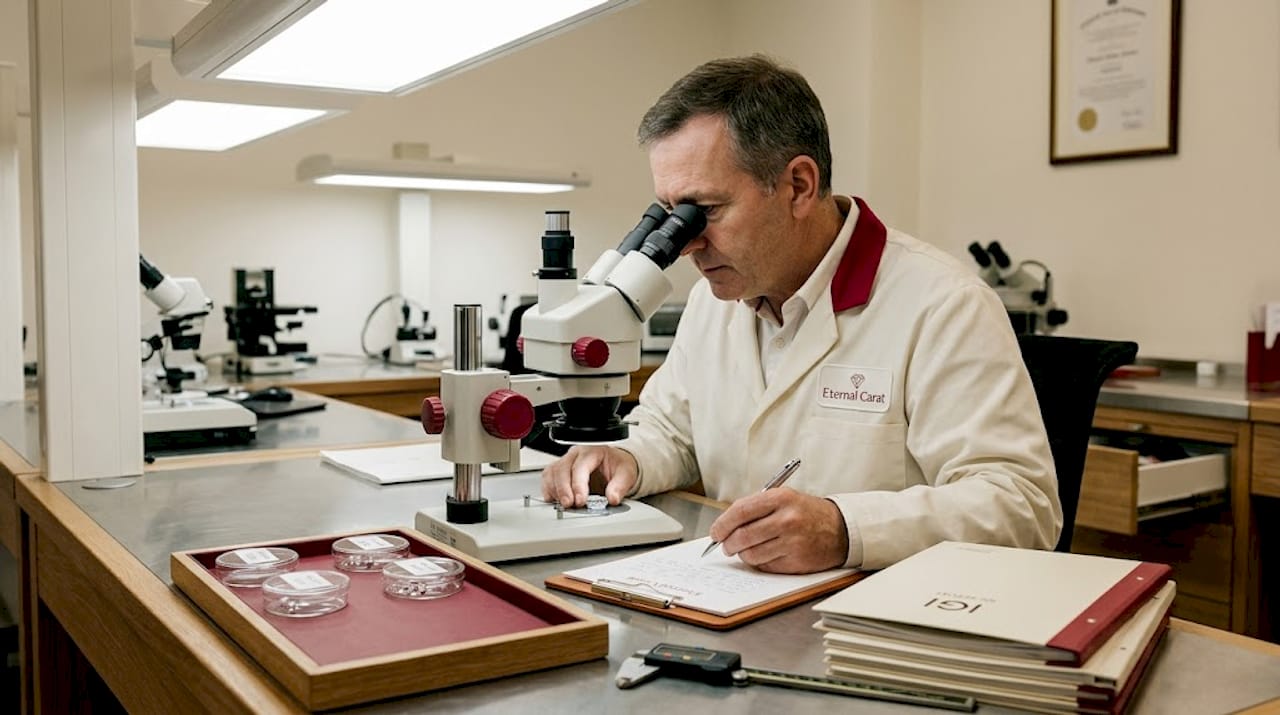
The IGI grading process works on a consensus model. Each stone passes through multiple independent graders who assess color and clarity separately before their findings are compared. Discrepancies are resolved by a senior gemologist. This prevents any single person’s bias or error from determining the final grade on your report. Electronic tracking follows each diamond from intake to delivery, and the ISO 17025 accreditation confirms that these methods meet internationally recognized scientific standards.
Here’s how IGI certification compares to buying an uncertified stone:
| Factor | IGI certified diamond | Uncertified diamond |
|---|---|---|
| Color grade verification | Multi-expert consensus | Seller’s verbal claim |
| Clarity verification | Microscopic, documented | Visual estimate only |
| Treatment disclosure | Required and noted | Not guaranteed |
| Report authenticity check | Online verification available | No way to verify |
| Resale documentation | Recognized globally | None |
| Post-growth treatment info | Fully disclosed | Often unknown |
One area worth understanding involves post-growth treatments. Some lab-grown diamonds undergo a process called annealing after they’re created, which can improve color by reducing internal stress in the crystal. IGI requires full disclosure of post-growth treatments, and these are noted clearly on the report. You can always verify any IGI report’s authenticity through igi.org’s online verification tool, which gives you real-time access to the grading data on file.
Pro Tip: Before any purchase, type the report number directly into the IGI verification portal. If the details on your physical or digital report don’t match what the database shows, walk away.
The lab diamond buying guide process becomes much smoother once you understand that the report is your contract with reality. Every claim the seller makes about quality can be cross-referenced against the IGI record.
Comparing IGI to other diamond grading labs
Knowing what IGI provides, how does it stack up against other leading labs? The two most discussed grading laboratories are IGI and GIA (Gemological Institute of America). Both are respected, but they have meaningful differences that affect your buying decision.
Here’s a direct comparison across the factors that matter most:
| Criteria | IGI | GIA |
|---|---|---|
| Lab-grown diamond grading | Full grades (color, clarity) | Full grades as of 2020 |
| Grading strictness (lab-grown) | Consistent; some perceive slightly lenient | Generally considered stricter |
| Report cost | Lower | Higher |
| Verification tool | Yes, online | Yes, online |
| Treatment disclosure | Full | Full |
| Consumer accessibility | High | High |
The IGI grading comparison question is one buyers raise often. Some industry observers suggest IGI grades slightly more generously on color for lab-grown stones, which can translate to a price advantage for buyers. However, dual-certification studies, where the same stone is graded by both labs, show mixed results with no consistent pattern of one being stricter than the other across all grades.
Key points to keep in mind when comparing:
- An “H color” IGI stone might occasionally grade “I color” at GIA, but this works in both directions
- The visual difference between adjacent color grades (say, H vs I) is often invisible to the naked eye
- For lab-grown diamonds, both labs now provide detailed color and clarity grades, eliminating an older gap in reporting
- IGI certification is more widely available for lab-grown stones globally, which can matter for resale or appraisal
“At the top of the quality range, the label on the report matters far less than what you see when the stone catches light. Two diamonds with identical grade designations can look dramatically different depending on cut quality.”
The choice between lab-grown vs natural diamonds is one decision. The choice of lab is a second. For most buyers prioritizing ethics and value, IGI certified lab-grown diamonds represent the most practical and transparent path. You get the documentation, you get the verification tool, and you get a stone that was graded by multiple independent experts. That’s a strong foundation for any major purchase. For a deeper look at how these options compare side by side, a detailed diamond comparison can clarify the full picture.
Tips for selecting the perfect IGI certified diamond in Denver
Having compared certification options, here’s how to put this knowledge into practice when you’re ready to buy.
- Verify the IGI report before paying: Use the IGI online tool to confirm your diamond’s authenticity and confirm the grading details match what you’ve been shown. This takes two minutes and protects you completely.
- Ask directly about post-growth treatments: A reputable jeweler will answer this question immediately and show you where it’s noted on the report. Hesitation here is a red flag.
- Prioritize cut quality over carat weight: A well-cut 1.5-carat stone will consistently outperform a poorly cut 2-carat stone in terms of brilliance and visual size. Cut is the single grade that determines how much light your diamond returns.
- Request an in-person or video viewing before finalizing: Photos on a white background don’t tell the full story. Seeing a stone under natural light and indoor lighting reveals how it actually performs in daily wear.
- Work with jewelers who specialize in lab-grown stones: Not every jeweler has deep experience with IGI certified lab-grown diamonds. You want someone who can explain treatment disclosures, speak to growing methods (HPHT vs CVD), and walk you through the report in plain language.
- Consider the setting as seriously as the stone: The metal color and setting style dramatically affect how a diamond reads. A colorless D-E stone in yellow gold picks up warmth and may appear slightly tinted, while the same stone in platinum or white gold shows its true color grade.
The key benefits for couples choosing lab-grown diamonds go beyond price. When both partners share values around sustainability and ethical sourcing, the stone becomes a symbol of those shared commitments, not just a purchase.
Pro Tip: When comparing two stones with similar grades, ask to see them side by side under a loupe (a small magnification tool). Small clarity differences that look significant on paper often disappear entirely under real viewing conditions, while cut differences become immediately obvious.
The real-world value of IGI certification: Focus on more than the label
Here’s our experience-driven outlook on what actually makes these choices meaningful, beyond the paperwork.
Certification reassures, and IGI certification specifically gives you a documented foundation for trust. But some buyers treat the report as the finish line when it’s really the starting gate. We’ve seen clients fixate on a VS1 clarity grade when an SI1 in the same stone would be eye-clean, meaning no inclusions visible to the naked eye. The grade on paper never tells you how the diamond lives in real light.
There’s a broader conversation happening in the industry about whether IGI grading perception affects pricing. Some buyers seek GIA certified stones specifically because they believe stricter grading means better value on resale. The reality is more nuanced. Empirical dual-grading studies show mixed results, and the stone you’re wearing doesn’t know which lab certified it. What matters is how it looks on the hand of someone you love.
Trust your jeweler’s reputation as seriously as you trust the report. A jeweler with deep expertise in 60% lower carbon elegance lab-grown stones will steer you toward the best visual performer at your budget, not the best-looking number on a report. That combination of certified documentation and genuine human expertise is where real peace of mind lives.
Your values and your aesthetic sense should lead this decision. The IGI report confirms the stone is exactly what it claims to be. Your own eyes, and the judgment of a jeweler you trust, tell you whether it’s the right one.
Discover your perfect IGI certified lab grown diamond with us
Ready to move from research to reality? At Eternal Carat, we work exclusively with ethical, high-quality lab-grown diamonds that come with full IGI certification and complete transparency about sourcing and treatments. Our clients in the Denver metro area trust us for personalized guidance that goes well beyond handing over a report.

Whether you’re designing a custom engagement ring from scratch or selecting a loose IGI certified stone to set in a family heirloom setting, our team brings the expertise and the inventory to match. Browse our full collection of shop lab-grown diamond jewelry online, or book a private appointment at our Parker, Colorado location for a one-on-one consultation. We’ll walk through every grade, every treatment disclosure, and every setting option with you until you’re completely confident in your choice.
Frequently asked questions
What makes IGI certification different for lab grown diamonds?
IGI grades lab-grown diamonds through a multi-expert grading process using ISO 17025 accredited methods, with full disclosure of any post-growth treatments, ensuring complete transparency for the buyer.
Are IGI certified lab grown diamonds ethical?
Yes. They are conflict-free and sustainable, produced without mining, making them an inherently ethical option for buyers who care about sourcing and environmental impact.
How can I verify an IGI report before buying?
Enter the report number into the IGI online verification tool at igi.org, and confirm the details match what’s shown on your physical or digital certificate before completing any purchase.
Does IGI certification impact diamond pricing?
Some buyers associate IGI grading with a modest price advantage over GIA certified stones, but empirical studies show no consistent grading difference, making visual quality the more reliable pricing guide.
What sustainability benefits do IGI certified lab diamonds have?
Lab-grown diamonds use less water and energy, avoid landfill waste from mining operations, and generate a substantially lower carbon footprint compared to mined diamonds across their full production lifecycle.


